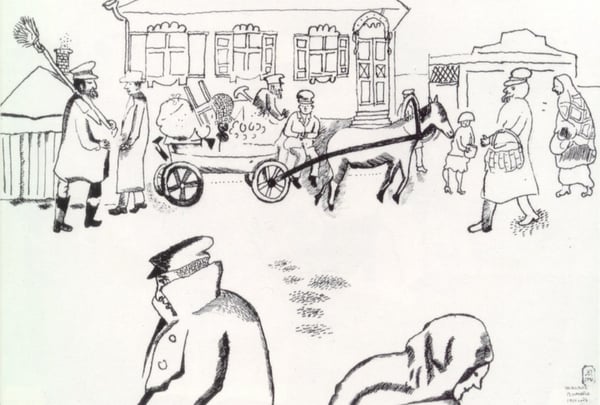
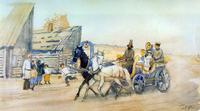
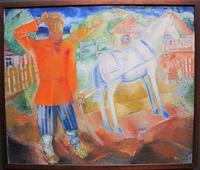
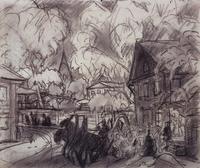
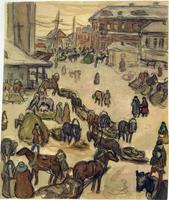
As an expert art historian, I can attest that Marc Chagall’s Street in Vitebsk is a landmark work within the Expressionist movement, specifically in the genre of genre painting—scenes of everyday life. Its significance lies in how Chagall transforms a seemingly ordinary street view into a powerful emotional and psychological landscape.
Using the Expressionist style, Chagall rejects naturalistic depiction in favor of subjective feeling. The painting’s distorted perspective, skewed architecture, and heightened, often dissonant colors imbue the mundane subject—a street in his Belarusian hometown—with a sense of memory, dream, and dislocation. The familiar becomes strange, reflecting the artist’s personal nostalgia and the upheaval of his era. As a genre painting, it documents daily life, but the Expressionist treatment elevates that life into a universal symbol of home, exile, and the fragile beauty of the ordinary. This fusion of a humble genre subject with the intense, subjective force of Expressionism is what makes Street in Vitebsk a seminal work—it demonstrates how modernist painting can invest the simplest corner of the world with profound, lasting significance.