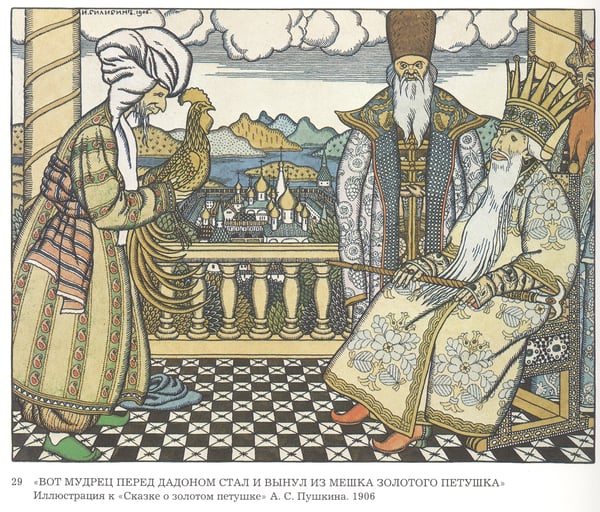
Illustration for the poem 'The Tale of the Golden Cockerel' by Alexander Pushkin
Dettagli
Analisi esperta di Illustration for the poem 'The Tale of the Golden Cockerel' by Alexander Pushkin di Ivan Bilibin
Stile: Art Nouveau (Modern) · Genere: illustration
This illustration by Ivan Bilibin for Pushkin’s The Tale of the Golden Cockerel is a masterful example of how Art Nouveau (known in Russia as Modern) was adapted to national folk traditions, making Bilibin a key figure in the revival of Russian fairy-tale illustration at the turn of the 20th century.
Significance within the Art Nouveau / Modern Style:
Bilibin’s work is not merely decorative; it codifies a distinctly Russian variant of Art Nouveau. While European Art Nouveau often drew on organic, sinuous plant forms, Bilibin fused the movement’s emphasis on rhythmic line and flat, expressive color with the ornamental vocabulary of medieval Russian icon painting, lubok (folk prints), and traditional embroidery.
- Synthetic Composition: The illustration likely features a strong, patterned border (a hallmark of Bilibin’s design) that frames the scene, integrating text and image in a unified, stylized surface—a core Art Nouveau principle. The figures are rendered with crisp, black outlines and filled with rich, unmodulated colors (ochre, vermilion, malachite green), echoing the luminosity of enamel and manuscript miniatures.
- Folklore as Modern Art: By treating Pushkin’s literary fairy tale with the aesthetic of peasant handicrafts and ancient Slavic ornament, Bilibin elevated folk art to the level of high Modernism. This was a deliberate nationalist gesture: his illustrations helped define a “Neo-Russian” style within the broader International Art Nouveau, proving that modern design could be rooted in indigenous heritage.
- Narrative Clarity: As an illustration, the work serves the text without sacrificing artistic autonomy. Bilibin’s careful staging—often presenting a key dramatic moment with symbolic objects (the golden cockerel, King Dadon, the Shamakhan queen)—makes the story instantly legible while the stylized forms add a sense of magical timelessness.
Broader Impact: Bilibin’s cycle for The Golden Cockerel (first published in 1906–1907) became a benchmark for Russian book design, influencing stage sets, graphic arts, and even contemporary animation. It exemplifies how Modern style could be both international and profoundly local, using sinuous line and flattened perspective not as borrowed European formulas but as a natural outgrowth of Slavic decorative tradition.
Visivamente simili
20 opere con composizione e palette affini
Illustration for the Russian Fairy Story "The Frog Princess"
Ivan Bilibin
Illustration for Alexander Pushkin's 'Fairytale of the Tsar Saltan'
Ivan Bilibin
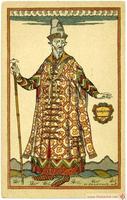
Boyar. Costume design for the opera "Boris Godunov" by Modest Mussorgsky
Ivan Bilibin
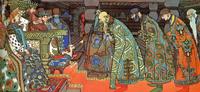
Merchants. Illustration for Alexander Pushkin's 'Fairytale of the Tsar Saltan'
Ivan Bilibin
Illustration for Alexander Pushkin's 'Fairytale of the Tsar Saltan'
Ivan Bilibin
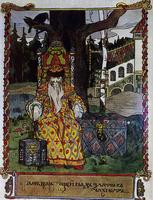
Illustration for Alexander Pushkin's poem "Ruslan and Ludmila"
Heorhiy Narbut
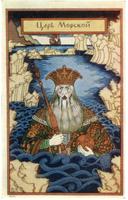
King of the seas
Ivan Bilibin
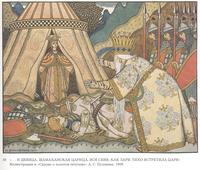
Illustration for the poem 'The Tale of the Golden Cockerel' by Alexander Pushkin
Ivan Bilibin
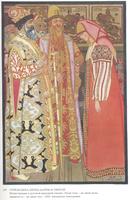
Illustration for the fairytale "Go there do not know where, bring it I do not know what"
Ivan Bilibin
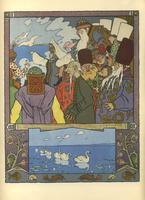
Illustration for the Russian Fairy Story "The Frog Princess"
Ivan Bilibin
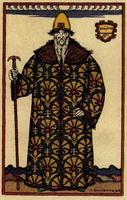
Boyar. Costume design for the opera "Boris Godunov" by Modest Mussorgsky
Ivan Bilibin
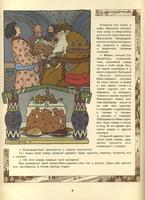
Illustration for the Russian Fairy Story "The Frog Princess"
Ivan Bilibin
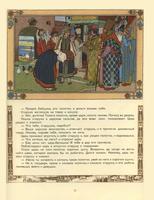
Illustration for the fairy tale "Vasilisa the Beautiful"
Ivan Bilibin
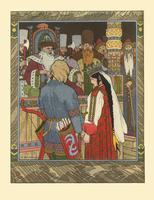
Illustration for the Tale of Prince Ivan, The Firebird and the Grey Wolf
Ivan Bilibin
Sketch of costumes for "Tale of Tsar Saltan"
Nicholas Roerich
Royal and nobleman clothing of the XVII century
Fyodor Solntsev
Illustration for the Tale of Prince Ivan, The Firebird and the Grey Wolf
Ivan Bilibin
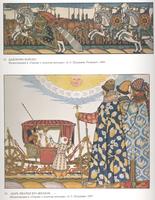
Illustration for the poem 'The Tale of the Golden Cockerel' by Alexander Pushkin
Ivan Bilibin
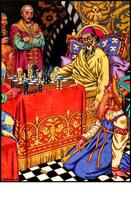
The Death of Ivan the Terrible
Ivan Bilibin
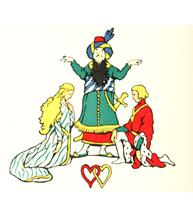
The sweet and touching tale of Fleur and Blanchefleur
Eleanor Fortescue-Brickdale