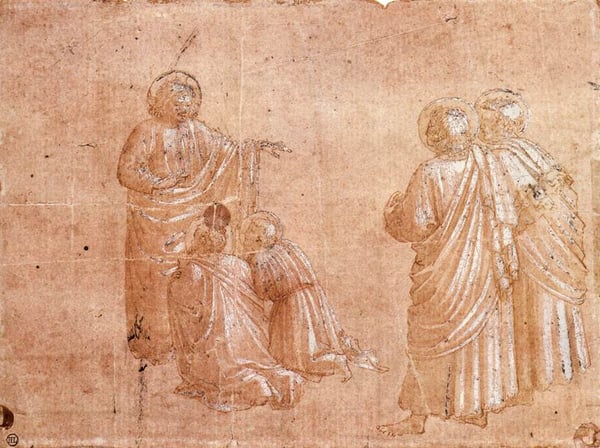
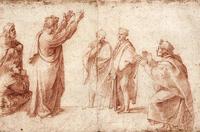
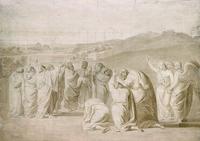
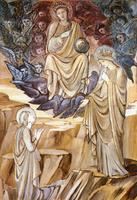
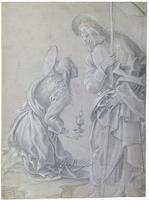
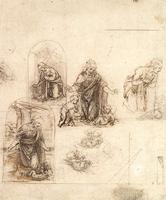
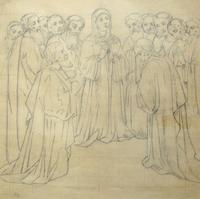
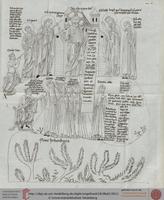
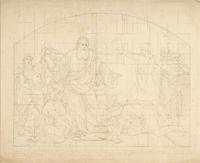
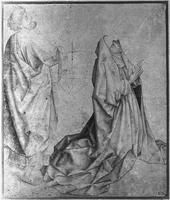
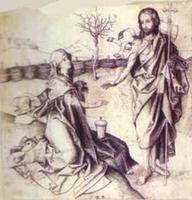
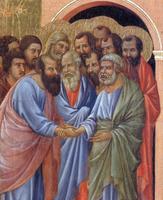
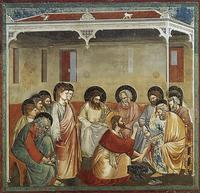
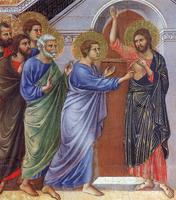
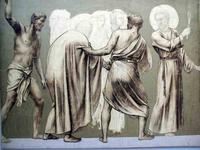
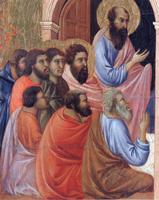
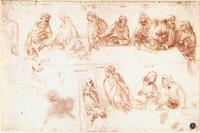
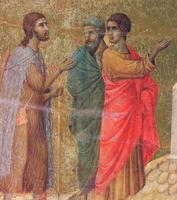
This sketch and study by Fra Angelico, a master of the Early Renaissance, holds particular significance as a window into the artistic process of the period. Unlike finished altarpieces, this work reveals the foundational planning and intellectual rigor behind the final composition. As a study for the "Institution of the Eucharist," it showcases Angelico's characteristic blend of spiritual clarity and geometric harmony typical of the Early Renaissance—where religious narrative meets a nascent concern for perspective, proportion, and naturalistic gesture. The sketch form is especially valuable for understanding how artists like Angelico translated theological concepts into visual structure: here, the arrangement of figures around the sacred act emphasizes both the solemnity of the moment and the humanistic attention to individual response. Its significance lies in documenting the transitional moment between medieval iconography and Renaissance naturalism, while also preserving the devotional intensity that defines Angelico’s oeuvre.