Expert analysis of Karl Bryullov’s Genius of Art
Style: Neoclassicism · Genre: allegorical painting
Expert Analysis: Genius of Art by Karl Bryullov
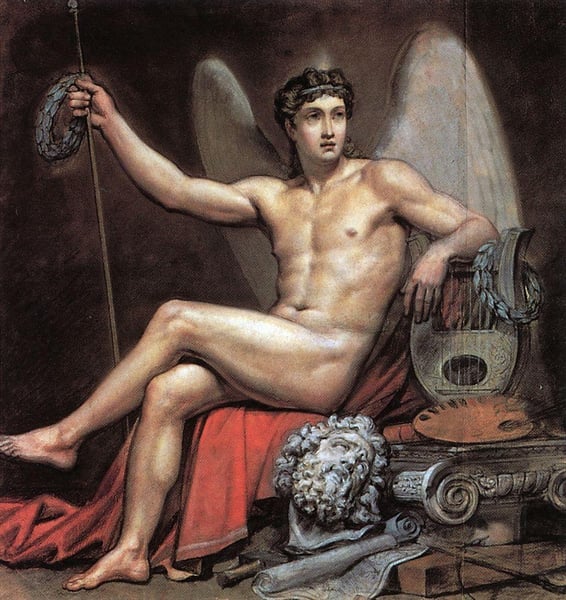
Karl Bryullov’s Genius of Art stands as a compelling exemplar of Neoclassical allegory, a genre that sought to embody abstract virtues through idealized human figures. Within this tradition, Bryullov’s work is significant for its synthesis of academic precision and the Romantic sensibility that would later define his most famous masterpieces, such as The Last Day of Pompeii.
The painting personifies the “Genius” of artistic creation—likely an androgynous or youthful figure—employing the cool, balanced compositions and clear contours that Neoclassicism inherited from antique sculpture. Yet Bryullov injects a subtle vitality into the figure, tempering the static formality of classicism with a dynamic, almost theatrical presence. This balance reflects the artist’s position as a bridge between the rigorous ideals of the early 19th-century Academy and the burgeoning emotionalism of Russian Romanticism.
As an allegorical work, Genius of Art functions not merely as a decorative symbol, but as a manifesto for the transformative power of art itself. The figure’s attributes—variously a lyre, palette, or laurel crown (depending on the specific version)—ground the abstract concept in tactile, classical symbols. The painting’s significance lies in how it encapsulates the Neoclassical belief that art is a civilizing force, while also foreshadowing Bryullov’s own reputation as a creative “genius” in his era. It remains a key example of how Russian Neoclassicism adapted Western European conventions to express distinctly national aspirations for cultural elevation.
Visually similar
20 works with related composition and palette
Amor Victorioso
Orazio Riminaldi
Amor Victorious
Caravaggio
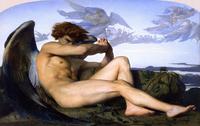
Fallen Angel
Alexandre Cabanel
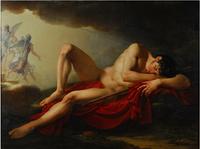
Jacob's Dream
Jacques Réattu
Seated Male Nude
Pierre-Paul Prud'hon
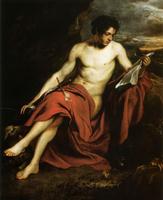
Saint John the Baptist in the Wilderness
Anthony van Dyck
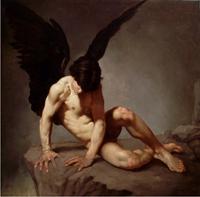
Fallen Angel
Roberto Ferri
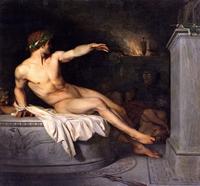
Orestes
Alexandre Cabanel
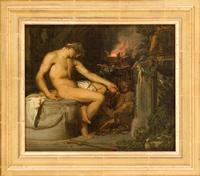
Sketch for Orestes
Alexandre Cabanel
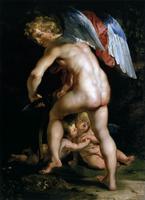
Cupid Making His Bow
Peter Paul Rubens
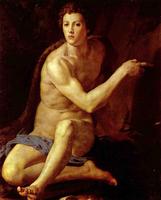
Saint John the Baptist
Agnolo Bronzino
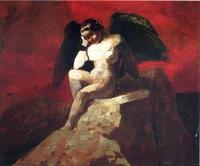
Angel in Chains
Odilon Redon
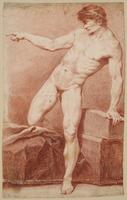
Männerakt
Charles-Andre van Loo (Carle van Loo)
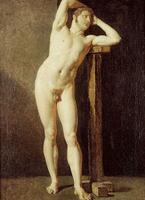
Male nude
Jean Auguste Dominique Ingres
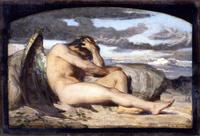
Study for 'Fallen Angel'
Alexandre Cabanel
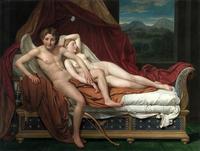
Cupid and Psyche
Jacques-Louis David
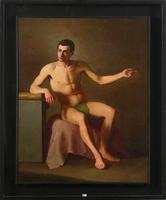
Nu masculin assis
Antonio Maria Esquivel
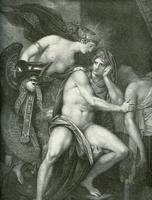
Thetis Bringing the Armor to Achilles
Benjamin West
Nude male
Colleen Barry
The Education of Achilles
James Barry