Analisi esperta di Grape Harvest Celebration di Karl Bryullov
Stile: Romanticism · Genere: genre painting
Expert Analysis: "Grape Harvest Celebration" by Karl Bryullov
Artist: Karl Bryullov (1799–1852)
Style: Romanticism
Genre: Genre painting (everyday life)
Significance Within Romanticism and Bryullov’s Oeuvre
Karl Bryullov, a towering figure of Russian Romanticism, is best known for his monumental history painting The Last Day of Pompeii (1833), a work that epitomized the Romantic fascination with sublime catastrophe, dramatic emotion, and dynamic chiaroscuro. Grape Harvest Celebration, however, reveals a different, equally vital facet of Romanticism: the celebration of local color, folk traditions, and the idyllic harmony between humanity and nature.
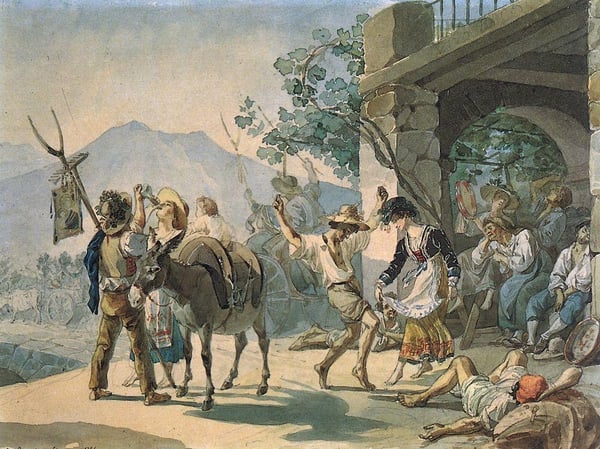
In this genre scene, Bryullov turns from classical or biblical grandeur to a moment of communal joy rooted in the rhythms of rural life. The grape harvest—a timeless symbol of fertility, abundance, and seasonal renewal—becomes a vehicle for Romantic themes of spontaneity, sensory pleasure, and the authentic beauty of the “ordinary” people. The painting likely captures a sun-drenched vineyard, perhaps inspired by Bryullov’s extended stay in Italy (1822–1835), where he absorbed the warmth of the Mediterranean light and the lively character of Italian peasant festivals.
Key stylistic and thematic elements that mark its significance:
-
Dynamic Composition and Emotional Vividness – True to Romanticism, Bryullov eschews static, balanced classicism for a swirling, lively arrangement. Figures are caught mid-motion—reaching for grapes, dancing, laughing—as if the viewer has stumbled upon an unposed moment of euphoria. The grouping is dense yet fluid, leading the eye through a cascade of action and interaction.
-
Vibrant, Atmospheric Color – Bryullov was a master of color, and here he likely employs rich purples, golds, and greens, with dappled sunlight filtering through vine leaves. This palette does more than describe: it evokes the heat of the harvest sun, the sweetness of the fruit, and the intoxicating atmosphere of celebration. The use of warm, saturated hues against cool shadows heightens the sense of immediacy and vitality.
-
Fusion of the Ideal and the Real – While Romantic genre painting often idealized rural life, Bryullov brings a palpable sense of individual character and physical presence. Faces are distinct, and gestures feel unstudied. The viewer senses both the specific joy of this harvest and a universal human connection to the land and its bounty.
-
The Artist’s Italianate Influence – Bryullov’s time in Italy deeply shaped his approach to genre. Grape Harvest Celebration can be seen as a Russian Romantic’s tribute to the Italian festa tradition—a pastoral idyll that also resonated with Russian audiences hungry for images of unaffected peasant vitality (compare to later works by Venetsianov or Repin). This cross-cultural borrowing was typical of Romanticism’s global curiosity.
-
Contrast with Bryullov’s Historical Dramas – The significance of this work also lies in its contrast to Bryullov’s more famous epic. Where The Last Day of Pompeii overwhelms with terror and moral weight, Grape Harvest Celebration charms with intimacy and earthy humor. It shows that Romanticism could be, for Bryullov, not only a grand, theatrical stage but also a simple, festive gathering—equally worthy of artistic attention.
Conclusion
Grape Harvest Celebration is a testament to Karl Bryullov’s range and to Romanticism’s embrace of life’s every-day marvels. Through its rapturous color, kinetic composition, and affectionate portrayal of human fellowship, the painting elevates a humble harvest feast into a celebration of nature’s generosity and the collective spirit. It reminds us that Romanticism’s core—the worship of intense experience, whether sublime or joyful—could be found just as vividly in the sunlit laughter of vineyard workers as in the ruins of Pompeii.
Museum / Gallery
Visivamente simili
20 opere con composizione e palette affini
Abraham's Journey to Canaan
Pieter Lastman
Ave Maria at Tivoli
Bartolomeo Pinelli
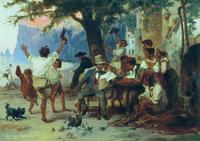
At a roadside tavern
Fyodor Bronnikov
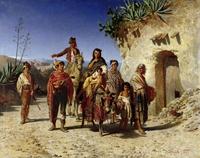
A Gypsy Family on the Road
Achille Zo
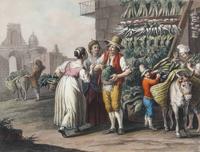
Stall of the Neapolitan greengrocer
Saverio della Gatta
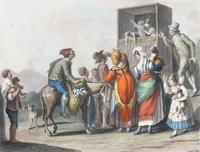
The scene of Pulcinella
Saverio della Gatta
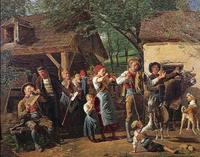
Seizure
Ferdinand Georg Waldmüller
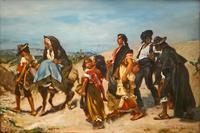
Bohemians on the march
Alfred Dehodencq
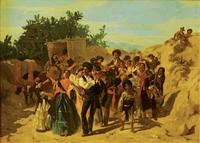
Bohemians returning from a party in Andalusia
Alfred Dehodencq
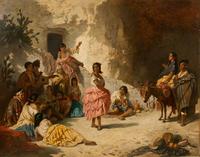
Gypsies in Sacromonte
Achille Zo
Seller of cooked goods and tripe, Seller of raw goods
Saverio della Gatta
Gypsy fortune-telling
Theodor Leopold Weller
Donuts fryer, egg seller and the itinerant water seller
Saverio della Gatta
View from an Italian town with a Corpus Christi procession moving through the streets
Ernst Meyer
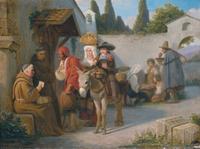
A little boy is taken to the monastery by his parents
Ernst Meyer
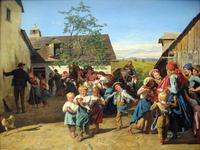
Return from the Church Fair
Ferdinand Georg Waldmüller
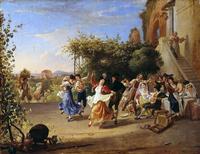
Roman vigna
Franz Ludwig Catel
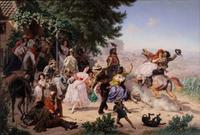
Fandango
Charles Nahl
The stubborn donkey
Anton Romako
Urchins
Filippo Palizzi