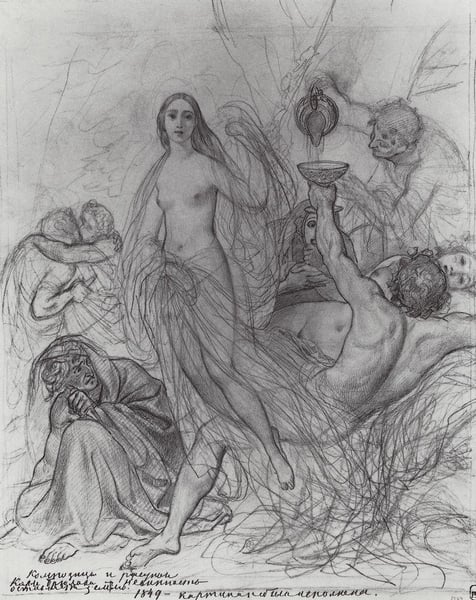
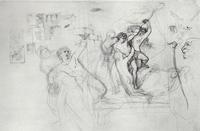
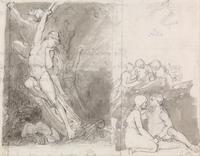
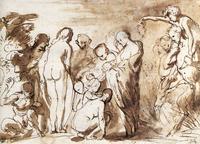
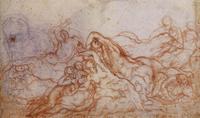
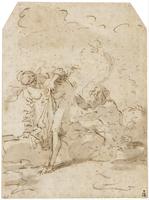
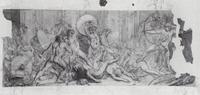
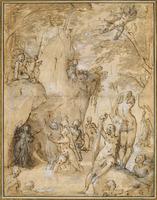
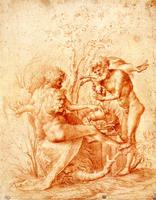
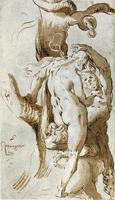
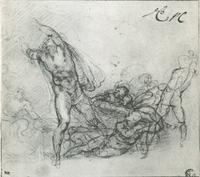
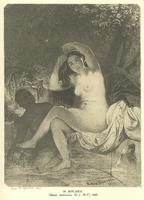
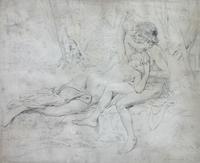
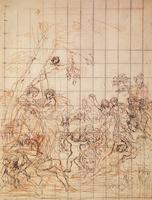
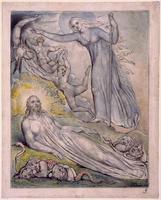
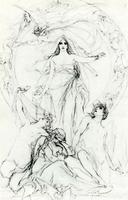
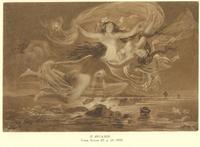
“Innocence, leaving the Earth” by Karl Bryullov is a compelling example of Neoclassicism captured in the intimate, preparatory form of a sketch and study. Its significance lies first in the choice of genre: a sketch reveals the artist’s process, highlighting the disciplined draftsmanship and idealized forms central to Neoclassical aesthetics. Bryullov uses the study to distill a poignant allegory—the departure of innocence from the world—into a balanced, serene composition, even in its early stage. This work underscores the Neoclassical value of clarity and moral narrative, while also offering a rare glimpse into Bryullov’s working method, showing how classical themes were refined before execution. Within the artist’s oeuvre, it bridges the rigidity of academic tradition with the emotional resonance that would later mark his Romantic tendencies, making it a valuable document of stylistic transition.