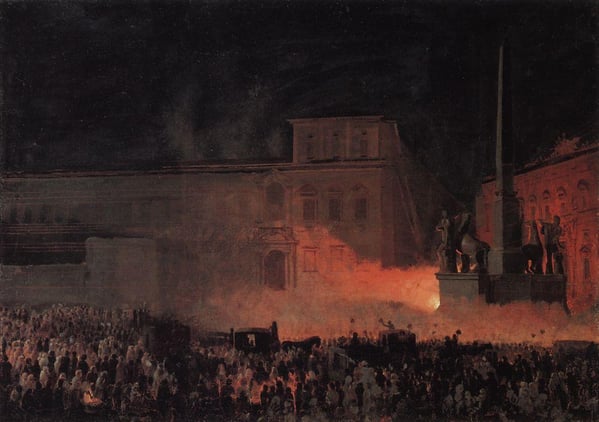
Karl Bryullov の Political Demonstration in Rome in 1846 の専門的な分析
スタイル:Romanticism · ジャンル:history painting
Expert Analysis: Political Demonstration in Rome in 1846 by Karl Bryullov
Karl Bryullov, the preeminent Russian painter of the Romantic era, is best known for his monumental historical canvas The Last Day of Pompeii (1830–1833). Yet Political Demonstration in Rome in 1846 represents a crucial, if less discussed, extension of his Romantic sensibility into the realm of contemporary political struggle. Painted on the cusp of the revolutionary wave that swept Europe in 1848, this work captures a charged moment in Italian history—a popular protest in the Papal States against clerical and aristocratic authority.
Significance within Romanticism
The painting exemplifies Romanticism’s shift from ancient or mythological subjects toward modern, politically charged events. Bryullov treats the demonstration with the same dramatic emotional intensity and dynamic composition he applied to Pompeii’s eruption. The crowd is not a static mass but a surging, expressive force: figures gesture, banners rise, and faces convey anger, hope, and defiance. The use of chiaroscuro—strong contrasts of light and shadow—heightens the tension, casting some faces in stark relief while plunging others into darkness, suggesting both the illumination of revolutionary ideas and the obscurity of political oppression.
Historical Context and Thematic Weight
1846 was a pivotal year in Rome: Pope Pius IX, newly elected, initially enacted liberal reforms, sparking hopes for Italian unification (Risorgimento). Bryullov, who lived in Italy from 1822 to 1835 and returned in the 1840s, witnessed these aspirations firsthand. This painting is therefore not merely a record but a Romantic statement about national awakening and the power of collective action. Unlike his earlier works rooted in antiquity, here Bryullov engages directly with the “spirit of the age”—the Romantic belief that history is made by the passion of ordinary people.
Artistic Legacy
Political Demonstration in Rome in 1846 is significant for bridging Russian and Italian Romantic traditions. Bryullov fused the academic grandeur of history painting with the immediacy of reportage, anticipating the 19th-century trend toward social realism. The work also underscores Romanticism’s core tenet: art as a vehicle for moral and political commentary. By elevating a contemporary protest to the status of historical painting, Bryullov affirmed that the heroic could be found not only in the distant past but in the righteous struggles of his own time.
視覚的に類似
構図やパレットが近い作品 20 件
Blessing of Pius IX from the Quirinale at night
Ippolito Caffi
The square of Monte Cavallo (Now called ''Piazza del Quirinale'')
Ippolito Caffi
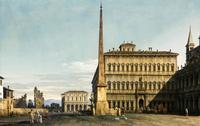
Rome: View of the Piazza di San Giovanni in Laterano
Bernardo Bellotto
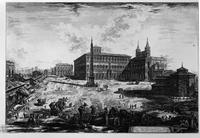
View of the Basilica of St. John Lateran
Giovanni Battista Piranesi
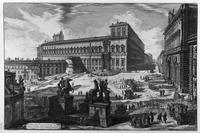
View of the Piazza di Monte Cavallo
Giovanni Battista Piranesi
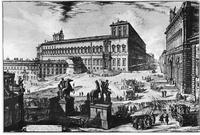
Vedute di Roma
Giovanni Battista Piranesi
Scene in the Piazza del Popolo, Rome
Thomas Jones Barker
Easter Day at Rome
John Frederick Lewis
The destruction of the tree of liberty in Largo di Palazzo
Saverio della Gatta
View of the Spanish Steps
Giovanni Battista Piranesi
The Castle of the Acqua Paola on the Golden Mount
Giovanni Battista Piranesi
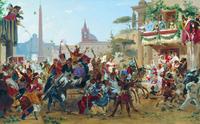
Carnival in Rome
Fyodor Bronnikov
The Lottery at Palazzo Montecitorio
Giovanni Paolo Panini
Vedute di Roma
Giovanni Battista Piranesi
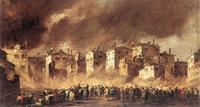
The Fire at San Marcuola
Francesco Guardi
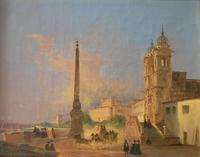
View of Trinità dei Monti
Ippolito Caffi
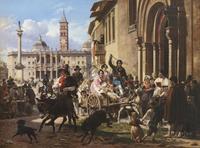
The Feast of St. Anthony in Rome
Wilhelm Marstrand
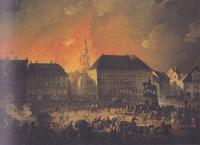
The British Bombardment of Copenhagen, Night Between 4th and 5th of September 1807
Christian August Lorentzen
The Start for the Horse Race, Rome
Elizabeth Thompson
View of Palazzo Montecitorio with the obelisk of Psammetichus II
Enrico Nardi