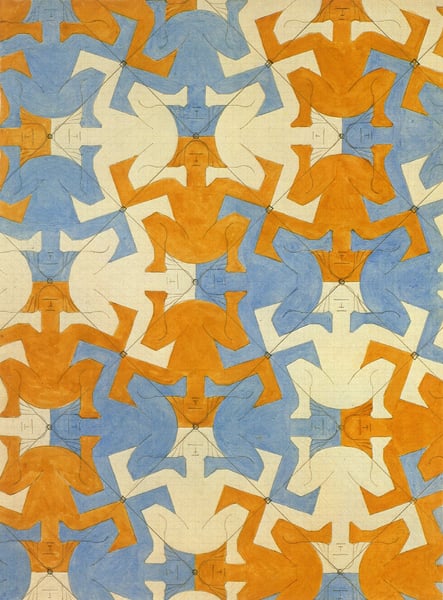
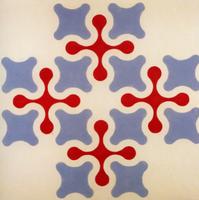
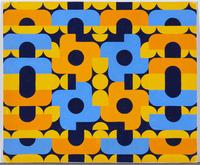
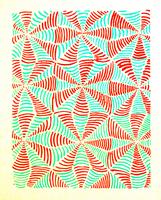
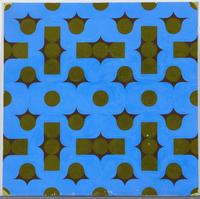
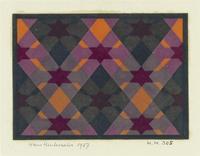
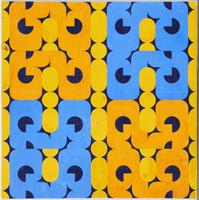
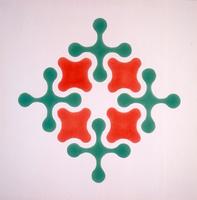
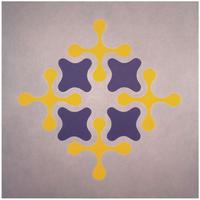
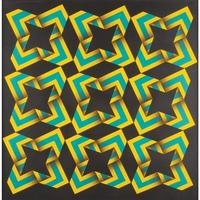
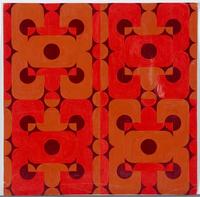
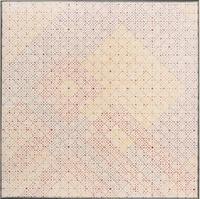
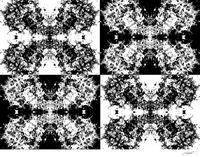
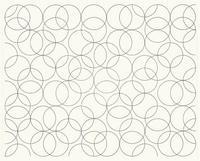
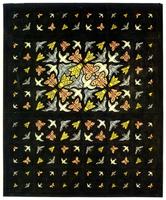
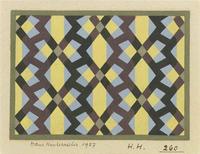
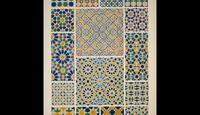
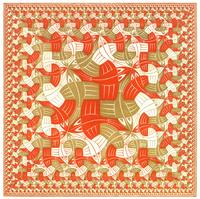
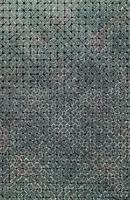
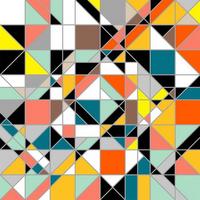
As an Op Art tessellation, "Systematic Study" by M.C. Escher is significant for its rigorous, mathematical approach to visual perception. The work exemplifies how systematic repetition and interlocking shapes—hallmarks of Escher’s tessellation genre—can create powerful optical effects, a core concern of Op Art. By reducing complex imagery to a controlled, logical system, Escher elevates the tessellation from mere pattern-making to a study of how the eye and mind process order, ambiguity, and illusion. This piece underscores the intersection of art and geometry that defines both Escher’s legacy and the broader Op Art movement’s fascination with structured, perceptual puzzles.