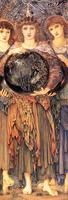
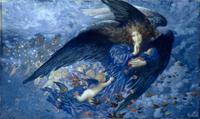
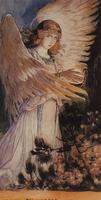
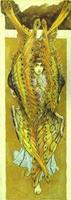
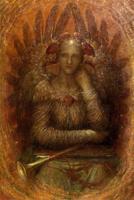
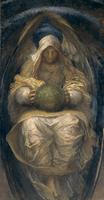
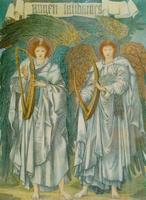
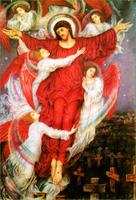
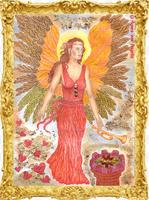
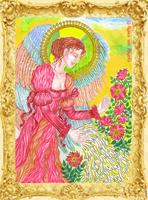
This artwork is significant as a quintessential example of Romanticism applied to religious subject matter. Edward Burne-Jones, a leading figure in the second generation of the Pre-Raphaelite Brotherhood, infuses the biblical "First Day" of Creation with the Romantic ideals of sublime mystery and emotional transcendence. The painting moves away from strict doctrinal illustration, instead presenting a deeply personal, visionary interpretation that emphasizes the cosmic and the ineffable. Its importance lies in how it merges the Romantic fascination with the primordial and the divine, using luminous color and symbolic form to evoke the moment light emerges from chaos—a theme central to Romanticism's celebration of imagination and spiritual awakening. As a religious painting within this style, it marks a shift toward inward, symbolic spirituality rather than narrative clarity, making it a key work in the period's exploration of faith through aesthetic experience.