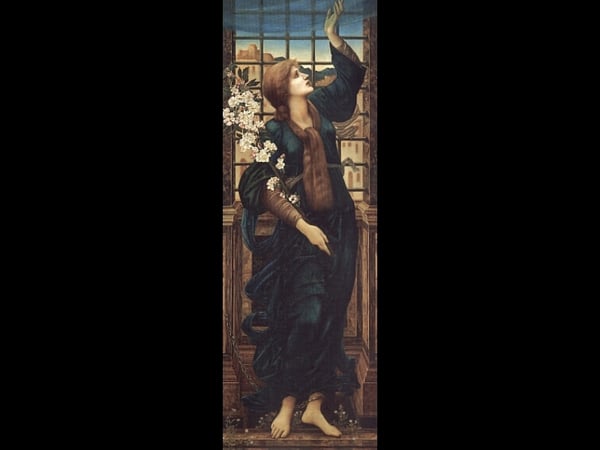
As a Romantic allegorical painting, Edward Burne-Jones's Hope exemplifies the period's emphasis on emotional depth, spiritual aspiration, and the idealized human form. In Romanticism, allegory was used not merely to illustrate a concept but to evoke a profound, often melancholic, emotional response. Hope achieves this by presenting its central figure not as triumphant, but as contemplative and fragile—a reflection of Romanticism's fascination with inner, subjective experience. The painting's significance lies in how it transforms a classical virtue into a deeply personal, almost otherworldly vision, characteristic of Burne-Jones's ability to merge Pre-Raphaelite detail with Romantic longing. Through its serene composition and ethereal treatment of light and color, Hope stands as a key example of how Romantic allegory can transcend mere symbolism to become a meditation on the human condition.