
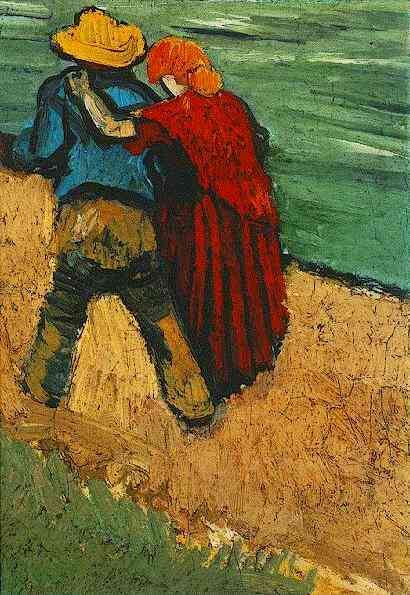
Two Lovers, Arles (Fragment)
Details
Expert analysis of Vincent van Gogh’s Two Lovers, Arles (Fragment)
Style: Post-Impressionism · Genre: genre painting
Expert Analysis: "Two Lovers, Arles (Fragment)" by Vincent van Gogh
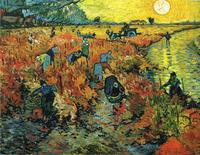
As a Post-Impressionist genre painting, this fragmentary work embodies van Gogh’s radical departure from naturalism, focusing instead on subjective emotion and symbolic color. Painted during his intensely productive Arles period (1888–1889), the piece reflects the artist’s obsession with capturing the raw, emotional undercurrents of everyday life—here distilled into the intimate theme of two lovers.
Significance within Post-Impressionism
Van Gogh’s style in Arles is defined by thick, impasto brushwork and high-key, non-local color. Though only a fragment survives, the composition would have relied on exaggerated hues (e.g., cadmium yellows, cobalt blues, and emerald greens) to convey psychological intensity rather than optical reality. This aligns with Post-Impressionism’s rejection of Impressionist objectivity: van Gogh uses color and distorted form to externalize inner feeling, making the lovers’ bond feel both tender and urgent.
Genre Painting as Emotional Allegory
While genre scenes traditionally depict mundane daily activities, van Gogh elevates the subject to a universal symbol of human connection. The fragmentary nature—perhaps cut from a larger canvas during a period of artistic or personal turmoil—echoes his struggle to contain overwhelming emotion within a single frame. Even in this partial state, the work demonstrates his belief that a loving couple could represent solace against mental anguish, a theme he explored in works like The Bedroom and The Lovers: The Poet’s Garden.
Technical and Contextual Significance
The “fragment” status itself is telling: van Gogh often worked rapidly, layering paint to build tactile surfaces that record his mental state. The surviving portion likely retains the characteristic curving outlines and rhythmic dashes of pigment, creating a sense of vibrating energy. In the context of Arles, where van Gogh sought to establish a “Studio of the South,” this painting contributes to his vision of art as a conduit for shared human experience—fragmented yet fiercely alive.
Museum / Gallery
Visually similar
20 works with related composition and palette
Landscape at Arles
Paul Gauguin
The Sower Outskirts of Arles in the Background
Vincent van Gogh
Road with Cypresses
Vincent van Gogh
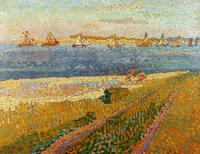
The fishing fleet of Veere
Jan Toorop
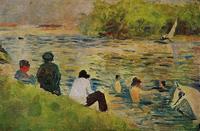
The Bank of the Seine
Georges Seurat
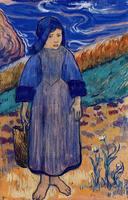
Young breton by the sea
Paul Gauguin
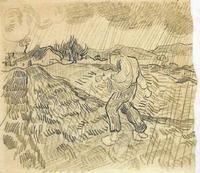
Enclosed Field with a Sower in the Rain
Vincent van Gogh
Wheat Field with the Alpilles Foothills in the Background
Vincent van Gogh
Two Women Crossing the Fields
Vincent van Gogh
Study for "Bathers at Asnieres"
Georges Seurat
Study on the Island
Georges Seurat
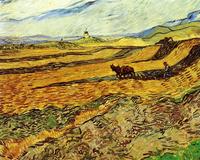
Field and Ploughman and Mill
Vincent van Gogh
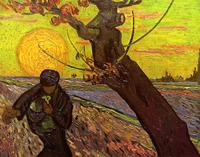
Sower
Vincent van Gogh
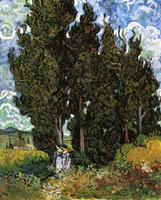
Cypresses with Two Women
Vincent van Gogh
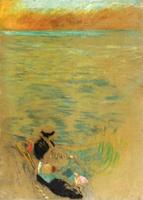
Sea at Sunset, Women on the Shore
Edouard Vuillard
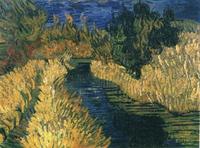
The Little Stream
Vincent van Gogh
Landscape in the Rain
Vincent van Gogh
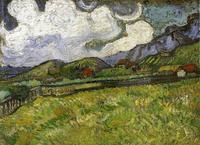
Wheat Field behind Saint-Paul Hospital with a Reaper
Vincent van Gogh
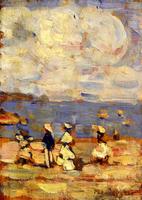
St. Malo
Maurice Prendergast
Red Vineyards at Arles
Vincent van Gogh