
Expert analysis of Vincent van Gogh’s A Sheet with Sketches
Style: Realism · Genre: genre painting
Expert Analysis of "A Sheet with Sketches" by Vincent van Gogh
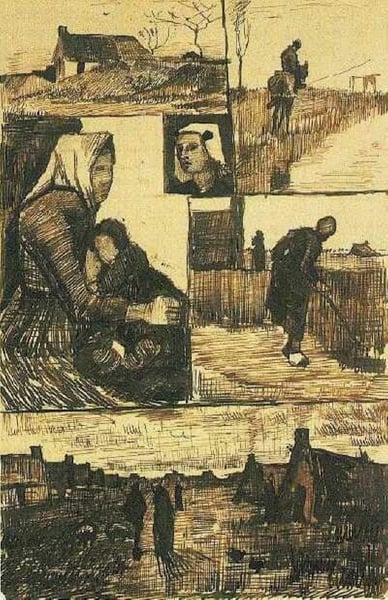
Although Vincent van Gogh is widely celebrated as a Post-Impressionist pioneer, this early work—classified here under Realism and as a genre painting—offers a crucial window into his formative development. The piece is significant for three primary reasons: its demonstration of van Gogh’s rigorous observational training, its candid documentation of ordinary life through multiple vignettes, and its role as a preparatory laboratory for his later, more emotive masterpieces.
1. Realist Foundation in a Post-Impressionist Career
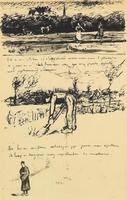
During his early years in the Netherlands (c. 1881–1885), van Gogh deliberately adopted the gritty, unidealized approach of Realists like Jean-François Millet and the Hague School. A Sheet with Sketches exemplifies this: the page is filled with rapid, accurate studies of laborers, tools, and rural interiors. The artist’s focus on texture—the weave of a basket, the bent posture of a peasant—mirrors the Realist commitment to truth over decoration. This sheet proves that van Gogh’s later “emotional color” was built upon a foundation of precise draftsmanship and empirical observation.
2. Genre Painting as Social Documentation
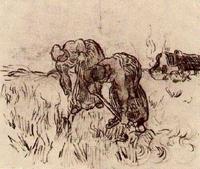
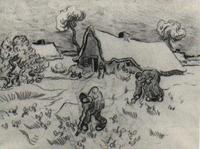
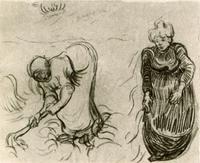
As a genre painting, the work captures ordinary people in unremarkable moments: a woman sewing, a farmer digging, a hand gripping a spade. Such sketches were not mere practice; they formed the backbone of van Gogh’s early narrative works (like The Potato Eaters). By preserving these fleeting gestures on a single sheet, van Gogh treats humble labor as worthy of sustained artistic attention—a core Realist value. The sheet thus functions as a visual diary of peasant life, recording the rhythms of manual work that would become his thematic hallmark.
3. The “Sketches” Format: A Bridge Between Observation and Invention
Unlike a finished painting, this composite sketch reveals van Gogh’s artistic process: he is testing poses, refining anatomy, and studying light effects from life. Each marginal figure is a problem solved—a tilted shoulder, a shadowed hand—before being translated into larger compositions. In the context of Realism, this transparency is itself significant. It shows an artist who believed that art should be built from direct, unglamorous scrutiny, not studio idealization. The sheet’s survival offers rare insight into how van Gogh moved from seeing to making, grounding his later Expressionist energy in steadfast Realist discipline.
Conclusion
Though van Gogh is famed for turbulent brushwork and bold color, A Sheet with Sketches establishes the indispensable Realist bedrock from which those innovations arose. It captures his empathy for common subjects, his commitment to truthfully rendering their world, and his relentless technical practice. In this single page, we see the nascent discipline that would later explode into Starry Night—a reminder that even the most radical vision begins with careful sketches of the everyday.
Museum / Gallery
Visually similar
20 works with related composition and palette
Cottages with a Woman Working in the Foreground
Vincent van Gogh
Snow-Covered Cottages, a Couple with a Child, and Other Walkers
Vincent van Gogh
Woman with a Fork in a Winter Landscape
Vincent van Gogh
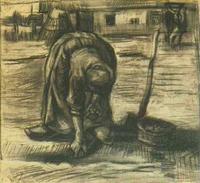
Peasant Woman, Planting Potatoes
Vincent van Gogh
Smoerbukk
Theodor Severin Kittelsen
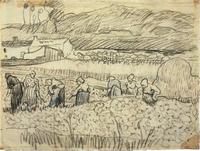
Women Working in Wheat Field
Vincent van Gogh
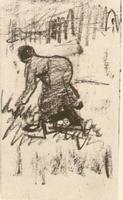
Peasant Woman, Stooping to the Left
Vincent van Gogh
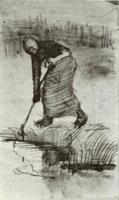
Peasant Woman, Standing near a Ditch or Pool
Vincent van Gogh
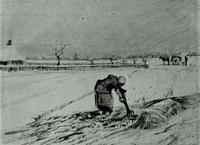
Snowy Landscape with Stooping Woman
Vincent van Gogh
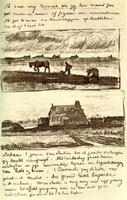
Plowman with Stooping Woman, and a Little Farmhouse with Piles of Peat
Vincent van Gogh
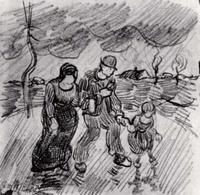
Couple Walking Arm in Arm with a Child in the Rain
Vincent van Gogh
Field in a Thunderstorm
Vincent van Gogh
Peasant Woman Digging
Vincent van Gogh
Sketch of Diggers and Other Figures
Vincent van Gogh
Sketch of Two Women
Vincent van Gogh
Le Retour - C'est Ici Chez Nous
Theophile Steinlen
Potato Harvest with Two Figures
Vincent van Gogh
Washerwomen at the Laita River, near Pouldu
Paul Serusier
Winter Landscape with Skaters
Hendrick Avercamp
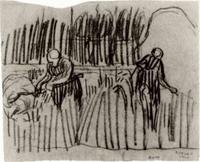
Two Women Working in Wheat Field
Vincent van Gogh