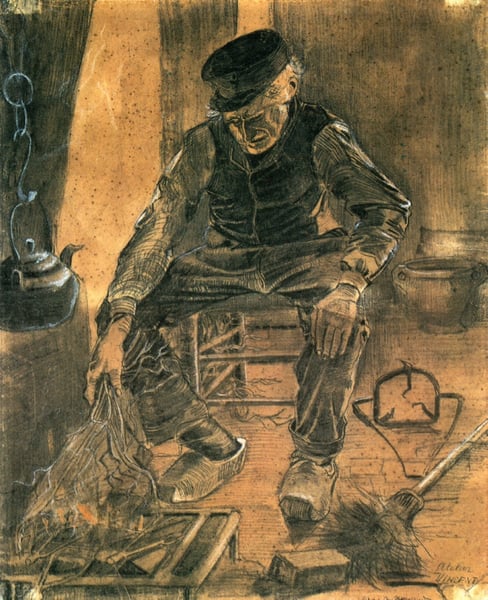
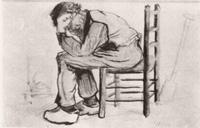
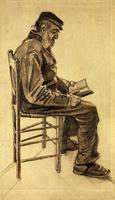
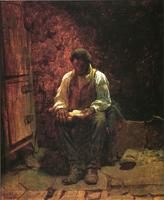
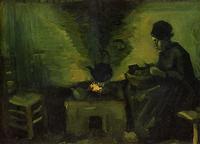
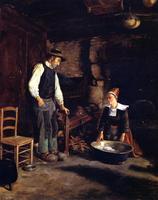
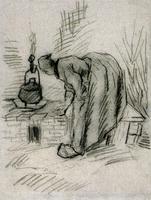
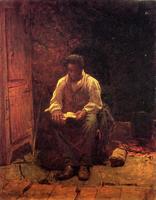
This analysis focuses solely on the supplied information about Vincent van Gogh’s An Old Man Putting Dry Rice on the Hearth, which is classified as a Realist genre painting. The work is significant within the Realist period because it aligns with the movement’s core mission: depicting ordinary, unglamorous moments of daily life with unvarnished truth. Rather than romanticizing or idealizing the scene, the artist presents a humble domestic ritual—an old man tending to dry rice by a hearth—emphasizing the dignity of simple labor and the quiet authenticity of peasant existence. This subject matter, typical of genre painting, elevates a fleeting, unremarkable action into a focal point for emotional and social observation. For van Gogh, working here within a strict Realist framework, the piece demonstrates his early commitment to capturing the real, unembellished human experience, a foundation that later resurfaced in his more expressive works. The significance lies in how the painting embodies Realism’s refusal to aestheticize poverty or rural life, instead offering a straightforward, respectful window into a private, ordinary moment.