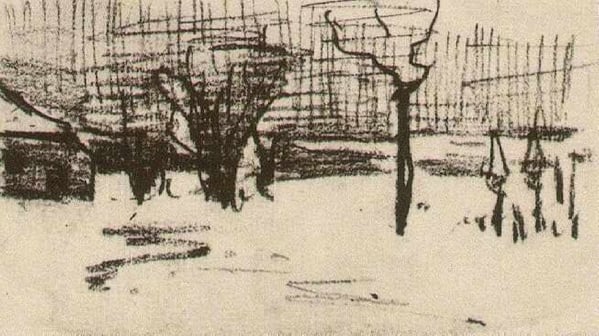
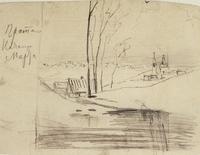
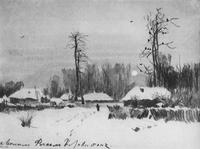
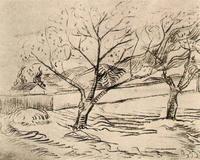
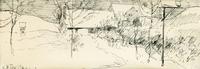
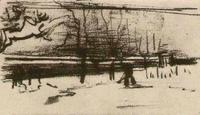
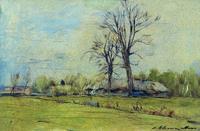
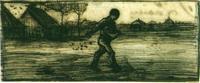
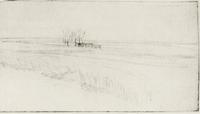
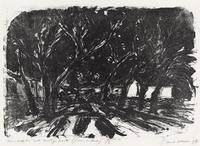
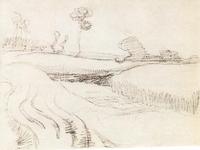
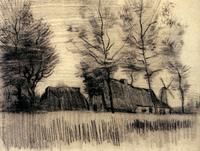
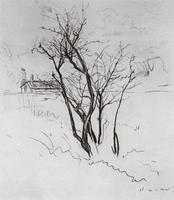
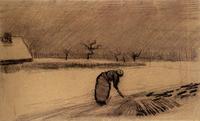
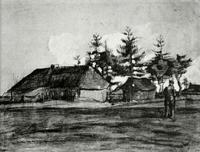
“Garden in the Snow” by Vincent van Gogh is a notable example of the artist working within a Realist framework, here executed as a sketch and study. The work’s significance lies in its demonstration of van Gogh’s disciplined observation of nature—a hallmark of Realism—while retaining the immediacy and spontaneity typical of a study. By focusing on a winter garden, the artist captures the subtle tonal variations and textural qualities of snow-covered landscape, emphasizing light and atmosphere rather than expressive color. As a sketch, it offers insight into van Gogh’s preparatory process, revealing his careful attention to line and composition before the more vibrant, Post-Impressionist phase for which he is best known. This piece thus stands as a document of the artist’s technical grounding in Realist practice, marking a moment of quiet, direct engagement with the natural world that contrasts with his later, more dramatic works.