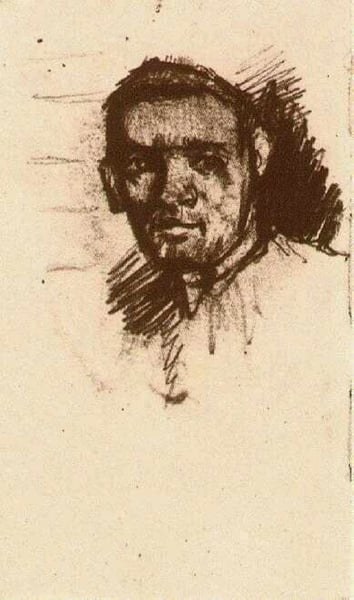
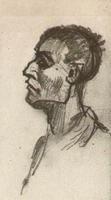
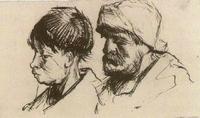
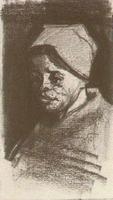
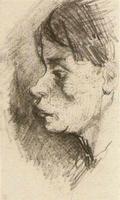
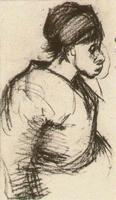
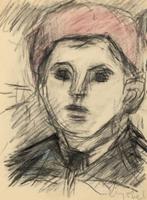
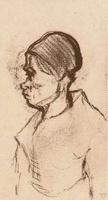
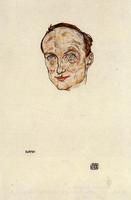
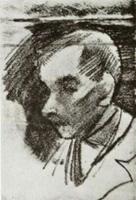
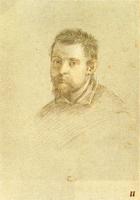
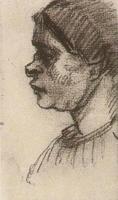
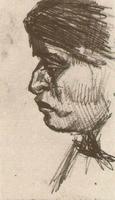
“Head of a Young Man, Bareheaded” by Vincent van Gogh is a revealing work within the Post-Impressionist movement, significant primarily for its genre as a sketch and study. In this piece, van Gogh strips away the elaborate color and texture of his more finished canvases to focus on direct, expressive draftsmanship. As a study, it offers a window into his artistic process—capturing the psychological presence and structural essence of the sitter through bold, rapid lines rather than polished detail. The bareheaded pose emphasizes the face as the central subject, allowing van Gogh to explore character and emotion with an economy of means that anticipates his later, more intensely expressive portraits. Within Post-Impressionism, such studies underscore the shift from mere visual accuracy toward subjective interpretation and emotional immediacy, positioning this work as a concise but potent example of van Gogh’s commitment to capturing inner life over outward perfection.