
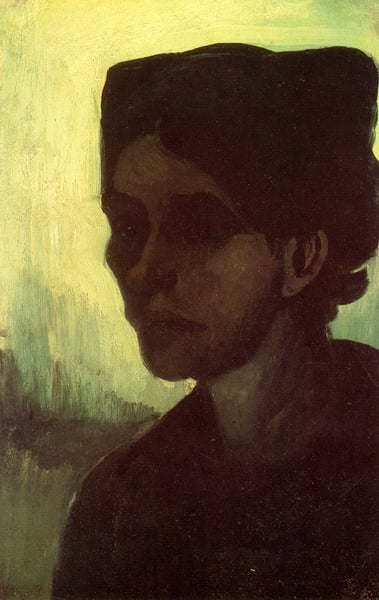
Head of a Young Peasant Woman with Dark Cap
Details
Expert analysis of Vincent van Gogh’s Head of a Young Peasant Woman with Dark Cap
Style: Realism · Genre: portrait
This early work by Vincent van Gogh, executed during his Nuenen period (circa 1885), stands as a significant example of his commitment to Realism before his later shift toward Post-Impressionism. While van Gogh is celebrated for his vibrant, expressive palette, this portrait reveals the foundational discipline he absorbed from Dutch Golden Age masters—particularly the somber tonalities and psychological depth of Rembrandt and the earthy directness of Jean-François Millet.
Analysis of Significance:
-
Context within van Gogh’s Oeuvre:
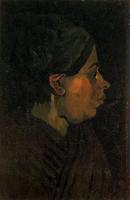
The painting belongs to a series of peasant studies that culminated in his first major masterpiece, The Potato Eaters (1885). Here, van Gogh deliberately rejects idealization, instead capturing the weathered face, lowered gaze, and simple dark cap of a working-class woman. This unflinching realism aligns with his stated goal to depict "the real peasant life"—not as picturesque, but as honest labor. -
Technical Execution and Stylistic Realism:
Van Gogh employs a restrained palette of browns, deep greens, and muted ochres, relying on thick, directional brushwork to model the face’s structure and the rough texture of the cap. The dark background isolates the sitter, focusing attention on the nuanced rendering of her features—the slight downturn of her mouth, the shadows under her brow. This exemplifies the Realist principle of truth to nature over decorative beauty. -
Social and Artistic Significance:
The portrait embodies the Realist movement’s concern with the dignity of common people. Unlike the polished portraits of the bourgeoisie, van Gogh’s peasant woman is shown with unvarnished authenticity. Her strong bone structure and weary expression convey a life of physical hardship, yet the careful deliberation of the painting—the subtle highlights on her cheekbone, the precise edge of the cap—elevates her to a subject of serious artistic study. -
Bridge to Later Innovation:
While this work is firmly within Realism, the viewer can discern early traces of van Gogh’s signature energy. The brushstrokes are already more visible and deliberate than in academic Realism, hinting at the expressive force that would later define his Arles period. This painting thus provides crucial insight into van Gogh’s evolution: it demonstrates that his later emotional intensity was built upon a rigorous grounding in faithful observation.
In summary, Head of a Young Peasant Woman with Dark Cap is significant not only as a technical tour de force within the Realist tradition but also as a key document of van Gogh’s artistic development, showcasing his deep empathy for his subjects and his unwavering commitment to the truth of lived experience.
Museum / Gallery
Visually similar
20 works with related composition and palette

Head of a Peasant Woman with Dark Cap
Vincent van Gogh
Head of a Brabant Peasant Woman with Dark Cap
Vincent van Gogh
Head of a Peasant Woman with Dark Cap
Vincent van Gogh
Woman's Head in Profile
Amedeo Modigliani
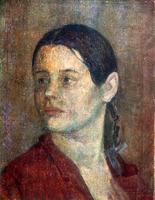
Portrait of a Young Woman
Volodymyr Bondarenko
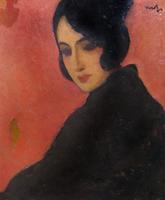
Spanish Woman
Nicolae Tonitza
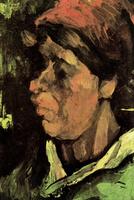
Head of a Peasant Woman with Dark Cap
Vincent van Gogh
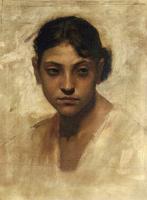
Head of Capri Girl
John Singer Sargent
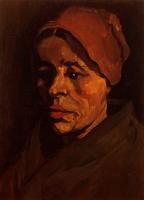
Head of a Peasant Woman with Brownish Cap
Vincent van Gogh
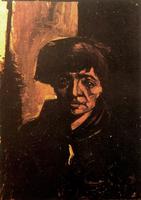
Head of a Peasant Woman
Vincent van Gogh
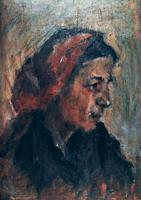
Old woman with red scarf
George Bouzianis
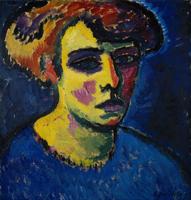
Head of a Woman
Alexej von Jawlensky

Dreaming
Nicolae Vermont
Forty Year Old
Helene Schjerfbeck
Girl
Joan Brull
Rochelle
Robert Brackman
Head of a Peasant Woman with Dark Cap
Vincent van Gogh

Male Portrait
Oleg Holosiy
The head of John the Apostle
Nikolai Ge
Zamorka (Black Girl)
Anton Azbe