
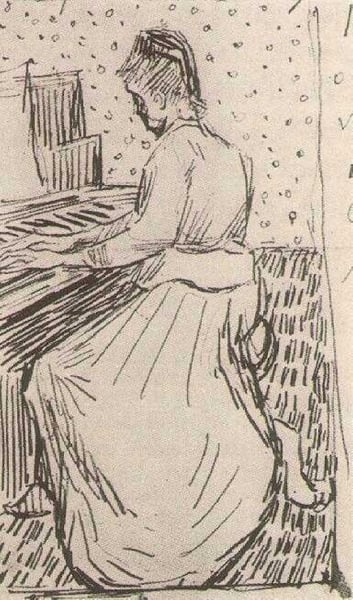
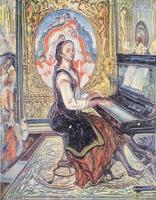
Marguerite Gachet at the Piano
Dettagli
Analisi esperta di Marguerite Gachet at the Piano di Vincent van Gogh
Stile: Post-Impressionism · Genere: sketch and study
Expert Analysis of "Marguerite Gachet at the Piano" by Vincent van Gogh
Style: Post-Impressionism
Genre: Sketch and Study
Vincent van Gogh’s Marguerite Gachet at the Piano (1890) holds a distinctive place within his late oeuvre and the broader Post-Impressionist movement precisely because of its status as a sketch and study rather than a finished canvas. This classification is key to understanding its significance.
Within the context of Post-Impressionism, sketches and studies were often the crucible for the movement’s radical innovations. Van Gogh used such works to rapidly capture fleeting emotional states and to test his expressive color harmonies and agitated brushwork before committing them to larger, more deliberate compositions. In this piece, the sketch-like handling—visible, energetic strokes and a seemingly unpolished surface—reveals the artist’s direct, improvisational process. It is not a mere preliminary drawing but a finished statement in its own right, embodying the Post-Impressionist emphasis on subjective vision over objective representation.
The artwork’s significance is further heightened by its biographical and historical context. Painted during van Gogh’s final months in Auvers-sur-Oise, under the care of Dr. Paul Gachet, the study captures Marguerite, the doctor’s daughter, absorbed in playing the piano. The intimate, domestic subject matter—a private moment in a country home—reflects van Gogh’s turn toward portraying the quiet dignity of everyday life. Yet the sketch’s spontaneous mark-making and the strained, almost vibrating lines around the figure and instrument convey a psychological tension that transcends the genre. This tension is a hallmark of van Gogh’s late work, where the boundary between serene study and emotional intensity blurs.
As a study, the work also offers invaluable insight into van Gogh’s working method. It demonstrates how he could distill a scene to its essential expressive components—the curve of the piano, the tilt of Marguerite’s head, the rhythmic repetition of vertical chair posts—without sacrificing emotional impact. In Post-Impressionism, such sketches were not inferior to finished paintings; they were prized for their authenticity and immediacy. Marguerite Gachet at the Piano exemplifies this, showing how van Gogh used the sketch format to push beyond naturalism and toward a more personal, symbolic language of form and color. Its significance lies in its raw, unfiltered glimpse into the mind of an artist at the peak of his expressive powers, creating a work that is both a document of a moment and a monument to the creative process itself.
Visivamente simili
20 opere con composizione e palette affini
Cecilia De Madrazo playing the piano
Marià Fortuny
Playing Mozart
Charles Blackman
The piano (Velazquez)
Pablo Picasso
Juke Joint
Benny Andrews
The Duet
Georges Braque
Countess Potocka Playing Piano
Paul Delaroche
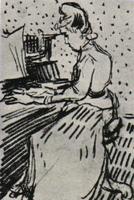
Mademoiselle Gachet at the Piano
Vincent van Gogh
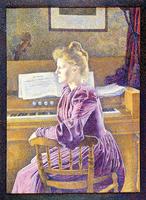
Maria Sethe at the Harmonium
Theo van Rysselberghe
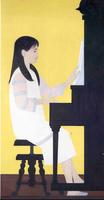
Girl at Piano
Will Barnet
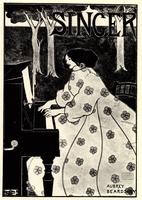
Singer
Aubrey Beardsley
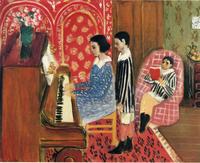
The Piano Lesson
Henri Matisse
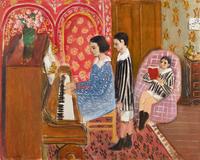
The piano
Henri Matisse
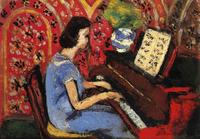
Woman at the Piano
Henri Matisse
The Pianist
Irfan Ajvazi
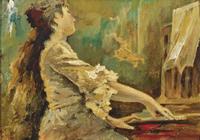
Young Woman at the Piano
Tranquillo Cremona
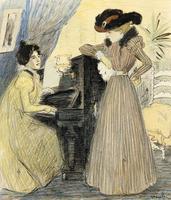
Les Grands Douleurs
Theophile Steinlen
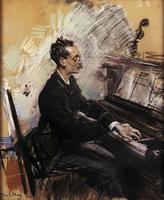
The pianist Alexandre Rey Colaço
Giovanni Boldini
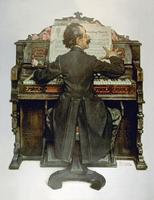
Piano
Norman Rockwell
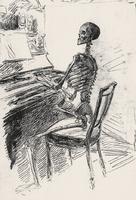
Death at the Piano
Maria Yakunchikova
Music. Wife at the Piano
Oleksa Novakivskyi