
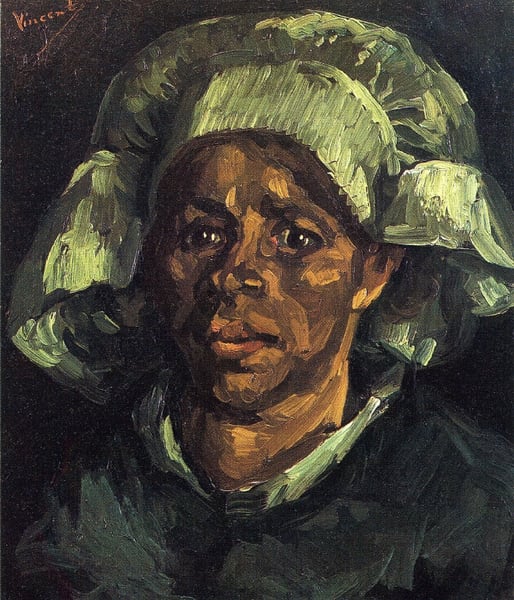
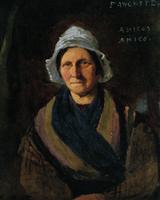
Peasant Woman, Portrait of Gordina de Groot
Dettagli
Analisi esperta di Peasant Woman, Portrait of Gordina de Groot di Vincent van Gogh
Stile: Realism · Genere: portrait
Expert Analysis: "Peasant Woman, Portrait of Gordina de Groot" by Vincent van Gogh
This portrait occupies a crucial position in van Gogh’s early development, preceding his later vibrant, expressive style. Painted during his Nuenen period (1883–1885), when he committed himself to Realism, the work demonstrates his deep engagement with the Dutch realist tradition of the 17th century—particularly the somber, earthy palettes and unsentimental depictions of peasant life championed by artists like Jozef Israëls and Jean-François Millet.
Significance within Realism:
Van Gogh’s portrait of Gordina de Groot is not merely a likeness; it is a deliberate study of character and social condition. The model—a local peasant woman who also appears in his landmark work The Potato Eaters—is rendered with stark honesty. The dark, limited color range (muted browns, grays, ochres) and rough, almost chalky brushwork emphasize the physical labor and humble existence of the sitter. There is no idealization: her weathered face, simple clothing, and direct, weary gaze confront the viewer with the dignity and hardship of rural life. This aligns with Realism’s core mission to depict everyday reality without romanticism.
Art-Historical Importance:
This portrait is significant because it marks van Gogh’s disciplined attempt to master the realist idiom before his transformative move to Paris. The controlled modeling and subdued palette show his technical grounding in tonal painting, yet subtle hints of his future intensity appear—in the focused gaze and the slight angularity of the features. It stands as a testament to his belief that the artist’s role was to speak for the voiceless, a conviction that would later fuel his more expressionistic works. Within the context of 19th-century portraiture, it challenges the bourgeois conventions of the time by elevating a peasant subject to monumental dignity, echoing the social conscience that made Millet’s The Gleaners so revolutionary.
Conclusion:
This work is essential for understanding van Gogh’s artistic roots. It shows him not as the brilliant colorist of Starry Night, but as a dedicated realist committed to truth in representation. Its significance lies in its raw, unflinching portrayal of a working-class woman—a quiet but powerful statement that humanity, in all its forms, deserves to be immortalized in art.
Museum / Gallery
Visivamente simili
20 opere con composizione e palette affini
Head of a Peasant Woman with White Cap
Vincent van Gogh
Head of a Peasant Woman with White Cap
Vincent van Gogh
Head of a Peasant Woman with White Cap
Vincent van Gogh
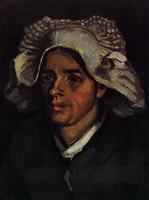
Head of a Peasant Woman with White Cap
Vincent van Gogh
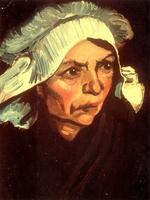
Head of a Peasant Woman with White Cap
Vincent van Gogh
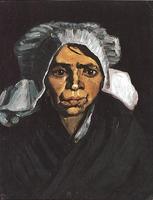
Head of a Peasant Woman with White Cap
Vincent van Gogh
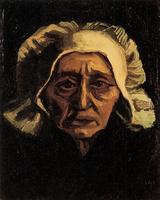
Head of an Old Peasant Woman with White Cap
Vincent van Gogh
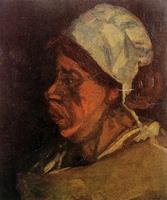
Head of a Peasant Woman with White Cap
Vincent van Gogh
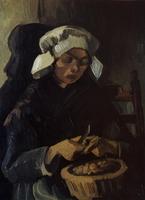
Peasant Woman Peeling Potatoes
Vincent van Gogh
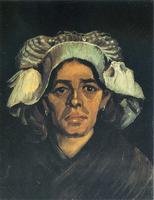
Peasant Woman, Portrait of Gordina de Groot
Vincent van Gogh
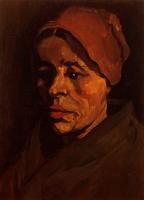
Head of a Peasant Woman with Brownish Cap
Vincent van Gogh
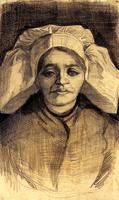
Head of a Woman
Vincent van Gogh
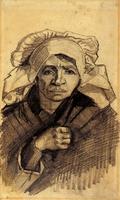
Head of a Woman
Vincent van Gogh
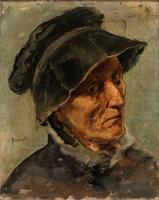
Head of an old woman
Salvador Sánchez Barbudo
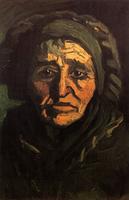
Head of a Peasant Woman with Greenish Lace Cap
Vincent van Gogh
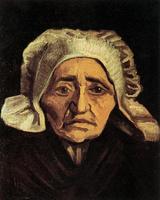
Head of an Old Peasant Woman with White Cap
Vincent van Gogh
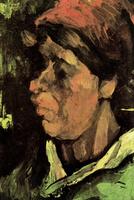
Head of a Peasant Woman with Dark Cap
Vincent van Gogh
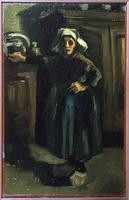
peasant woman
Vincent van Gogh
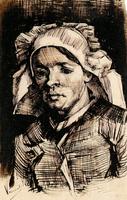
Head of a Woman
Vincent van Gogh
Housekeeper
Camille Corot