
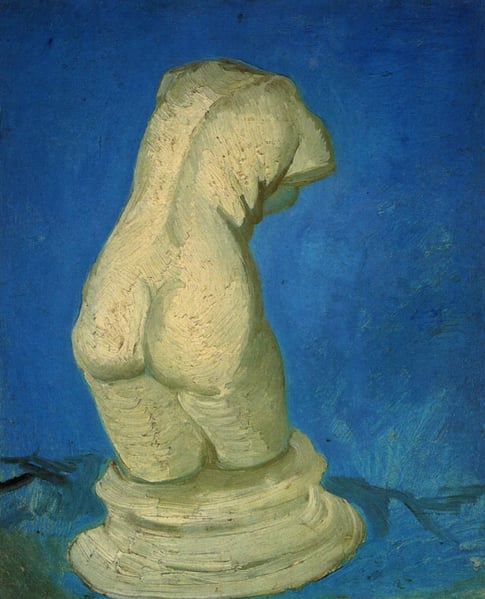
Vincent van Gogh sanatçısının Plaster Statuette of a Female Torso eseri hakkında uzman analizi
Tarz: Post-Impressionism · Tür: still life
Expert Art Historical Analysis: Plaster Statuette of a Female Torso by Vincent van Gogh
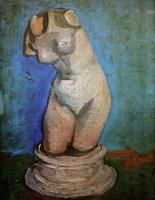
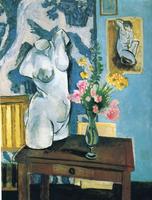
Vincent van Gogh’s Plaster Statuette of a Female Torso is a compelling still life that bridges his intense personal vision with the broader concerns of Post-Impressionism. While van Gogh is best known for his vibrant landscapes and portraits, this work demonstrates his deep engagement with classical sculptural forms—a subject he revisited during his time in Antwerp (1885–1886) and later in Paris. The painting’s significance lies in how van Gogh transforms a conventional studio prop into a vehicle for his characteristic expressive brushwork and psychological tension.
Significance within Post-Impressionism:
Post-Impressionism emerged as a reaction against the naturalism of Impressionism, emphasizing subjective emotion, symbolic content, and formal structure. Van Gogh’s treatment of the statuette exemplifies this shift. Rather than depicting the plaster torso with cool, academic precision, he applies thick, directional strokes of paint—often described as impasto—that animate the surface. The interplay of warm ochres, creamy whites, and subtle blue-greys creates a sense of volume, but also a restless energy that suggests the figure is caught in a moment of silent drama.
Formal Innovation:
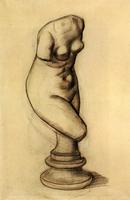
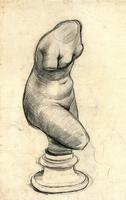
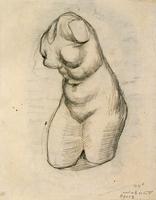
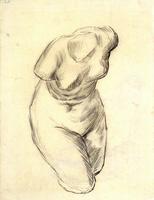
Van Gogh’s still life is notable for its unconventional cropping and close-up viewpoint. By isolating the torso and focusing on its curved contours, he transforms a copy of a classical fragment into a modern, almost abstract study of form and light. The background is typically left ambiguous or rendered in broad, unmodulated tones, forcing the viewer to concentrate on the interplay of highlight and shadow across the plaster surface. This approach prefigures the later emphasis on two-dimensional design in Post-Impressionist painting.
Symbolic and Biographical Context:
The plaster statuette—likely a study from an academic drawing exercise—carries personal meaning for van Gogh. During his time in Antwerp, he struggled with traditional art training, finding it rigid and uninspiring. By painting the statuette in his own expressive style, he asserts his independence from academic norms. The work also reveals his fascination with the human form, even when mediated through a cast. The torso, severed and impersonal, becomes a vessel for van Gogh’s emotional intensity—a recurring theme in his art where objects are imbued with inner life.
Legacy:
While not as famous as Sunflowers or Starry Night, Plaster Statuette of a Female Torso is a vital example of van Gogh’s ability to infuse a mundane still-life subject with profound vitality. It demonstrates how Post-Impressionist artists redefined traditional genres, using brushwork and color to express subjective experience. This work stands as a testament to van Gogh’s belief that even the humblest object could be a source of artistic revelation.
Museum / Gallery
Görsel olarak benzer
İlişkili kompozisyon ve renk paletine sahip 20 eser
Plaster Statuette of a Female Torso
Vincent van Gogh
Plaster Statuette of a Female Torso
Vincent van Gogh
Plaster Statuette of a Female Torso
Vincent van Gogh
Plaster Statuette of a Female Torso
Vincent van Gogh
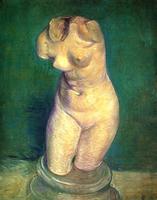
Plaster Statuette of a Female Torso
Vincent van Gogh
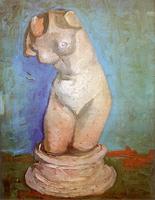
Gypsum Torso
Vincent van Gogh
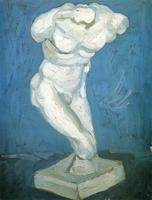
Plaster Statuette of a Male Torso
Vincent van Gogh
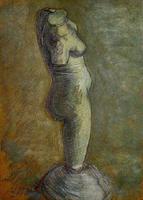
Plaster Statuette of a Female Torso
Vincent van Gogh
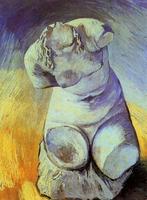
Plaster Statuette of a Female Torso
Vincent van Gogh
Torso of Venus
Vincent van Gogh
Torso of Venus
Vincent van Gogh
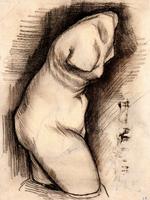
Torso of Venus
Vincent van Gogh
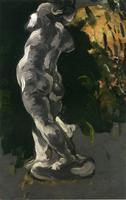
Amour in Plaster
Paul Cezanne
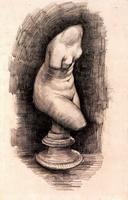
Torso of Venus
Vincent van Gogh
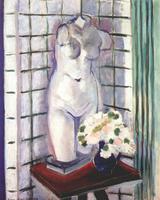
Still Life with Plaster Torso
Henri Matisse
Torso of Venus
Vincent van Gogh
Torso of Venus
Vincent van Gogh
Torso of Venus
Vincent van Gogh
Torso of Venus
Vincent van Gogh
The Plaster Torso
Henri Matisse