
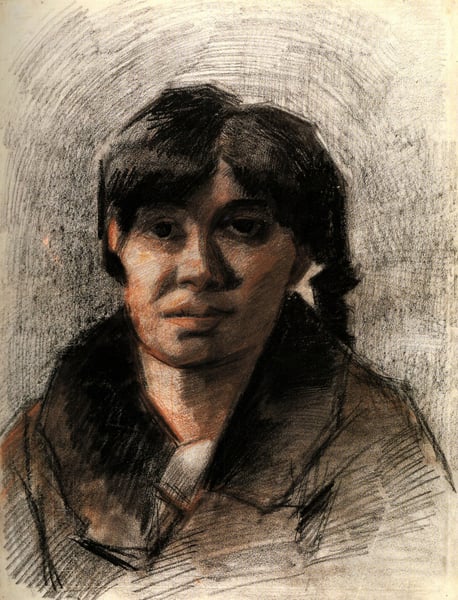
Vincent van Gogh の Portrait of a Woman の専門的な分析
スタイル:Realism · ジャンル:portrait
Expert Analysis of "Portrait of a Woman" by Vincent van Gogh (Realism, Portrait)
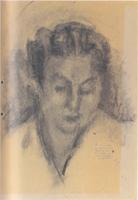
While Vincent van Gogh is most celebrated for his Post-Impressionist works, his early paintings, including Portrait of a Woman, belong firmly to the Realist tradition. This portrait is significant as a testament to van Gogh’s formative artistic discipline and his deep empathy for ordinary people—a hallmark of Realism. Executed before his bold color experiments, the work embodies the movement’s commitment to truthful, unidealized representation.
Key Significance within Realism:
- Social Documentary: Van Gogh’s Realist portraits often depict peasants and working-class women, echoing the social consciousness of earlier Realists like Gustave Courbet. This painting likely captures a specific sitter’s dignity through modest dress, weathered features, and direct gaze, avoiding romanticization.
- Technical Restraint: Unlike his later impasto and vibrant hues, van Gogh here uses a muted, earthy palette (browns, grays, deep ochres) and careful chiaroscuro. The subdued tonality and firm modeling of the face and hands align with Realism’s preference for “truth over beauty.”
- Psychological Depth: The woman’s expression—reserved yet introspective—reflects van Gogh’s interest in inner life. Realist portraiture sought to reveal character through observation, and van Gogh achieves this through precise rendering of texture (rough skin, worn clothing) rather than symbolic props.
Contrast with Van Gogh’s Later Work:
This portrait provides crucial context for his evolution. The structural composition and attention to light and shadow here are a foundation for the distorted, emotionally charged portraits of his Arles period. The Realist phase taught him how to build a face from volume and tone—a skill he later transcended with line and color. Without these early Realist studies, his iconic portraits (e.g., L’Arlésienne) would lack their underlying solidity.
Conclusion:
Portrait of a Woman is significant not as a masterpiece of innovation, but as a pure example of van Gogh absorbing the Realist ethos. It stands as a bridge between 19th-century social realism and the artist’s own eventual, revolutionary style, demonstrating his commitment to capturing human truth before he learned to express it in flame-like brushstrokes.
Museum / Gallery
視覚的に類似
構図やパレットが近い作品 20 件
Portrait of Colette, the daughter of the artist
Theophile Steinlen
Self Portrait
Zoe Lerman
Head of a Peasant Woman
Vincent van Gogh
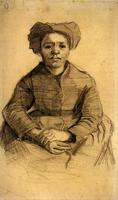
Seated Woman
Vincent van Gogh
Head study (Lilian)
Alfred Freddy Krupa
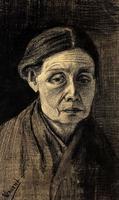
Head of a Woman
Vincent van Gogh
Portrait of a Girl
Victor Zaretsky
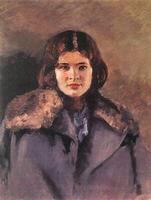
Svetlana
Igor Grabar
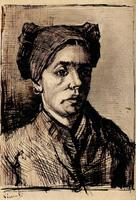
Head of a Woman
Vincent van Gogh
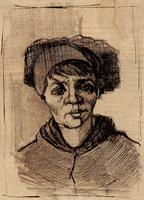
Head of a Woman
Vincent van Gogh
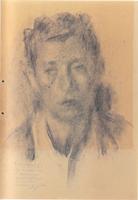
Portrait
George Bouzianis
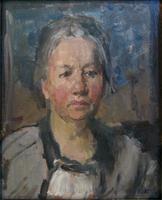
Portret Van Johanna Van Gogh-Bonger
Isaac Israels
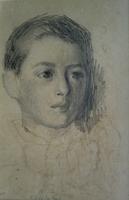
The artist's son Edoardo
Noè Bordignon
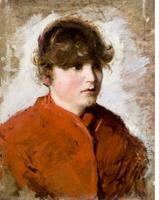
The red corset
Silvestro Lega
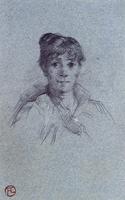
Portrait of a Woman
Henri de Toulouse-Lautrec
Peppina
Paul-Albert Besnard
Head of a Woman
Vincent van Gogh
Portrait of Sofia Petrovna Kuvshinnikov
Isaac Levitan
Spanish Girl
William Merritt Chase
Portrait
George Bouzianis