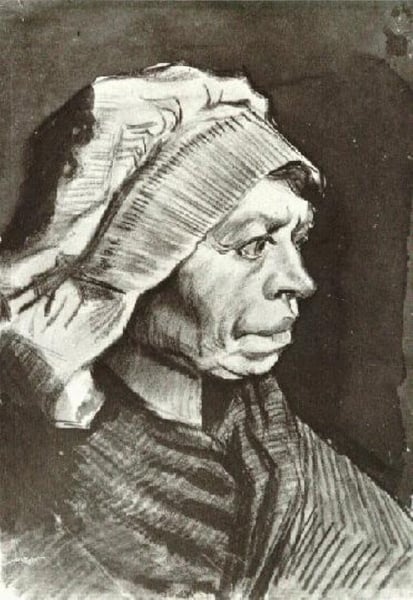
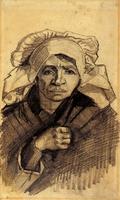
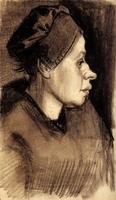
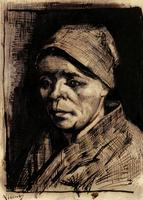
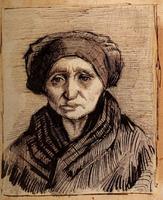
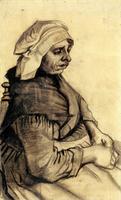
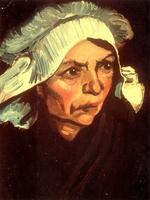
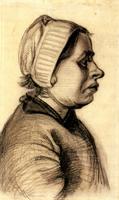
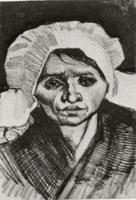
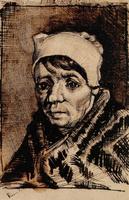
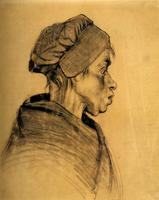
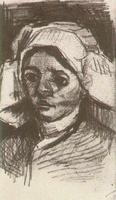
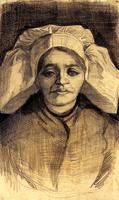
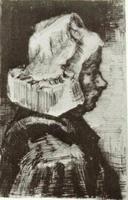
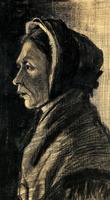
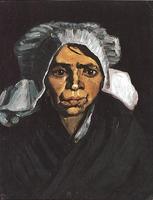
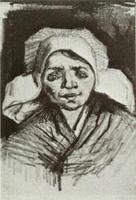
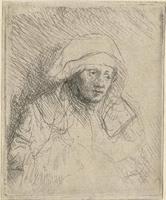
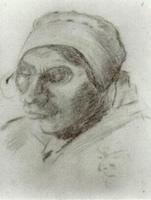
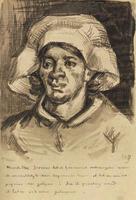
This portrait by Vincent van Gogh, executed in a Realist style, represents a significant early phase in the artist’s development. Working within the tradition of Realism—which prioritized unidealized depictions of everyday life—van Gogh chose as his subject a peasant woman, a figure often overlooked by more academic portraiture. The work’s significance lies in how it embodies the Realist commitment to truth and human dignity: rather than flattering the sitter, the artist focuses on the weathered features, the simple bonnet, and the honest, unpretentious expression. This approach connects van Gogh to the broader Realist movement’s interest in depicting the working class with empathy and directness, foreshadowing the social consciousness and raw emotional power that would define his later, more famous Post-Impressionist works.