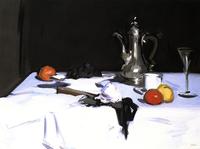
Expert Analysis: "Still Life with Blue Enamel Coffeepot, Earthenware and Fruit" by Vincent van Gogh
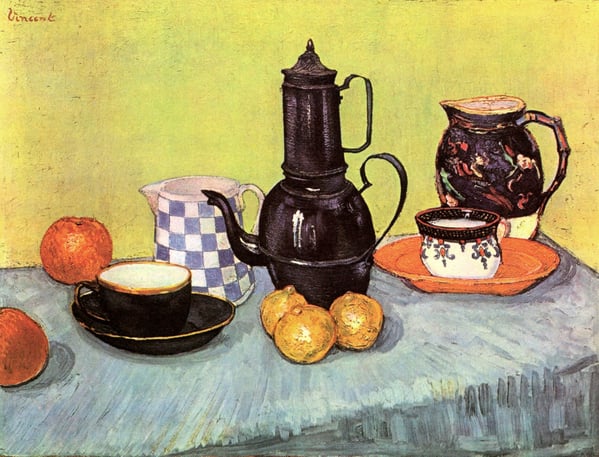
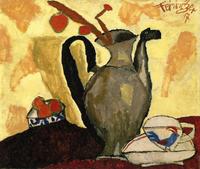
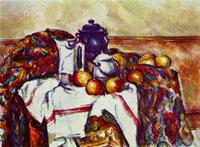
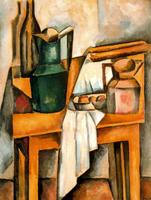
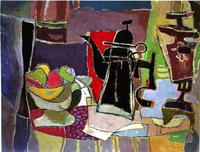
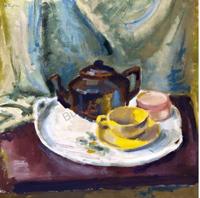
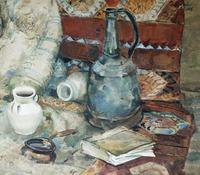
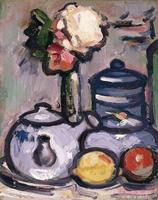
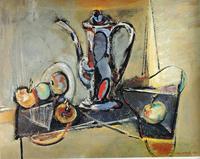
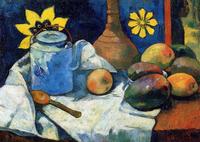
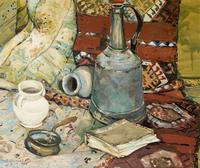
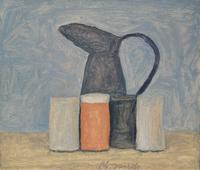
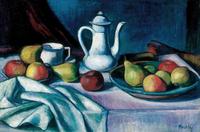
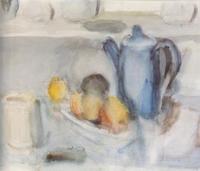
This work exemplifies van Gogh’s revolutionary approach to still life within the Post-Impressionist movement. Rather than seeking faithful reproduction of objects, van Gogh uses the genre as a vehicle for emotional and symbolic expression. The blue enamel coffeepot, earthenware vessels, and fruit are rendered with his characteristic thick, directional brushstrokes (impasto), which build a tactile, almost sculptural surface. The vibrant, arbitrary colors—deep blues set against warm ochres and greens—create a dynamic tension that transcends mere description.
What makes this piece significant is how it transforms everyday domestic items into a charged psychological landscape. The coffeepot’s enamel gleams with an almost metallic intensity, while the fruit and pottery pulse with energy, reflecting van Gogh’s belief that color and texture could convey the inner life of objects—and his own turbulent emotions. In the context of Post-Impressionism, this still life rejects the naturalism of earlier movements, prioritizing subjective experience and formal innovation. It stands as a testament to van Gogh’s ability to find profound meaning in the ordinary, paving the way for modernist explorations of expression over representation.