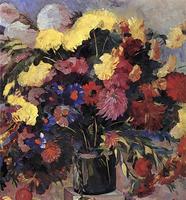
Expert Analysis: "Still Life: Vase with Cornflowers and Poppies" by Vincent van Gogh
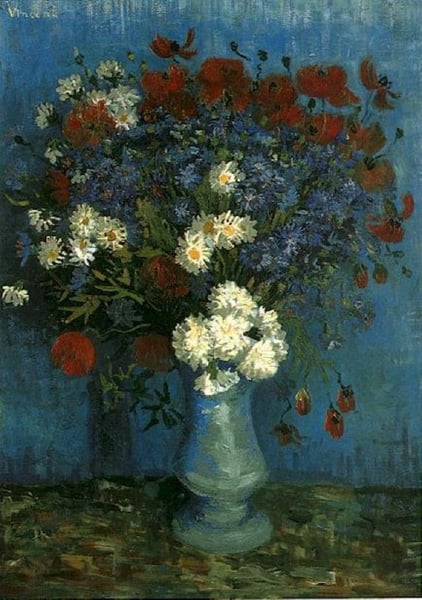
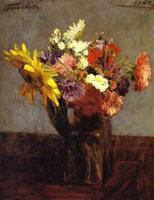
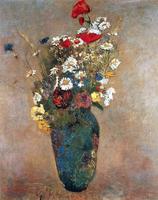
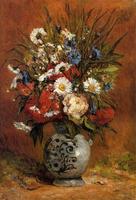
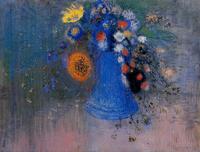
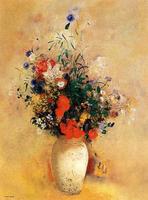
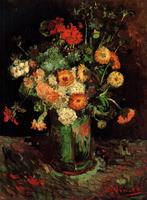
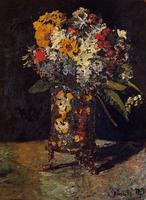
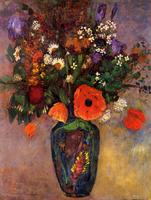
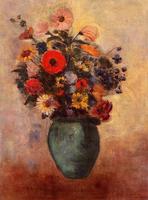
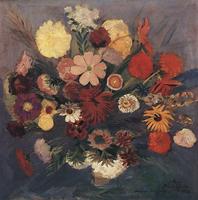
This vibrant flower still life exemplifies van Gogh’s mature Post-Impressionist style, where color and brushwork become vehicles for emotional intensity rather than mere representation. The composition pairs cobalt-blue cornflowers with scarlet poppies against a luminous yellow ground—a deliberate use of complementary colors that creates visual vibration and heightened drama. Van Gogh applied paint thickly (impasto), leaving visible, rhythmic strokes that animate the petals and leaves, transforming a conventional genre into a dynamic expression of life force.
Significantly, this work represents van Gogh’s systematic exploration of color theory during his Paris period (1886–1888), when he absorbed influences from Impressionism and Japanese prints. Flower still lifes allowed him to experiment with contrasts and harmonies in a controlled setting, yet his unflinching directness and emotional charge elevate the subject beyond decorative tradition. The juxtaposition of delicate cornflowers and fiery poppies—flowers associated with both beauty and mortality—echoes van Gogh’s personal turmoil and his quest to capture the essence of nature through intense, subjective perception. As a result, this painting stands as a key example of how Post-Impressionism liberated color and texture from naturalistic constraints, paving the way for modern expressionism.