
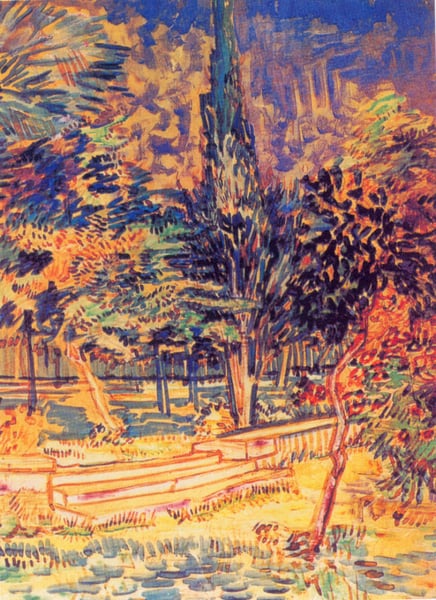
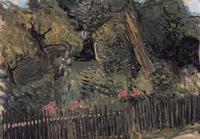
Stone Steps in the Garden of the Asylum
Dettagli
Analisi esperta di Stone Steps in the Garden of the Asylum di Vincent van Gogh
Stile: Post-Impressionism · Genere: landscape
The artwork Stone Steps in the Garden of the Asylum by Vincent van Gogh is a striking example of Post-Impressionist landscape painting, created during the artist’s stay at the Saint-Paul-de-Mausole asylum in Saint-Rémy-de-Provence. The work’s significance lies in how van Gogh transforms a seemingly ordinary garden feature—a set of stone steps—into a dynamic, emotionally charged vision of nature.
Stylistic and Contextual Significance
As a Post-Impressionist work, the painting moves beyond naturalistic representation to convey subjective experience and emotional truth. Van Gogh’s characteristic thick, swirling brushstrokes (impasto) animate the stone and surrounding foliage, giving the scene a sense of restless energy and rhythm. The steps themselves are not merely architectural elements; they become a compositional pathway that draws the eye upward, perhaps symbolizing a spiritual or psychological ascent—or a difficult climb from the depths of mental illness.
Color and Light
Van Gogh employs his signature vibrant palette: deep greens, blues, and earthy ochres, with touches of yellow and white that suggest dappled sunlight filtering through trees. The colors are heightened beyond naturalism, creating a luminous, almost hallucinatory atmosphere. This use of expressive color—a hallmark of Post-Impressionism—imbues the landscape with a profound sense of presence and inner life, reflecting van Gogh’s belief that color could convey emotion directly.
Personal and Historical Context
Painted during a period of intense creativity and personal turmoil (1889–1890), the work is part of a series depicting the asylum’s garden. Unlike the iconic Starry Night or Irises, this quieter scene focuses on a specific, mundane detail—the steps—yet transforms it into a meditation on shelter and confinement. The steps lead both into the garden and into the artist’s own psychological terrain, making the painting a poignant testament to van Gogh’s ability to find beauty and meaning even within the boundaries of institutional life.
Legacy
Stone Steps in the Garden of the Asylum exemplifies how Post-Impressionist artists broke from Impressionism’s focus on optical reality to explore personal vision. For van Gogh, the landscape became a mirror of the soul, and this work stands as a compelling example of his mature style—where brushwork, color, and composition converge to create a world that is both intimately observed and profoundly expressive.
Museum / Gallery
Visivamente simili
20 opere con composizione e palette affini
The Garden of Saint-Paul Hospital
Vincent van Gogh
Trees in the Garden of the Asylum
Vincent van Gogh
Trees in the Asylum Garden
Vincent van Gogh
Avenue in the Park
Vincent van Gogh
Trees and Shrubs
Vincent van Gogh
Path in the Park at Arles
Vincent van Gogh
Entrance to the Public Garden in Arles
Vincent van Gogh
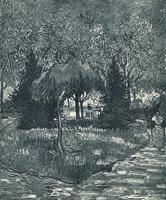
The Park at Arles with the Entrance Seen through the Trees
Vincent van Gogh
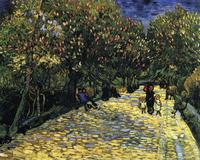
Avenue with Flowering Chestnut Trees at Arles
Vincent van Gogh
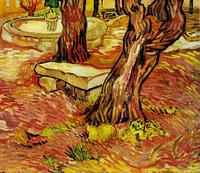
The Stone Bench in the Garden at Saint-Paul Hospital
Vincent van Gogh
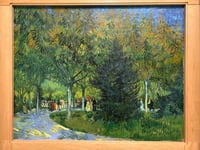
Wandelpad in het park
Vincent van Gogh
Corsican Landscape
Henri Matisse
Study of Pine Trees
Vincent van Gogh
Orchard in Blossom, Bordered by Cypresses
Vincent van Gogh
The Garden of Saint-Paul Hospital
Vincent van Gogh
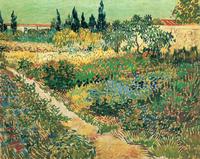
Garden with Flowers
Vincent van Gogh
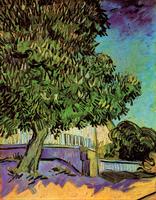
Chestnut Tree in Blossom
Vincent van Gogh
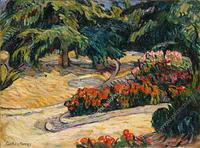
Palm trees and geranium
Pyotr Konchalovsky
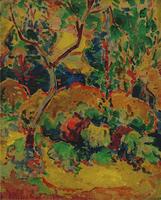
Paysage
Harry Phelan Gibb
View of the park
Richard Gerstl