
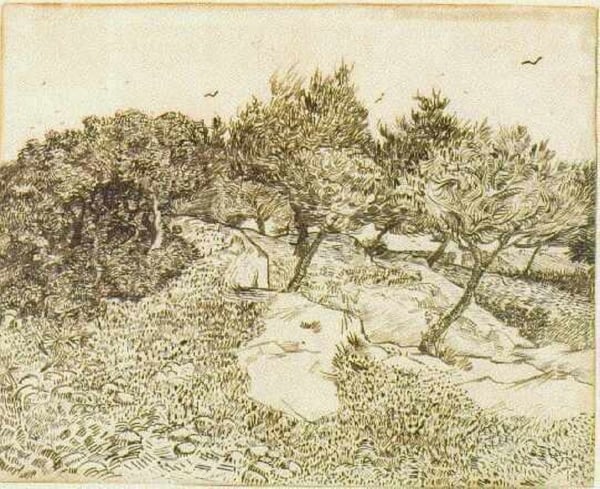
Analyse experte de The Olive Trees de Vincent van Gogh
Style : Post-Impressionism · Genre : sketch and study
Expert Analysis: "The Olive Trees" by Vincent van Gogh
Context and Significance
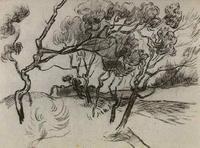
Created during a period of intense personal turmoil and artistic breakthrough, Vincent van Gogh’s The Olive Trees stands as a quintessential example of Post-Impressionism—a movement that pushed beyond naturalistic depiction to express subjective emotion through color, form, and brushwork. As a sketch and study, this work reveals the raw, preparatory side of van Gogh’s practice, offering insight into his iterative process and his deep engagement with the Provençal landscape.
Stylistic Characteristics
Van Gogh employs his signature expressive brushstrokes—swirling, rhythmic, and heavily impastoed—to animate the olive grove. The trees are not rendered with botanical accuracy but rather as dynamic, almost serpentine forms that pulse with energy. This distortion of natural shapes in favor of emotional resonance is a hallmark of Post-Impressionism, distinguishing it from the Impressionist focus on optical realism.
Color and Light
The palette is dominated by earthy greens, ochre yellows, and touches of muted blue, reflecting the sun-baked hills of southern France. Yet van Gogh heightens these hues, using complementary contrasts (e.g., green against red-violet shadows) to intensify the scene’s vibrancy—a technique borrowed from the Impressionists but pushed to a more symbolic, emotive extreme.
Genre as Key to Interpretation
As a sketch and study, this work is less a finished “masterpiece” and more a laboratory of ideas. The rapid, almost calligraphic handling of the paint captures a fleeting moment of discovery, documenting van Gogh’s search for ways to translate the spiritual and sensory experience of the olive grove. The unfinished quality invites the viewer into the artist’s creative process, underscoring the Post-Impressionist emphasis on the artist’s subjective vision over polished illusion.
Legacy
The Olive Trees is significant not only as a record of van Gogh’s evolving style but as a precursor to the expressive abstraction that would dominate 20th-century art. Its restless, vibrating surface anticipates the emotional charge of Expressionism, while its focus on the essential “soul” of the landscape reflects van Gogh’s belief that art should convey deeper truths. In this sketch, we witness Post-Impressionism’s most radical departure: art as an outpouring of the artist’s inner life, rendered in bold, unapologetic strokes.
Museum / Gallery
Visuellement similaire
20 œuvres à la composition et à la palette proches
Olive Trees
Vincent van Gogh
A Group of Pine Trees
Vincent van Gogh
Hill with Bushes
Vincent van Gogh
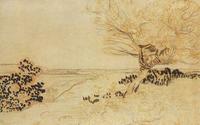
Landscape with a Tree in the Foreground
Vincent van Gogh
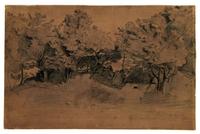
Landscape of Royat, study of trees
Camille Corot
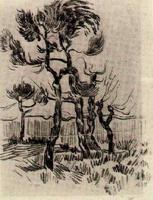
Pine Trees in Front of the Wall of the Asylum 4
Vincent van Gogh
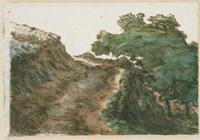
Road from Malavaux, near Cusset
Jean-Francois Millet
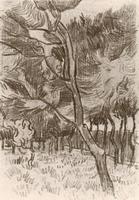
Pine Trees in the Garden of the Asylum
Vincent van Gogh
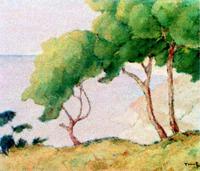
Forest Edge (Balcic)
Nicolae Tonitza
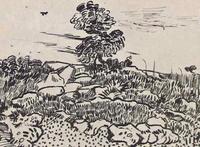
Rocks with Oak Tree
Vincent van Gogh
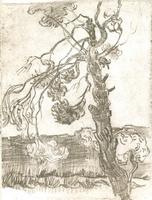
A Weather-Beaten Pine Tree
Vincent van Gogh
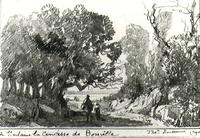
A path in the forest
Theodore Rousseau
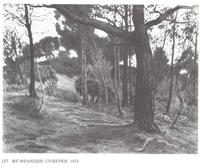
South of France. Twilight
Ivan Bilibin
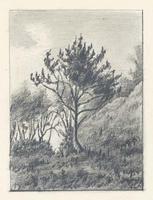
Near Mount Sobachya in Sosnitsy
Nicholas Roerich
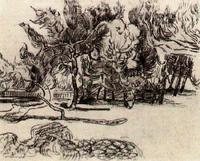
Pine Trees near the Wall of the Asylum
Vincent van Gogh
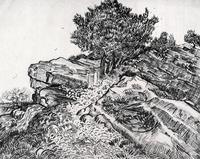
Montmajour
Vincent van Gogh
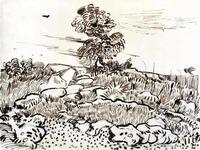
Rocky Ground at Montmajour
Vincent van Gogh
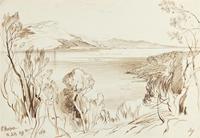
St. Hospice
Edward Lear
France. View from the window of the cottages
Ivan Bilibin
Pine Trees along a Road to a House
Vincent van Gogh