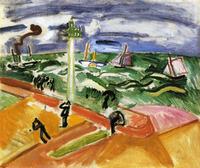
This analysis is based solely on the provided structured facts.
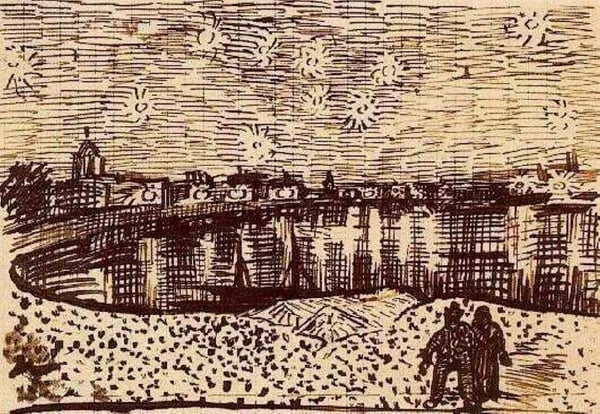
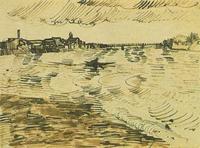
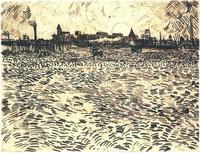
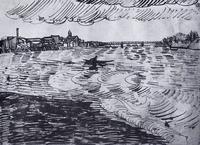
As a sketch and study within the Post-Impressionist style, The Starry Night (in its reduced, preparatory form) holds significance for offering a rare, unguarded glimpse into Vincent van Gogh’s analytical process. Unlike the famous fully realized painting, this version focuses on the bones of composition and emotional expression rather than decorative finish. Its importance lies in demonstrating how Van Gogh distilled subjective, turbulent feeling—the swirling movement of sky and the looming cypress—into raw marks of charcoal or ink. This study format reveals the artist's method of translating immediate sensory and emotional response into the expressive line and distorted perspective that define Post-Impressionism's break from naturalistic representation. It is significant as a document of creative formulation, showing the deliberate, searching choices behind what would become a landmark of modern art.