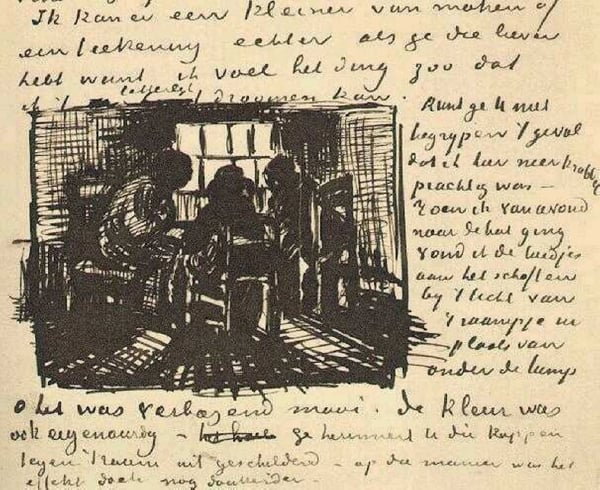
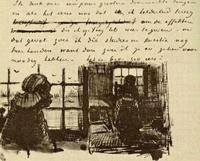
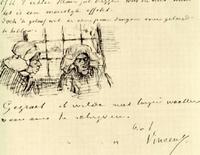
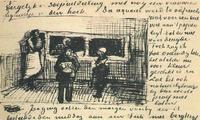
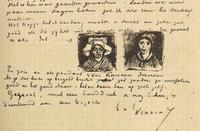
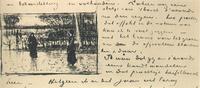
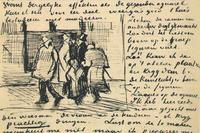
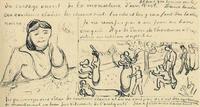
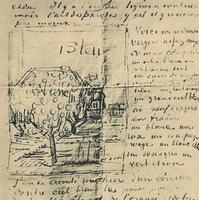
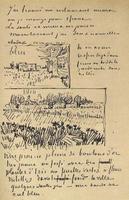
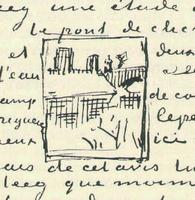
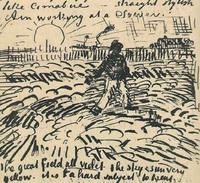
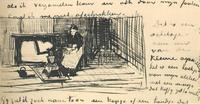
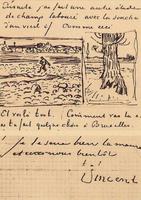
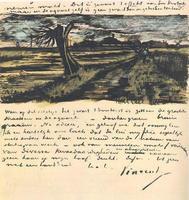
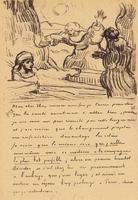
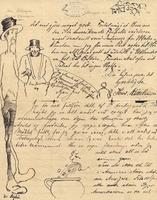
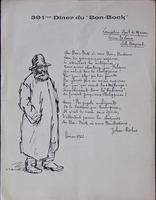
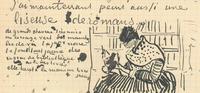
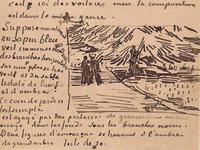
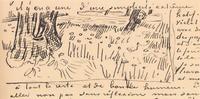
This artwork is significant as a rare glimpse into Vincent van Gogh’s early engagement with Realism, a style that grounds his later, more famous Post-Impressionist works in a disciplined study of everyday life. Executed as a sketch and study, the piece deliberately forgoes the bold color and expressive brushwork van Gogh would later employ, instead prioritizing observational accuracy and compositional structure.
The depiction of three figures by a window is a quintessential Realist subject—mundane, intimate, and unidealized. In the context of van Gogh’s oeuvre, this work reveals his foundational commitment to capturing authentic human presence and light, reflecting the influence of artists like Jean-François Millet. As a study, it likely served as a preparatory exercise, allowing van Gogh to refine his handling of spatial relationships, interior depth, and the subtle interplay of indoor and outdoor illumination. Its significance lies in documenting the disciplined draftsmanship and realist grounding that underpin his later emotional and chromatic innovations, making it an essential touchstone for understanding his artistic evolution within the Realist tradition.