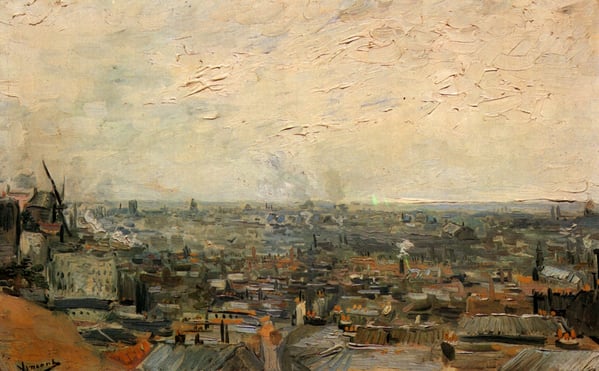
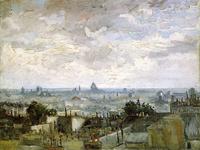
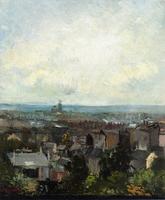
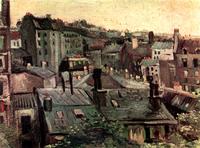
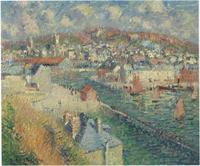
Expert Analysis of "View of Paris from Montmartre" by Vincent van Gogh
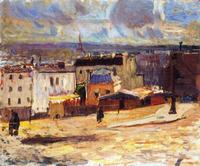
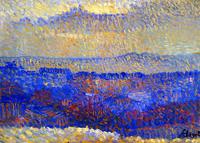
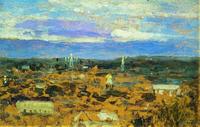
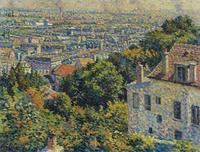
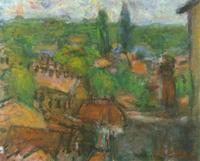
As a Post-Impressionist panorama, this work marks a pivotal moment in van Gogh’s transition from the naturalistic concerns of Impressionism toward a more expressive, emotionally charged vision. The panoramic genre—typically associated with comprehensive, even topographic views—is here transformed by van Gogh’s distinctive technique. He uses broad, rhythmic brushstrokes and a heightened, often arbitrary palette to convey not just the physical layout of the city but its atmospheric energy and his personal response to it. The elevated vantage point from Montmartre allows for a sweeping composition that emphasizes the contrast between the expansive sky, the urban fabric below, and the rural fringes—a juxtaposition that reflects the artist’s own tension between tradition and modernity.
Significance within Post-Impressionism: Van Gogh pushes beyond Impressionism’s optical recording of light and color. Instead, he structures the landscape through bold outlines and pattern-like marks, imbuing the scene with a nervous vitality that foreshadows his later masterpieces. The panorama, traditionally a neutral documentation of space, becomes here a subjective theater of emotion—a hallmark of Post-Impressionism’s shift toward symbolic and psychological depth. This painting thus stands as an early example of van Gogh’s lifelong project: to make landscape speak of inner experience.