
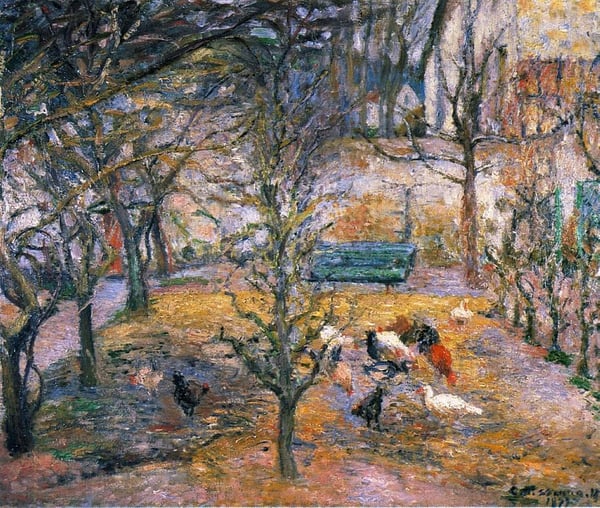
Farmyard at the Maison Rouge, Pontoise
Dettagli
Analisi esperta di Farmyard at the Maison Rouge, Pontoise di Camille Pissarro
Stile: Impressionism · Genere: landscape
Based solely on the provided facts—that Camille Pissarro’s Farmyard at the Maison Rouge, Pontoise is an Impressionist landscape—its significance lies in how it exemplifies the core revolutionary principles of the Impressionist movement during its most formative period.
-
As an Impressionist landscape, the work is significant for prioritizing direct observation of natural light and atmosphere over idealized or historical subject matter. Pissarro, a central figure in the movement, famously focused on rural and agrarian scenes, elevating the ordinary farmyard to a worthy subject for serious art. This painting, set in Pontoise (a village where Pissarro worked extensively), likely captures the subtle, transient effects of sunlight on familiar terrain—a hallmark of Impressionism that rejected studio-based conventions.
-
Within the Impressionist style, Pissarro’s landscapes are notable for their structured yet spontaneous brushwork. Unlike the more fluid strokes of Monet or the dramatic cityscapes of Degas, Pissarro’s approach here would typically combine broken color with a compositional solidity (influenced by his earlier training and his later turn to Neo-Impressionism). This balance between atmospheric immediacy and formal coherence makes the painting significant as a bridge between pure Impressionist sensory experience and more architecturally stable landscape traditions.
-
In its period, the work represents the democratization of landscape painting—focusing on a working farm rather than a picturesque vista. By choosing the “Maison Rouge” (Red House) farmyard, Pissarro aligned himself with the modern, everyday life of rural France, distancing from academic history painting and romanticized nature. This choice underscores Impressionism’s broader significance: its commitment to capturing contemporary experience with freshness and authenticity.
In summary, without additional specific details, the artwork’s significance rests squarely on its identity as an Impressionist landscape by Pissarro—a genre and style that redefined how artists, and viewers, see the world.
Museum / Gallery
Visivamente simili
20 opere con composizione e palette affini
Trees in Bloom
Gustave Loiseau
Flowering Orchard, Spring
Gustave Loiseau
Nice
John Singer Sargent
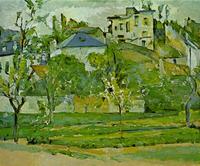
Orchard in Pontoise
Paul Cezanne
Trees in Bloom
Alfred Sisley
Frost
Claude Monet
Plum and Walnut Trees in Spring
Alfred Sisley
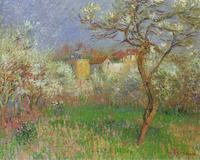
Spring
Gustave Loiseau
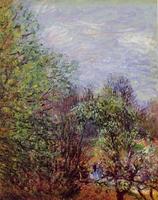
Two Women Walking along the riverbank
Alfred Sisley
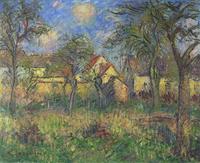
The Garden
Gustave Loiseau
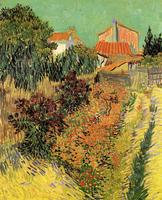
Garden Behind a House
Vincent van Gogh
Azaleas
John Henry Twachtman
Daubigny's Garden
Vincent van Gogh
Near Moret
Alfred Sisley
Spring at Veneux
Alfred Sisley
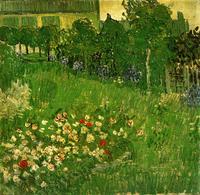
Daubigny's Garden
Vincent van Gogh
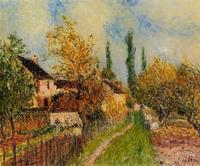
Path at Sablons
Alfred Sisley
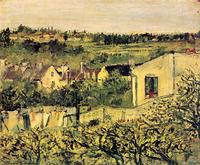
La Butte Pinson
Maurice Utrillo
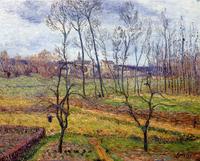
Overcast Weather at Nesles la Vallee
Gustave Loiseau
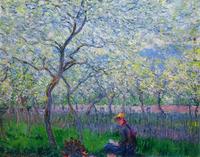
An Orchard in Spring
Claude Monet