
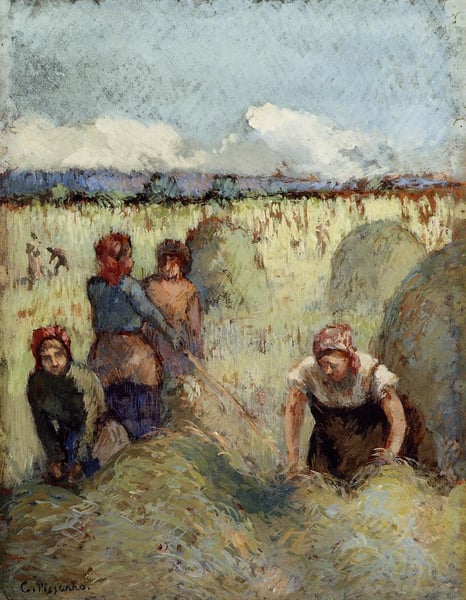
Expert analysis of Camille Pissarro’s Haymaking
Style: Impressionism · Genre: genre painting
Expert Analysis of "Haymaking" by Camille Pissarro
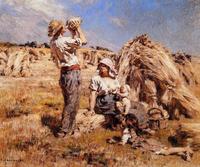
Camille Pissarro’s Haymaking stands as a quintessential example of Impressionism’s revolutionary approach to light, color, and everyday life. Painted during the height of the movement in the 1870s–1880s, this genre scene captures rural laborers in the fields of northern France, a subject Pissarro returned to frequently. The work’s significance lies in how it transforms a mundane agricultural task into a vibrant study of atmospheric effects and social observation.
1. Impressionist Techniques and Composition
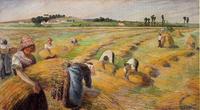
Pissarro employs loose, visible brushstrokes and a high‑key palette to evoke the shimmering heat and movement of haymaking. Rather than blending colors smoothly, he juxtaposes dabs of pure pigment—yellows, greens, blues, and touches of pink—allowing the viewer’s eye to optically mix them. This technique creates a sense of fleeting light and air, as if the scene is caught mid‑breeze. The composition, with its diagonal sweep of haystacks and figures bending over their work, guides the eye through the field while emphasizing the rhythm of labor.
2. Significance within Impressionism
Pissarro was the only artist to participate in all eight Impressionist exhibitions, and Haymaking embodies the movement’s core tenets: painting outdoors (en plein air), capturing modern life, and prioritizing optical perception over academic detail. Unlike earlier pastoral scenes that idealized peasant life, Pissarro’s haymakers are anonymous, active participants in a real, transient moment. The painting rejects narrative in favor of pure sensory experience—the weight of sunlight, the texture of hay, the bustle of workers.
3. Social and Artistic Context
As a genre painting, Haymaking elevates rural labor to a subject worthy of high art, aligning with Impressionism’s democratic impulse. Pissarro’s sympathetic, unromanticized portrayal reflects his anarchist sympathies and belief in the dignity of common work. The painting also demonstrates his influence on younger artists: Cézanne, Gauguin, and Seurat all admired Pissarro’s ability to balance structure with spontaneity. In Haymaking, that balance is evident in the solidity of the figures, the rhythmic repetition of haystacks, and the luminous, almost vibrating atmosphere.
4. Lasting Importance
Haymaking is significant not only as a masterful display of Impressionist technique but also as a document of a changing countryside—a world before industrial agriculture. It captures a moment when manual labor and nature were still entwined, rendered with a freshness that makes the ordinary sublime. Pissarro’s work here affirms Impressionism’s radical departure from studio‑based history painting, cementing his role as a visionary of everyday life.
Museum / Gallery
Genre
Style
Visually similar
20 works with related composition and palette
Haymaking at Eragny
Camille Pissarro
The Harvest of Hay in Eragny
Camille Pissarro
Haymaking
Léon Augustin Lhermitte
The gleaners
Léon Augustin Lhermitte
Haymakers at Eragny
Camille Pissarro
Gleaning Women
Léon Augustin Lhermitte
Gleaning Women
Léon Augustin Lhermitte
The Harvest
Camille Pissarro
The Harvesters
Léon Augustin Lhermitte
Mother breastfeeding during harvest
Léon Augustin Lhermitte
Gleaners near the millstones
Léon Augustin Lhermitte
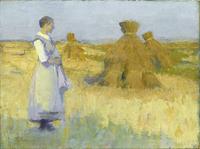
Etude
Theodore Robinson
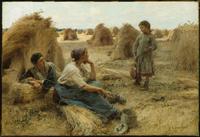
Wheatfield (Noonday Rest)
Léon Augustin Lhermitte
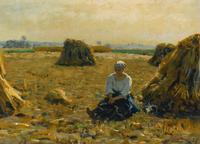
Setting out for the Fields
Jules Breton
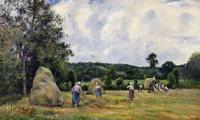
The Harvest at Montfoucault 2
Camille Pissarro
Scenes from harvest
Léon Augustin Lhermitte
The Gleaners
Léon Augustin Lhermitte
Hay stacks
Emile Claus
Harvest scenes
Léon Augustin Lhermitte
Motherhood
Léon Augustin Lhermitte