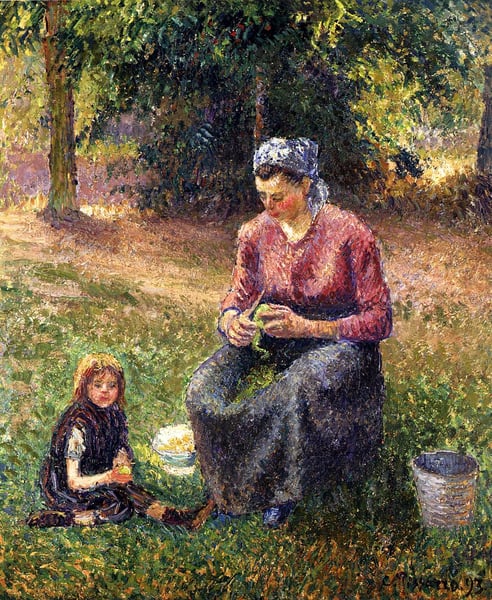
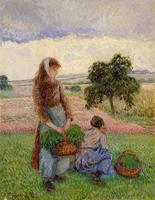
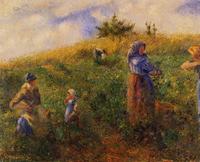
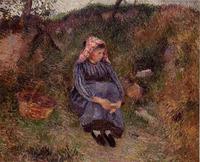
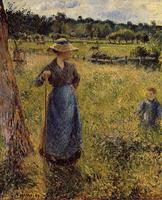
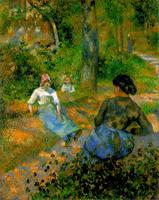
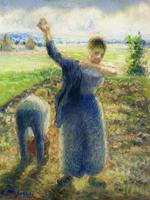
Camille Pissarro’s Peasant Woman and Child, Eragny (c. 1885) is a quintessential example of Impressionist portraiture, notable for its rejection of formal, studio-bound conventions in favor of an intimate, naturalistic depiction of rural life. Painted during Pissarro’s years in the village of Éragny, the work exemplifies his commitment to capturing the dignity of peasant subjects—a theme he pursued with socialist sympathy. The significance lies in how Pissarro merges portraiture with the Impressionist emphasis on light and atmosphere: the mother and child are not isolated figures but are integrated into their environment through loose, feathery brushstrokes and a warm, dappled palette that reflects the outdoor setting. This approach breaks from the polished, heroic portraiture of the academic tradition, instead presenting a fleeting, candid moment of everyday tenderness. The painting also demonstrates Pissarro’s role as a bridge between early Impressionism and the later Post-Impressionists, his subtle geometry and attention to the play of sunlight on skin and clothing prefiguring the work of Seurat and Gauguin.