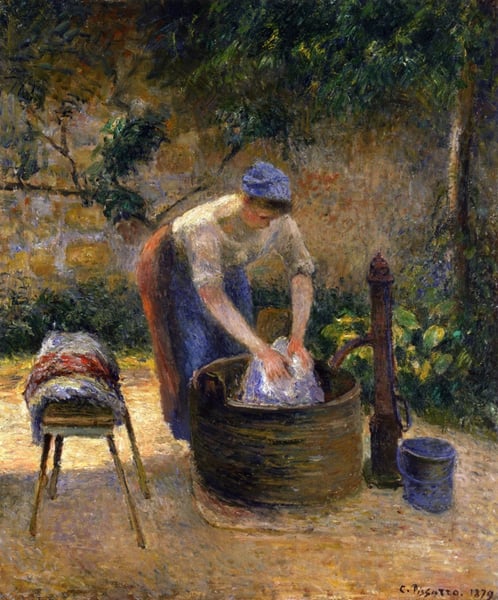
"The Laundry Woman" by Camille Pissarro exemplifies the core principles of Impressionism within the portrait genre. Rather than presenting an idealized or formal likeness, Pissarro captures a candid, everyday moment—a working woman engaged in domestic labor. This choice reflects the Impressionist commitment to depicting modern life and ordinary people, elevating a humble subject to the center of artistic attention. The work’s significance lies in its revolutionary approach: loose, visible brushwork and an emphasis on light and atmosphere over precise detail, characteristics that defined the movement and challenged academic conventions. As a portrait, it redefines portraiture as a study of momentary perception and social reality, making it a key example of how Impressionism expanded the boundaries of traditional genres.