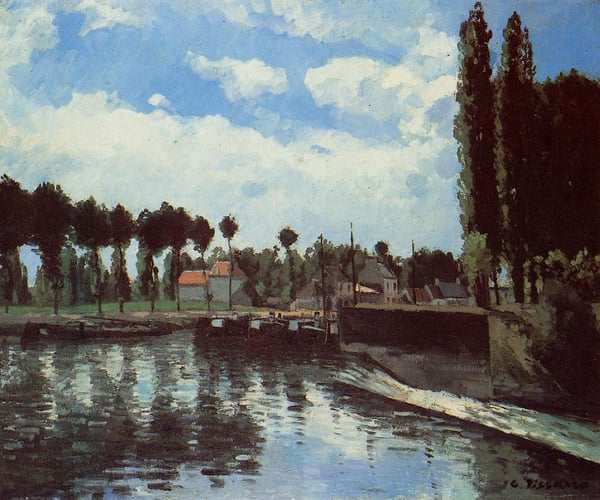
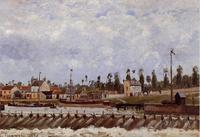
Analysis of "The Lock at Pontoise" by Camille Pissarro
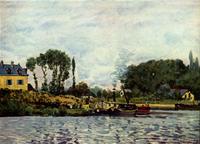
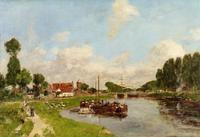
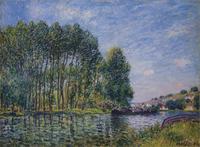
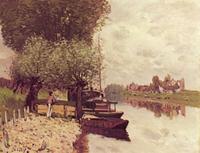
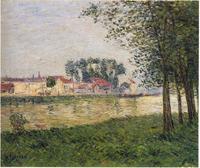
As an Impressionist landscape, The Lock at Pontoise exemplifies the movement’s radical shift away from historical or mythological subjects toward the observation of everyday rural life. The work’s significance lies in how Pissarro translates a modest, functional scene—a canal lock in the town of Pontoise—into a study of shifting light, atmospheric color, and fleeting natural effects. The loose, visible brushwork characteristic of Impressionism animates the water’s surface and the surrounding foliage, capturing the play of sunlight on different textures. By focusing on a mundane infrastructure subject rather than a dramatic vista, Pissarro elevates the ordinary to a worthy artistic motif, aligning with Impressionism’s core mission: to record the sensory experience of a specific moment in the open air. This painting thus stands as a key document of Pissarro’s role in defining the movement’s dedication to spontaneity, perception, and the beauty of the unremarkable.