Artwork Analysis: "Roses" by Henri Fantin-Latour
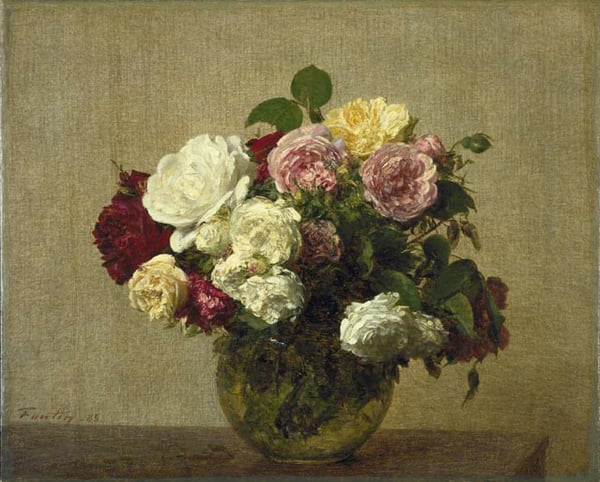
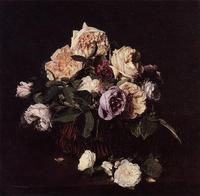
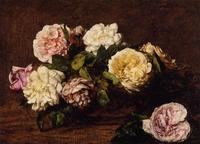
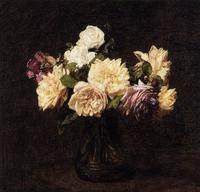
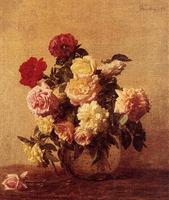
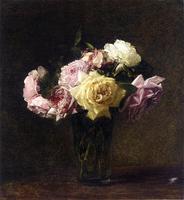
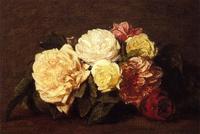
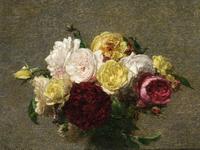
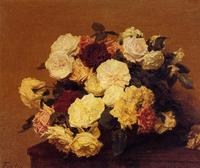
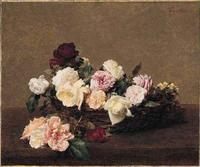
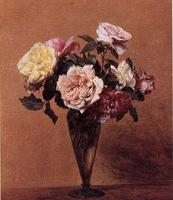
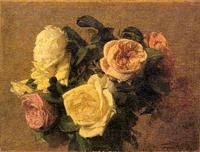
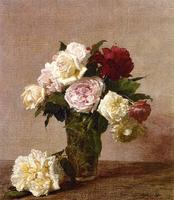
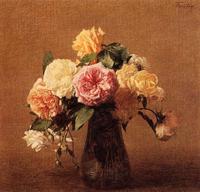
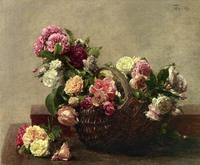
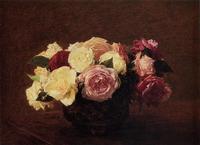
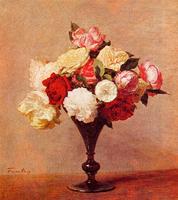
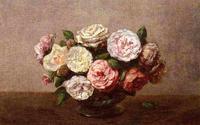
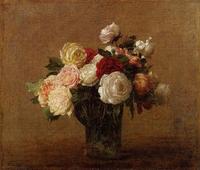
Henri Fantin-Latour’s "Roses" stands as a quintessential example of Realist flower painting, distinguished by its meticulous fidelity to nature and its subtle departure from the heightened drama of earlier botanical art. Working within the Realist tradition, Fantin-Latour rejects idealized or symbolic floral arrangements in favor of an almost scientific observation of form, texture, and light.
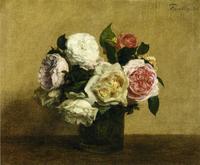
The painting’s significance lies in its ability to elevate a humble still-life subject to a study of quiet, luminous presence. Each petal is rendered with delicate, precise brushwork that captures both the velvety softness and the transient fragility of the blooms. The restrained palette—often soft pinks, whites, and greens—allows the artist to explore the interplay of natural light on organic surfaces, a hallmark of his Realist technique. Unlike the more theatrical floral compositions of the Romantic era, Fantin-Latour’s roses feel alive yet still, as if caught in a moment of serene observation.
Within the genre of flower painting, Fantin-Latour’s work is celebrated for bridging meticulous Realism with an emerging Impressionist sensitivity to atmosphere. "Roses" exemplifies this balance: it is rooted in the tangible world but suffused with a quiet, almost poetic intimacy. This approach established Fantin-Latour as a master of the still life, influencing later generations who sought to blend objective representation with subjective feeling. The painting remains a testament to the power of Realism to find profound beauty in the simple, ephemeral truths of nature.