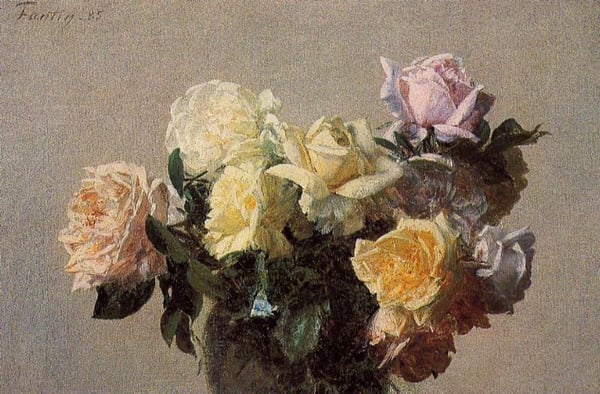
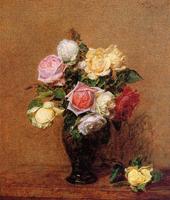
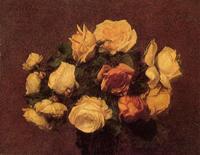
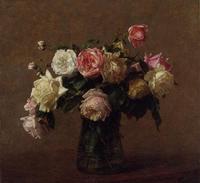
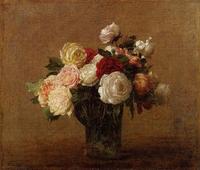
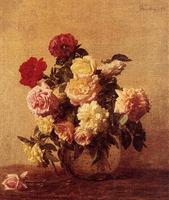
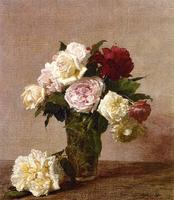
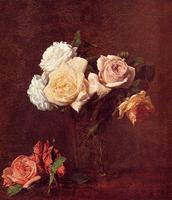
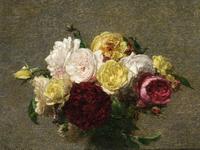
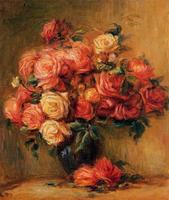
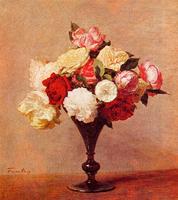
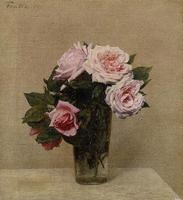
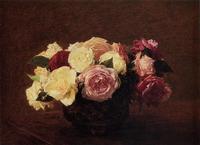
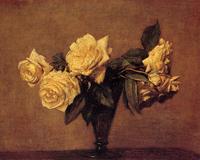
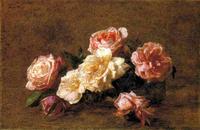
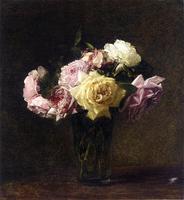
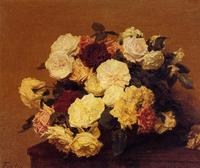
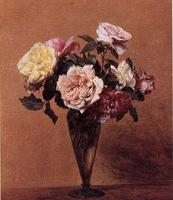
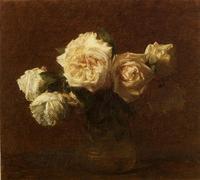
Henri Fantin-Latour’s Roses exemplifies Realism’s commitment to faithful observation, yet elevates a humble subject through exquisite technical control. Painted in the 19th century, when flower painting was often dismissed as decorative, Fantin-Latour’s still lifes were prized for their scientific accuracy and quiet, almost melancholic beauty.
In Roses, each bloom is rendered with a botanist’s precision—petal textures, subtle color shifts from cream to blush, and the soft diffusion of light create an illusion of tangible presence. Unlike earlier Dutch floral still lifes that emphasized opulence and vanitas, Fantin-Latour strips away moralizing symbolism: the roses are simply themselves, momentarily arrested in time.
This work is significant because it merges Realism’s allegiance to everyday truth with an almost Impressionist sensitivity to atmosphere—yet retains a structured, classical composition. Fantin-Latour’s flower paintings became commercially vital for his career, but they also influenced later generations by proving that stillness and intimacy could carry as much weight as grand historical narratives. Roses stands as a testament to the dignity of quiet observation.