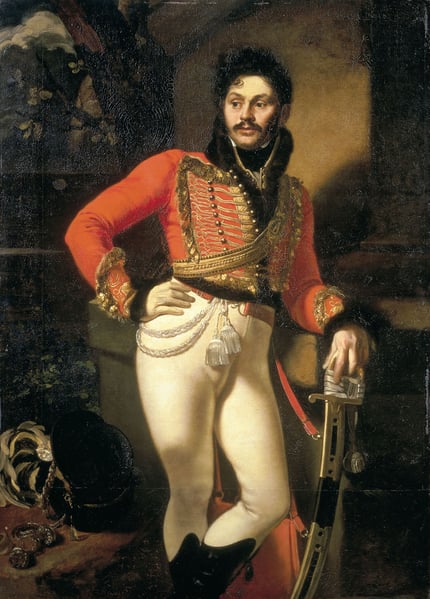
Portrait of Colonel Evgraf V. Davydov
Dettagli
Analisi esperta di Portrait of Colonel Evgraf V. Davydov di Orest Kiprensky
Stile: Romanticism · Genere: portrait
Analysis of "Portrait of Colonel Evgraf V. Davydov" by Orest Kiprensky
Orest Kiprensky’s portrait of Colonel Evgraf Davydov stands as a quintessential example of Russian Romanticism, blending heroic idealism with intimate psychological insight. The work transcends mere military likeness to embody the Romantic archetype of the noble warrior—a figure of passion, honor, and inner turmoil.
Significance within Romanticism:
-
Heroic Individualism: Kiprensky presents Davydov not as a distant general but as a living, breathing man of action and sentiment. The colonel’s confident yet contemplative gaze, the slight turn of his head, and the relaxed hand on his saber convey both martial readiness and introspective depth—a hallmark of the Romantic hero who balances duty with personal emotion.
-
Dramatic Use of Light and Color: The artist employs a rich, warm palette—deep reds of the uniform, gleaming gold braid, and a shadowed, almost brooding background. Strong contrasts of light and shadow (chiaroscuro) model Davydov’s face and form, emphasizing his strong features and the texture of his uniform. This theatrical lighting heightens the sense of individual character and emotional charge.
-
Psychological Realism: Unlike earlier formal state portraits, Kiprensky avoids stiff formality. Davydov’s slightly disheveled hair and the naturalistic rendering of his face—complete with a hint of fatigue or melancholy—suggest a man who has seen battle and carries its weight. This focus on the sitter’s inner life is central to Romantic portraiture.
-
National Identity and Patriotism: Painted in the aftermath of the Napoleonic Wars, the portrait celebrates the Russian officer as a national icon. Davydov, a hero of the 1812 campaign, becomes a symbol of Russian courage and Romantic idealism, linking personal valor to a larger cultural and historical narrative.
Technical Mastery: Kiprensky’s loose, energetic brushwork—visible in the epaulets and the shimmer of medals—contrasts with the careful modeling of the face, demonstrating his ability to balance precision with painterly spontaneity. This technique aligns with the Romantic preference for expressing vitality over polished finish.
In summary, Kiprensky’s portrait is significant for its fusion of Romantic ideals—heroism, individuality, emotional depth, and patriotic fervor—into a single, compelling image. It elevates a military portrait into a timeless meditation on honor, humanity, and the spirit of an era.
Genere
Stile
Visivamente simili
20 opere con composizione e palette affini
George Gordon
Thomas Lawrence
Lieutenant-General William Craven
Thomas Lawrence
Thomas Graham, Lord Lynedoch
Thomas Lawrence
Charles William Vane-Stewart, 3rd Marquess of Londonderry
Thomas Lawrence
Alexander I
Vladimir Borovikovsky
Lieutenant Colonel Thomas Lloyd (1751–1828), Colonel of the Leeds Volunteers
John Russell
First Consul Bonaparte
Antoine-Jean Gros
Portrait of Russian emperor Nicholas I
George Dawe
Portrait of Leopold I of Belgium
Franz Xaver Winterhalter
Portrait of Duke of Wellington
George Dawe
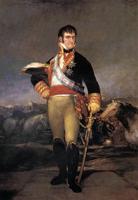
Ferdinand VII
Francisco Goya
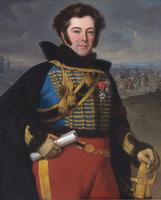
Colonel Auguste-Frederic-Bon-Amour, Marquis de Talhouët
Horace Vernet
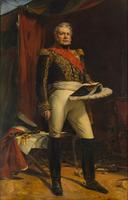
Nicolas-joseph Maison, Maréchal de France en 1829
Léon Cogniet
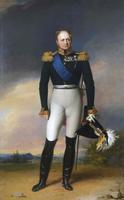
Portrait of Emperor of Russia Alexander I of Russia
George Dawe
General John Burgoyne
Joshua Reynolds
Infante Don Sebastián Gabriel de Borbón y Braganza
Francisco Goya
Portrait of George Townshend, Lord Ferrers
Joshua Reynolds
Captain Hay of Spot
Henry Raeburn
FLORENCE PORTRAIT OF AN OFFICER, THOUGHT TO BE GÉNÉRAL JEAN-CLAUDE MOREAU (1755 -1828), FULL LENGTH, IN UNIFORM, ON A TERRACE, A VIEW OF FLORENCE BEYOND
Louis Gauffier
Portrait of General Valerian Madatov
George Dawe