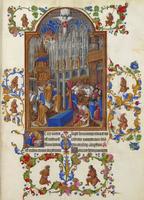
Artwork Analysis: "St. Francis Receiving the Stigmata" by Jean Fouquet
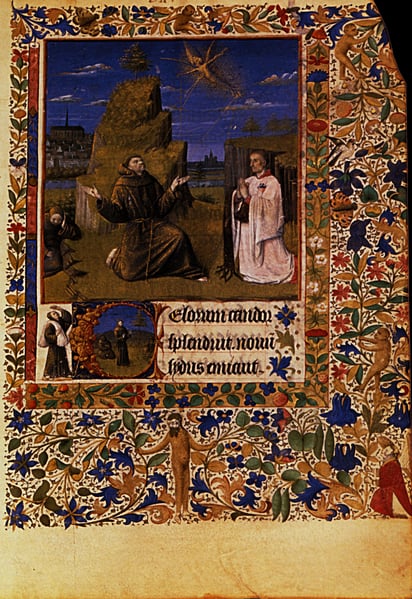
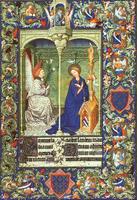
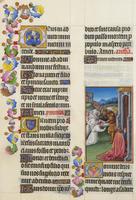
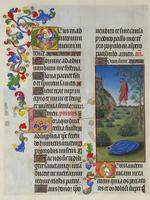
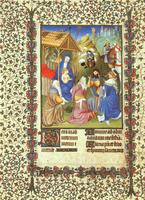
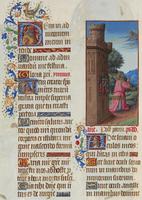
As a defining work of the Northern Renaissance, this religious painting by Jean Fouquet exemplifies the period’s fusion of meticulous realism with profound spiritual symbolism. Though the medium is not specified, the composition likely reflects the Northern Renaissance hallmark of precise, almost microscopic attention to detail—whether in the textures of Francis’s rough habit, the wounds (stigmata) appearing on his hands and feet, or the surrounding landscape.
The genre (religious painting) anchors the work in devotional tradition, but Fouquet’s treatment elevates it: St. Francis is not merely a static symbol; he is rendered with individualized features and emotional intensity, a Northern innovation that makes the miraculous feel tangible. The scene’s significance lies in its quiet drama—the crucifixion rays descending from a seraph, the saint’s humble posture—balanced by the naturalistic setting, possibly a rocky or wooded landscape that grounds the divine encounter in earthly reality.
What makes this work particularly notable within the Northern Renaissance is how Fouquet synthesized local Flemish traditions (luminous glazes, crisp outlines) with nascent Italianate influences (perspective, volumetric form). The result is a painting that is both intimately human and transcendent, capturing the era’s deep religious sensibility without sacrificing the emerging scientific curiosity about the material world.