Expert Analysis of "Gray Day" by Isaac Levitan
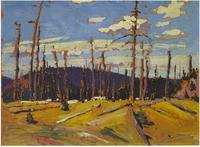
Isaac Levitan’s "Gray Day" exemplifies the Impressionist landscape through its masterful attention to atmosphere and transient light. While Impressionism is often associated with vibrant, sun-drenched scenes, Levitan demonstrates the movement’s capacity for subtle, muted harmonies. The work’s significance lies in its delicate balance between objective observation and emotional resonance—a hallmark of Levitan’s contribution to Russian landscape painting.
As an Impressionist landscape, "Gray Day" captures a fleeting moment of overcast weather, where the diffusion of light reduces contrasts to a soft, tonal unity. Levitan’s brushwork likely prioritizes the play of grey, silver, and pale earth tones over sharp detail, evoking the damp stillness of a subdued day. This emphasis on mood over narrative aligns with the Impressionist goal of recording perceptual experience, yet Levitan infuses it with a distinctly lyrical, almost introspective quality. The painting becomes significant not just as a study of natural light, but as a meditation on the quiet beauty of the ordinary—a theme that would influence later Russian landscape traditions. In the context of Impressionism, "Gray Day" proves that the movement’s innovations extend beyond sunshine; they also embrace the profound serenity found in the soft, overcast skies of the Russian countryside.