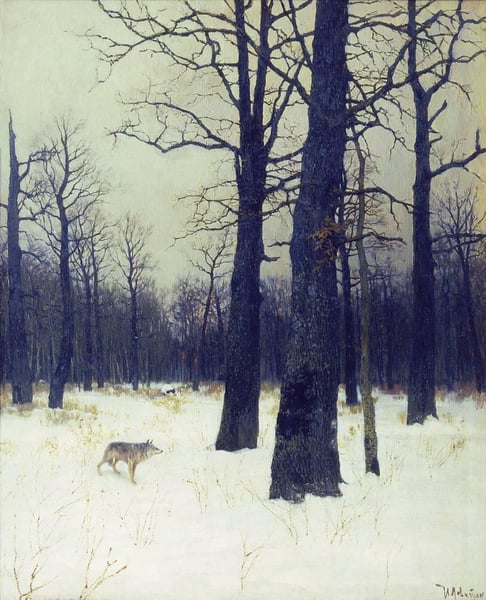
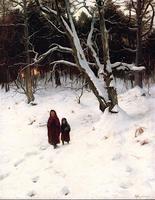
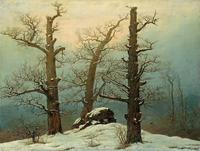
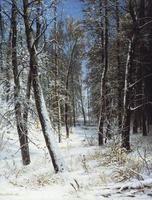
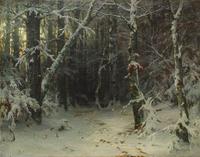
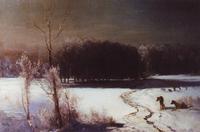
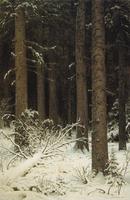
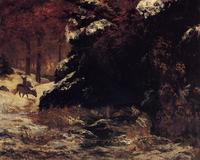
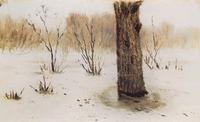
Isaac Levitan’s In the Forest at Winter stands as a quintessential example of Russian Realist landscape painting, distinguished not merely by its fidelity to natural observation but by its profound emotional resonance. Within the Realist tradition, which sought to depict the world without idealization, Levitan moves beyond surface accuracy to capture a specific psychological mood—often termed the paysage d’âme (landscape of the soul).
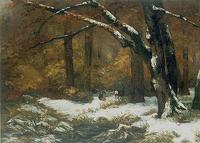
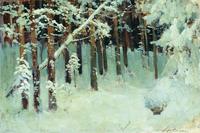
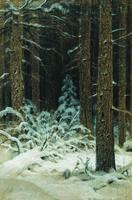
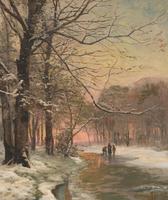
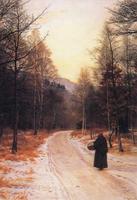
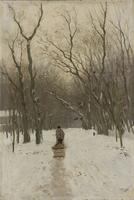
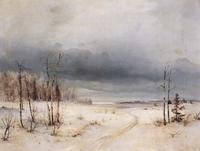
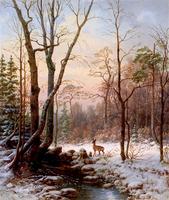
The significance of this work lies in how Levitan transforms a seemingly simple winter forest scene into a meditation on solitude and introspection. Unlike the picturesque Alpine snowscapes common in Western Romanticism, Levitan’s forest is stark, quiet, and unheroic. The muted palette of whites, grays, and deep browns, rendered with broad, sometimes feathery brushstrokes, conveys the muffled silence of snowfall and the skeletal grace of bare trees. There is no dramatic sunlight or storm; instead, a diffuse, cold light filters through the branches, creating a sense of vast, still emptiness.
In the context of Russian Realism, Levitan’s winter landscapes were groundbreaking for their synthesis of exacting naturalism and subjective emotion. Where earlier Realists like Perov focused on social critique, Levitan turned to nature as a mirror for human feeling. In the Forest at Winter demonstrates his mastery of atmosphere: the textures of crusted snow, the delicate layering of distant trunks, and the subtle gradation of shadow on the forest floor are rendered with a quiet precision that invites prolonged contemplation. This painting, like many of Levitan’s late works, elevates landscape from mere background to a living presence—one that is both a faithful record of the Russian winter and a deeply personal expression of its melancholic beauty.