Expert analysis of Raphael’s Self Portrait
Style: High Renaissance · Genre: self-portrait
Expert Analysis: Self Portrait by Raphael
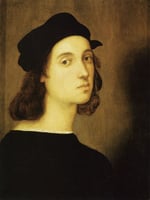
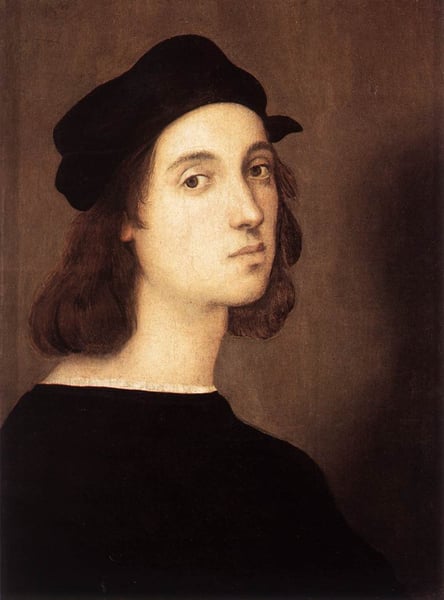
Raphael’s Self Portrait (circa 1504–1506) is a defining work of the High Renaissance, embodying the era’s ideals of grace, balance, and refined naturalism. As both a masterful self-portrait and a testament to the artist’s own burgeoning fame, it holds a unique place in art history.
Significance within the High Renaissance Style
The High Renaissance is characterized by harmonious composition, anatomical precision, and a synthesis of classical ideals with observed reality. Raphael’s self-portrait achieves all three with astonishing economy. The three-quarter pose, soft chiaroscuro modeling, and direct gaze reflect the influence of Leonardo da Vinci, while the calm, introspective expression and perfectly proportioned features align with the humanist belief in man as the measure of all things. The work’s restrained palette and subtle handling of light demonstrate Raphael’s ability to convey psychological depth without theatricality—a hallmark of his mature style.
Significance as a Self-Portrait
In the genre of self-portraiture, this painting is remarkable for its humility and confidence in equal measure. Raphael portrays himself not as a grand idealized figure, but as a young, contemplative artist—dark-eyed, softly bearded, dressed in contemporary black. The direct, searching gaze invites the viewer into a quiet dialogue, breaking the fourth wall in a way that suggests both self-awareness and a claim to intellectual authority. Unlike earlier self-portraits that often placed the artist within a larger narrative (e.g., as a bystander in a larger scene), this work elevates the individual creator to the subject itself, mirroring the Renaissance shift toward celebrating artistic genius.
Historical and Artistic Legacy
This portrait is significant because it captures Raphael at the cusp of his fame—just before his move to Florence and his later triumphs in Rome. It has been widely reproduced and studied as a key document of the artist’s personality and technical mastery. The calm dignity and idealized realism it displays became a template for later self-portraiture, influencing artists from Rembrandt to Ingres. In its fusion of personal identity with timeless beauty, Raphael’s Self Portrait stands as a touchstone of how the High Renaissance redefined the artist: no longer a craftsman, but a creator whose own image could embody the highest aesthetic and intellectual aspirations of the age.
Museum / Gallery
Visually similar
20 works with related composition and palette
Portrait of Raphael
Jean Auguste Dominique Ingres
Portrait of a young man
Pietro Perugino
Bildnis eines Edelmanns
Anthonie Palamedesz.
Portrait of a Young Man
Pietro Perugino
Autorretrato Corredor De Vasari
Giovanni Battista Gaulli
Portrait of a Young Man
Albrecht Durer
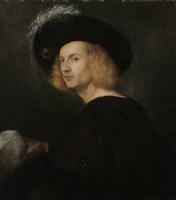
An Unknown Man in a Black Plumed Hat
Titian
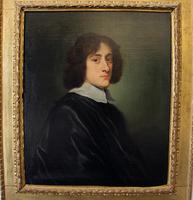
Giovan Battista Spinola Jr in Prelate Dress
Giovanni Battista Gaulli
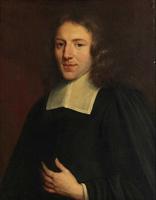
Portrait of a prelate
Sebastien Bourdon
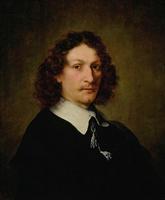
Portrait of a Man
Ferdinand Bol
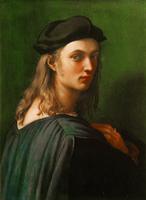
Portrait of Bindo Altoviti
Raphael
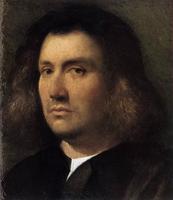
Portrait of a Man (Terris)
Giorgione
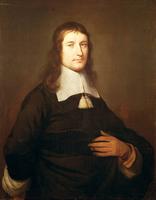
Self Portrait
Philippe de Champaigne
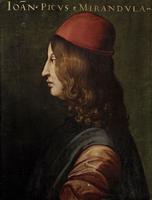
Portrait of Pico della Mirandola
Cristofano dell'Altissimo
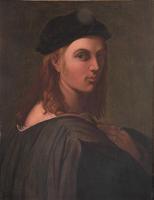
Portrait of Bindo Altoviti
Jean Auguste Dominique Ingres
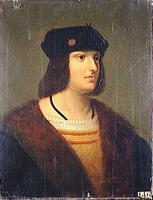
Louis d'Armagnac, duc de Nemours
Charles de Steuben
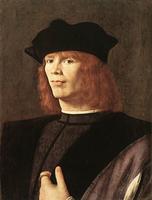
Portrait of a Man
Andrea Solario
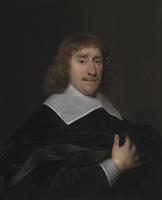
Apolonius Veth
Cornelius Johnson
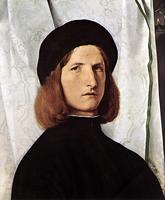
Portrait of a Man
Lorenzo Lotto
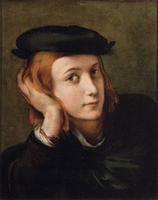
Portrait of a Young Man
Parmigianino