Expertenanalyse zu Raphaels The Parnassus, from the Stanza delle Segnatura (detail)
Stil: High Renaissance · Genre: mythological painting
Expert Art Historical Analysis of The Parnassus (detail) by Raphael
Style: High Renaissance
Genre: Mythological painting
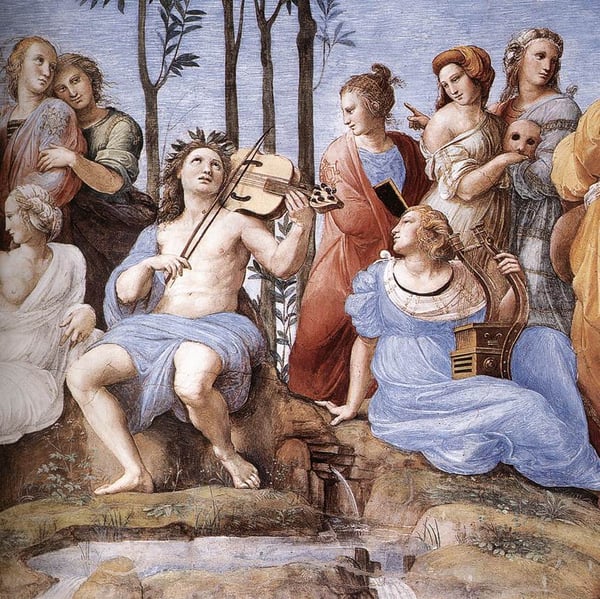
This detail from Raphael’s The Parnassus, part of the fresco cycle in the Stanza della Segnatura (Vatican Palace), is a quintessential example of the High Renaissance synthesis of classical mythology with humanist ideals. Executed during the height of the Renaissance (c. 1510–1511), the work exemplifies the period’s commitment to harmony, balance, and idealized naturalism.
Significance within the High Renaissance style: The fresco represents Mount Parnassus, the mythical home of Apollo and the Muses. In this detail, the composition achieves a serene equilibrium: figures are arranged in a clear, pyramidal grouping typical of High Renaissance order, with Apollo at the apex playing a lira da braccio, surrounded by the nine Muses and both ancient and contemporary poets. The use of chiaroscuro (light and shadow) and sfumato (soft transitions) lends the figures a sculptural, three-dimensional presence while preserving an airy, luminous atmosphere. Raphael’s mastery of perspective and anatomical precision—seen in the relaxed contrapposto of the figures—demonstrates the High Renaissance fascination with reviving classical ideals of beauty and proportion.
Significance within the mythological painting genre: As a mythological painting, The Parnassus is not merely a decorative scene but a profound allegory of poetic inspiration and the unity of knowledge. Raphael here merges classical mythology (Apollo, the Muses, Homer) with contemporary Renaissance poets (Dante, Petrarch, Boccaccio), asserting that the divine spark of creativity transcends time and culture. This fusion of pagan and Christian humanist thought was revolutionary for its era, elevating mythological subjects to a level of intellectual and spiritual seriousness previously reserved for religious art. The detail’s inclusion of recognizable historical figures alongside gods reinforces the Renaissance belief that ancient wisdom and modern achievement are part of a continuous, glorious tradition.
Conclusion: Raphael’s The Parnassus (detail) is significant as a High Renaissance masterpiece that exemplifies the period’s ideal of disegno (drawing and design) and its harmonious integration of classical mythology with contemporary humanist philosophy. It stands as a testament to the era’s belief in the power of art to unite the divine, the ancient, and the modern in a single, balanced vision.
Museum / Gallery
Visuell ähnlich
20 Werke mit ähnlicher Komposition und Farbpalette
The Feast of the Gods
Titian
The Contest Between Apollo and Marsyas
Tintoretto
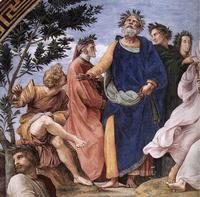
The Parnassus, detail of Homer, Dante and Virgil, in the Stanze della Segnatura
Raphael
The Feast of the Gods
Giovanni Bellini
The Feast of the Gods
Giovanni Bellini
Mythological Scene
Dosso Dossi
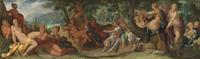
Competition between Apollo and Pan
Bartholomeus Spranger
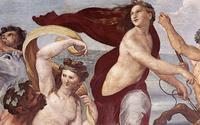
The Triumph of Galatea (detail)
Raphael
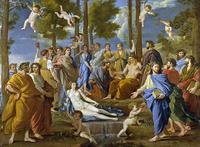
Parnassus
Nicolas Poussin
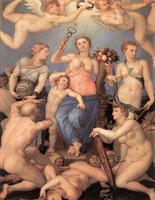
Allegory of Happiness
Agnolo Bronzino
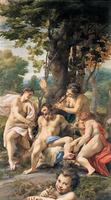
Allegory of the Vices
Correggio
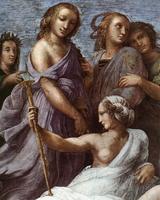
The Parnassus, from the Stanza delle Segnatura (detail)
Raphael
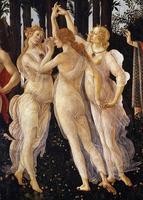
The Three Graces from Primavera
Sandro Botticelli
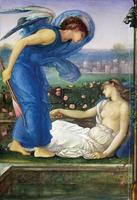
Cupid and Psyche
Edward Burne-Jones
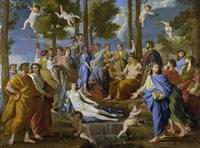
Apollo and the Muses
Nicolas Poussin
Finding Psyche
Edward Burne-Jones
Der Frühling
Jan Brueghel the Elder
Harmony or The Three Graces
Hans Baldung
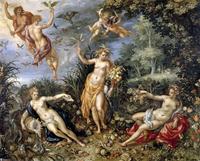
Abundance and the Four Elements
Jan Brueghel the Elder
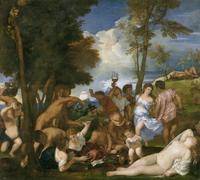
The Bacchanal of the Andrians
Titian