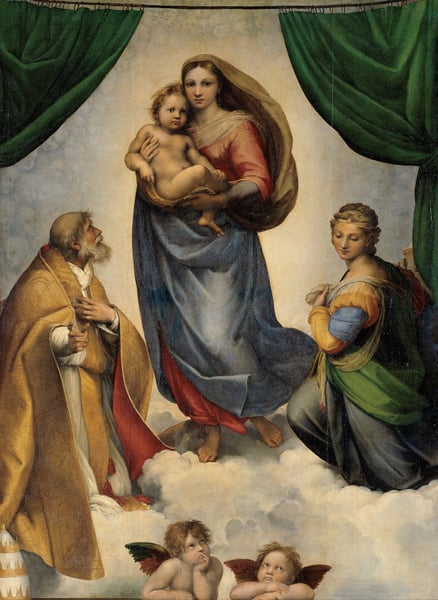
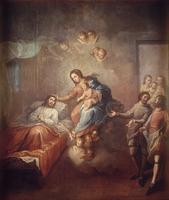
The Sistine Madonna stands as a defining masterpiece of the High Renaissance, a period celebrated for its pursuit of harmony, balance, and idealized naturalism. As a religious painting, it elevates a sacred subject—the Madonna and Child—through the era’s hallmark principles: serene composition, clear spatial organization, and a profound humanistic warmth that makes the divine feel approachable. Its significance within the style lies in how Raphael synthesizes classical grace with spiritual transcendence, capturing a moment of quiet majesty that embodies the High Renaissance ideal of perfect equilibrium between earthly beauty and heavenly grace. The painting’s influence endures as a quintessential example of how religious art of the period could achieve both emotional depth and formal perfection, setting a standard for devotional imagery that would resonate for centuries.