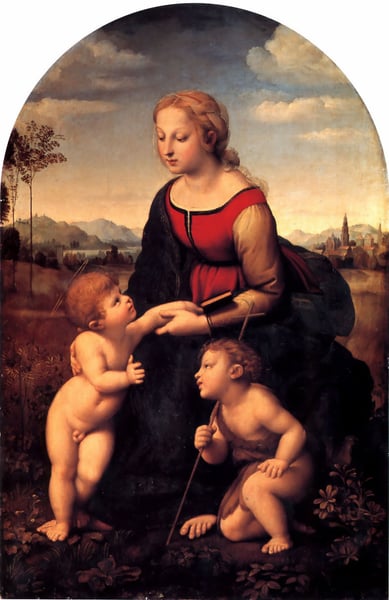
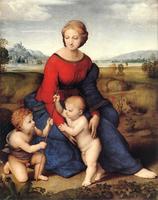
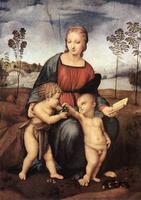
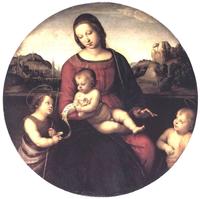
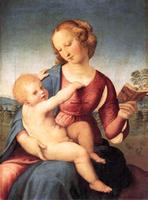
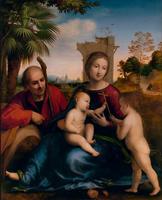
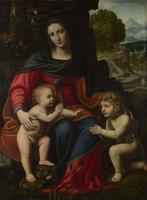
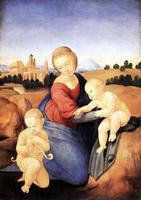
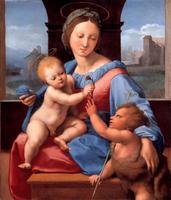
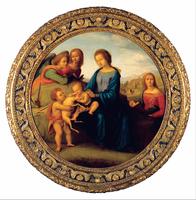
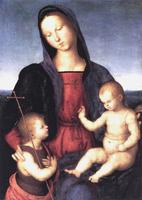
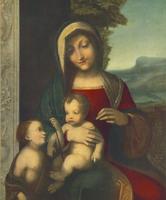
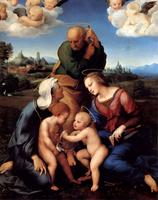
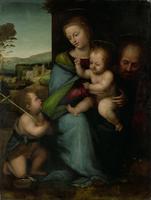
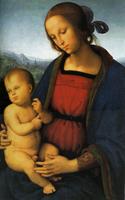
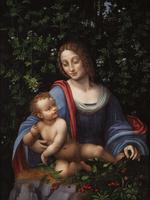
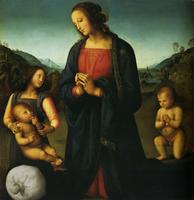
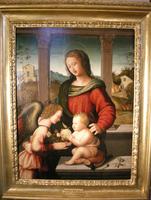
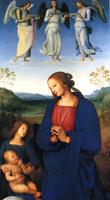
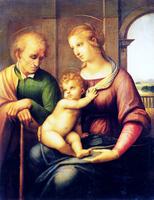
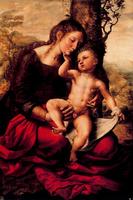
"The Virgin and Child with Saint John the Baptist," executed by Raphael during the High Renaissance, stands as a quintessential example of the period’s religious painting. Its significance lies in the masterful synthesis of naturalism, idealized beauty, and compositional harmony that defines the High Renaissance style. Raphael’s treatment of the sacred subject—depicting the Virgin Mary with the infant Christ and the young John the Baptist—demonstrates his ability to infuse a devotional scene with serene, human tenderness while maintaining a formal, balanced structure. The pyramidal grouping of figures, the gentle interaction between them, and the soft, atmospheric landscape background reflect Raphael’s deep study of Leonardo da Vinci’s sfumato and his own evolving sense of grace. This work is celebrated for its clarity, emotional restraint, and the perfect equilibrium between divine majesty and earthly intimacy, embodying the High Renaissance’s highest ideals of poise, proportion, and spiritual tranquillity.