Analisi esperta di Vision of Ezekiel di Raphael
Stile: High Renaissance · Genere: religious painting
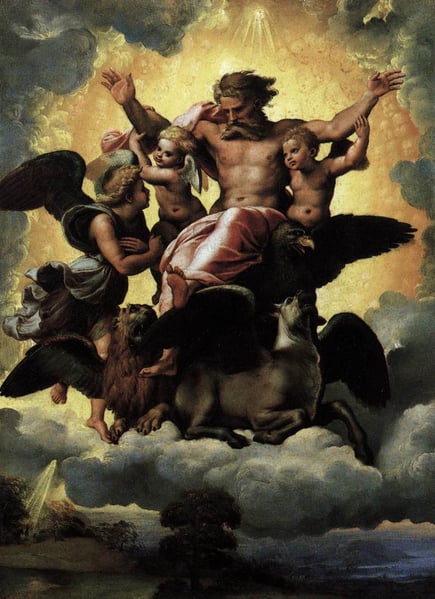
The "Vision of Ezekiel" by Raphael is a quintessential example of High Renaissance religious painting, demonstrating the period’s ideals of balance, clarity, and harmonious composition. Although the structured facts provide only the artist, style, and genre, these elements alone signal the work’s significance:
- High Renaissance style prioritizes naturalism, idealized human forms, and a calm, ordered arrangement of figures. Raphael’s mastery of these qualities elevates the biblical subject matter, making the divine vision feel both accessible and transcendent.
- Religious painting during this era served not only devotional purposes but also showcased the artist’s ability to convey spiritual narratives through visual grace. In Vision of Ezekiel, the dynamic yet controlled depiction of God appearing to the prophet exemplifies how Raphael synthesizes theological gravity with the period’s aesthetic ideals.
Thus, the work is significant for its embodiment of High Renaissance principles—where faith, reason, and beauty converge—and for Raphael’s role in defining the standard for sacred art that would influence generations.
Museum / Gallery
Visivamente simili
20 opere con composizione e palette affini
7. The Meeting of Marie de' Medici and Henry IV at Lyons
Peter Paul Rubens
Vision of Ezekiel
Peter Paul Rubens
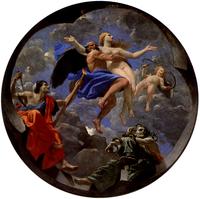
Truth Stolen Away by Time Beyond the Reach of Envy and Discord
Nicolas Poussin
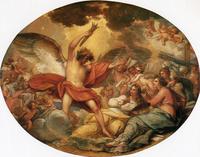
Genius Calling Forth the Fine Arts to Adorn Manufactures and Commerce
Benjamin West
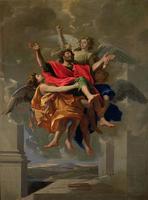
The Vision of St. Paul
Nicolas Poussin
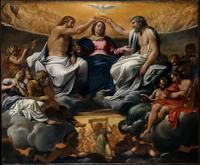
The coronation of the Virgin
Annibale Carracci
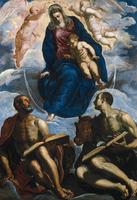
Mary with the Child Venerated by St Marc and St Luke
Tintoretto
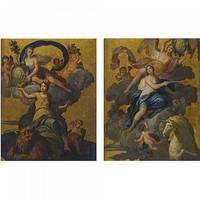
TWO GILDED PANELS BELIEVED TO COME FROM ONE OF THE ROYAL COACHES OF GEORGE I, WITH CLASSICAL PERSONIFICATIONS OF ENGLAND AND SCOTLAND BEARING ARMORIAL SHIELDS MONOGRAMED WITH THE KING'S INITIALS
James Thornhill
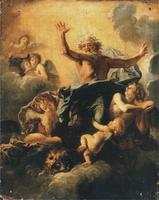
God the Father with the symbols of the Four Evangelists
Charles de La Fosse
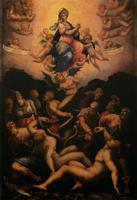
Allegory of the Immaculate Conception
Giorgio Vasari
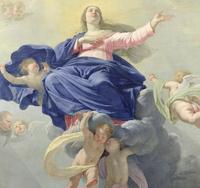
The Assumption of the Virgin
Philippe de Champaigne
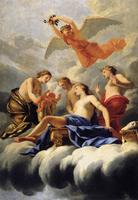
The Birth of Cupid
Eustache Le Sueur
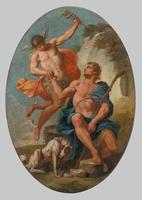
Mercury and Paris
Heinrich Schonfeld
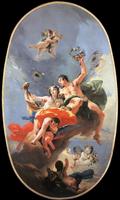
The Triumph of Zephyr and Flora
Giovanni Battista Tiepolo
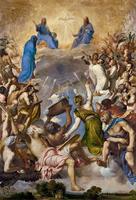
The Trinity in Glory
Titian
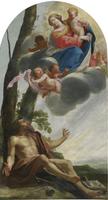
Apparition De La Vierge Et De L’enfant-jésus À Saint Antoine
Simon Vouet
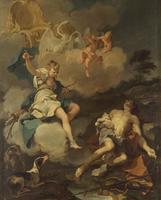
Diana and Endymion
Giambattista Pittoni
Diana and Endymion
Giambattista Pittoni
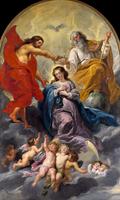
The Coronation of the Virgin
Peter Paul Rubens
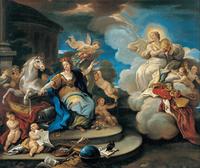
Series of the Four Parts of the World. Europe
Luca Giordano