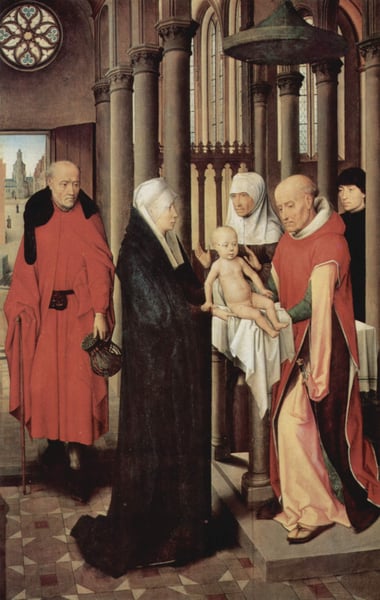
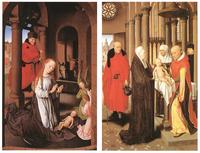
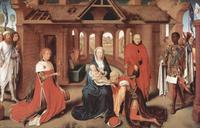
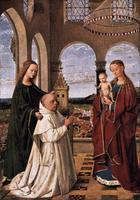
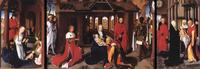
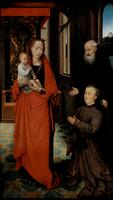
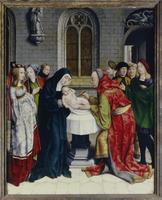
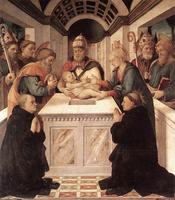
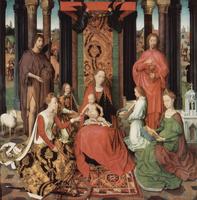
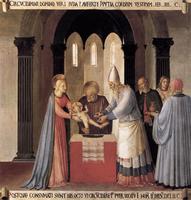
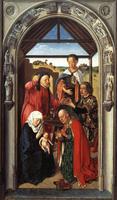
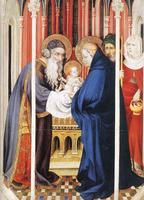
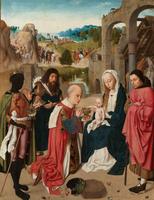
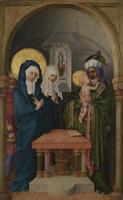
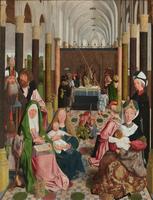
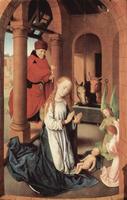
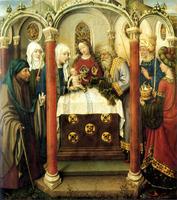
In the right wing of his triptych Adoration of the Magi (c. 1470–72), Hans Memling presents the Presentation in the Temple with the characteristic precision and luminous spirituality of the Northern Renaissance. This panel is significant not only as a masterful example of Memling’s oil technique but also as a crucial narrative component of a larger altarpiece, where it complements the central Adoration scene while standing as a distinct devotional image.
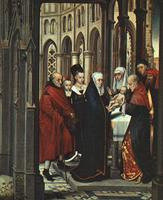
Memling, active in Bruges, was a leading figure of the Northern Renaissance, a style that prized meticulous detail, symbolic richness, and the realistic rendering of textures and light through oil glazes. In this wing, the Presentation unfolds within an architectural setting that combines a Gothic interior with spatial clarity, drawing the viewer’s eye to the central moment: the aged Simeon holding the Christ Child, flanked by the Virgin Mary and the prophetess Anna. Memling’s careful handling of drapery, the soft glow of haloes, and the luminous panel-painting technique create a sense of sacred intimacy and material beauty.
What makes this work significant within its period is its integration of narrative and symbolism within a triptych format—a common Northern altarpiece structure. The Presentation here serves as the culmination of the Incarnation story begun in the central Adoration panel, linking the homage of the Magi to the temple recognition of Christ’s messianic role. Memling’s ability to unify these scenes through consistent lighting, color harmony, and refined facial expressions demonstrates the Northern Renaissance ideal of devotional art that is both visually engaging and theologically profound. The panel thus stands as a testament to Memling’s skill in balancing naturalistic detail with sacred meaning, making it a key example of late 15th-century Netherlandish painting.