Analisi esperta di Standing Virgin and Child di Hans Memling
Stile: Northern Renaissance · Genere: religious painting
Expert Analysis: "Standing Virgin and Child" by Hans Memling
Style: Northern Renaissance
Genre: Religious painting
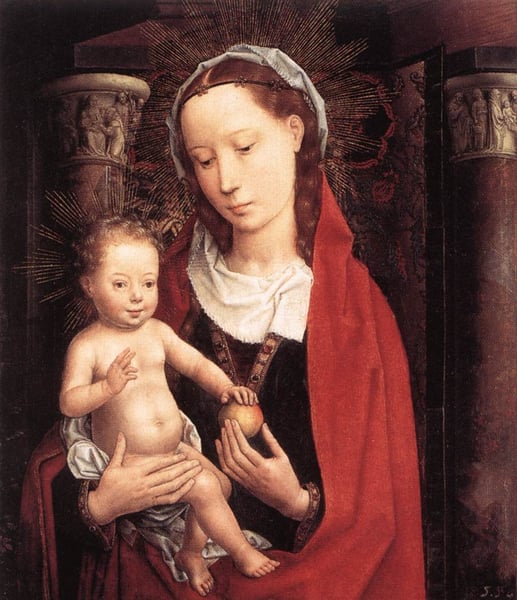
Hans Memling’s Standing Virgin and Child exemplifies the refined devotional intimacy that defines the Northern Renaissance. Within this period—characterized by meticulous naturalism, luminous oil glazes, and symbolic detail—Memling stands out for his serene, balanced compositions and his ability to humanize sacred figures without sacrificing their spiritual gravitas.
Significance within the Northern Renaissance:
-
Integration of Flemish Realism and Idealization: Memling, active in Bruges, synthesized the detailed realism of earlier masters like Rogier van der Weyden with a softer, more graceful idealism. In this work, the Virgin stands in a composed contrapposto, her drapery falling in carefully observed folds, while her tender gaze and the Christ Child’s gentle pose evoke a believable maternal bond. This blend of earthly verisimilitude and heavenly calm made Memling’s images deeply accessible for private devotion.
-
Emphasis on Symbolic Clarity: The standing format—less common than the seated "Throne of Wisdom" type—accentuates Mary’s role as the Sedes Sapientiae (Seat of Wisdom) while also emphasizing her accessibility. Subtle symbols typical of Northern Renaissance iconography (e.g., the apple held by the Child as a prefiguration of the Redemption) would have resonated with contemporary viewers attuned to layered meaning.
-
Technical Refinement: Memling’s use of smooth, transparent oil glazes creates a luminous surface that enhances the Virgin’s flawless complexion and the rich textures of her robe. This technical mastery, paired with a calm, symmetrical composition, reflects the Northern Renaissance’s obsession with capturing divine beauty through meticulous craft.
-
Influence and Legacy: Standing Virgin and Child is significant as a hallmark of Memling’s mature style, which helped popularize the Flemish tradition across Europe. His works were sought after by international patrons, spreading the Northern Renaissance’s fusion of naturalistic detail and contemplative spirituality. This painting, in particular, demonstrates how Memling elevated the religious panel from a mere liturgical object to a vehicle for intimate, emotional engagement—a key contribution to the era’s devotional art.
Museum / Gallery
Visivamente simili
20 opere con composizione e palette affini
Virgin and Child
Jan Provoost
Madonna and Child
Rogier van der Weyden
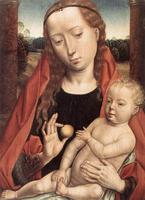
Virgin with the Child Reaching for his Toe
Hans Memling
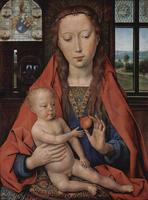
Madonna and Child, from The Diptych of Maerten van Nieuwenhove
Hans Memling
The Virgin and Child
Ambrogio Bergognone
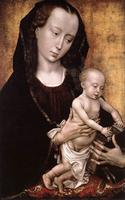
Madonna and Child
Rogier van der Weyden
Virgin and Child
Hans Holbein the Elder
Mary with the Sleeping Christ Child
Hans Holbein the Elder
Madonna and Blessing Child
Vittore Carpaccio
Madonna and Child
Giovanni Bellini
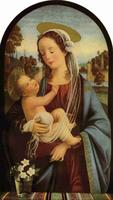
Madonna
Domenico Ghirlandaio
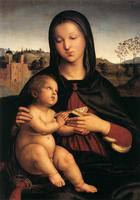
Madonna and Child
Raphael
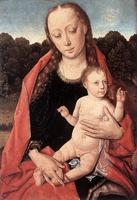
The Virgin and Child
Dirk Bouts
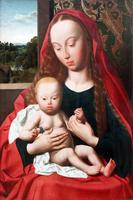
Virgin and Child
Geertgen tot Sint Jans
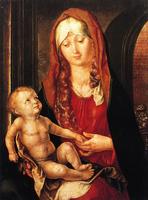
Virgin and Child before an Archway
Albrecht Durer
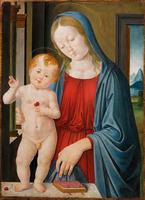
Madonna and Child
Andrea del Verrocchio
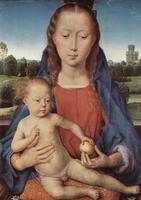
Portinari Triptych (central panel)
Hans Memling
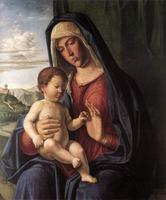
Madonna and Child
Cima da Conegliano
Madonna and Child enthroned with donor
Carlo Crivelli
Maria, Dem Kind Einen Granatapfel Reichend
Hans Holbein the Elder