
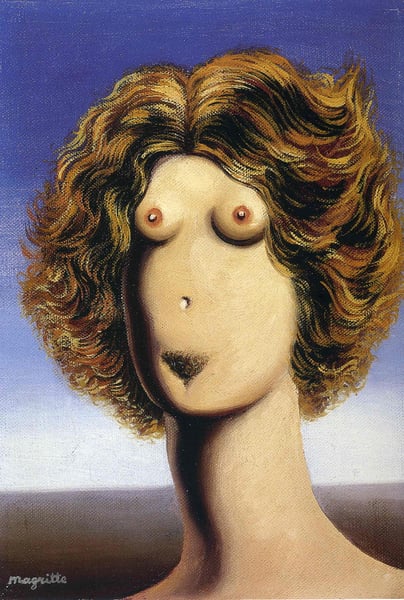
Rape
Dettagli
Analisi esperta di Rape di Rene Magritte
Stile: Surrealism · Genere: symbolic painting
Based on the structured facts provided, here is an expert analysis of René Magritte's The Rape (Le Viol, 1934).
Context and Significance within Surrealism Painted during Magritte's Brussels pre-war and war years, The Rape is a quintessential example of Surrealist symbolic painting. It moves beyond mere dreamlike imagery to directly confront perception, identity, and the social construction of the female body. This work epitomizes Surrealism’s core ambition: to disrupt rational, everyday reality by forcing a disorienting collision between two familiar forms—a woman’s face and her torso.
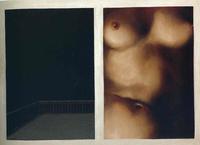
What Makes the Artwork Significant The painting’s power lies in its precise, almost clinically painted visual paradox. Magritte replaces a woman’s facial features with elements of her own body: the breasts become the eyes, the navel becomes the nose, and the pubic area becomes the mouth. This is not a surrealist fantasy of eroticism; it is a calculated, unsettling allegory.
-
Subversion of the Portrait: Traditionally, a portrait aims to reveal a subject’s inner character through the face. Magritte completely annihilates that notion, reducing the female subject to her sexual anatomy. The face—the seat of identity—is literally erased and replaced by the body’s primary and secondary sexual characteristics. This act of symbolic "rape" is a critique of how patriarchal vision objectifies women, seeing them only as bodies rather than individuals.
-
Double Meaning of the Title: The title The Rape operates on two levels. First, it describes the violent visual act of the painting’s composition—the violent transformation of a face into a torso. Second, it alludes to the psychological and societal violation of reducing a person to their sex. The painting’s unsettling effect is enhanced by its cool, academic execution; the viewer is forced to calmly confront a disturbing idea.
-
Period Relevance: Created in the tense, anxious atmosphere of the pre-war and early war years (1934–1945), the painting reflects a broader Surrealist concern with the irrational undercurrents of society. Just as Europe was being torn apart by conflict, Magritte’s work tears apart the conventional representation of the human figure. It stands as a landmark of Surrealism’s most intellectually provocative and psychologically penetrating phase, where the movement moved from random dream imagery to calculated, philosophical challenges to perception.
Visivamente simili
20 opere con composizione e palette affini
Rape
Rene Magritte
Rape
Rene Magritte
Nude bust
Moise Kisling
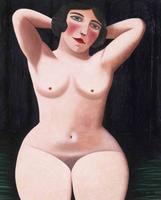
The nude with raised arms
Camille Bombois
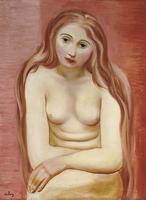
Sitting nude
Moise Kisling
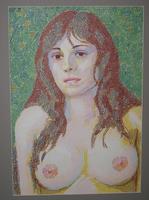
Nude
Hryhorii Havrylenko
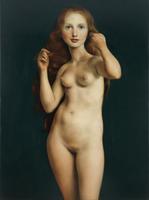
Nude with Raised Arms
John Currin
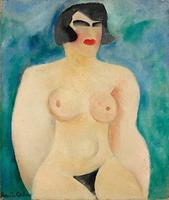
Nu sur fond bleu
Marcelle Cahn
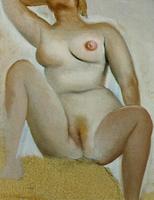
Female Seated Nud
Salvador Dali
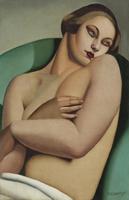
Reclining Nude I
Tamara de Lempicka
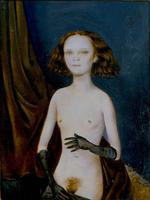
Nude Girl with Gloves
Otto Dix
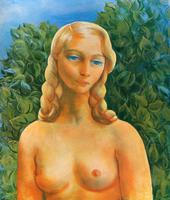
Eve
Moise Kisling
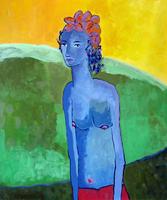
In the naked light
Jacques Sterenberg
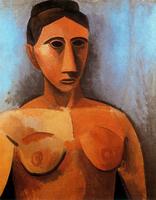
Female bust
Pablo Picasso
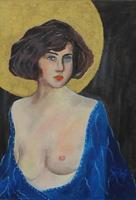
Virgin Mary
Sami Gattoufi
The disguised symbol
Rene Magritte
Nude
Hryhorii Havrylenko
Woman with bird
Pablo Picasso
Seated Female Nude
Vilhelm Lundstrom
Torso
Fernando Botero