
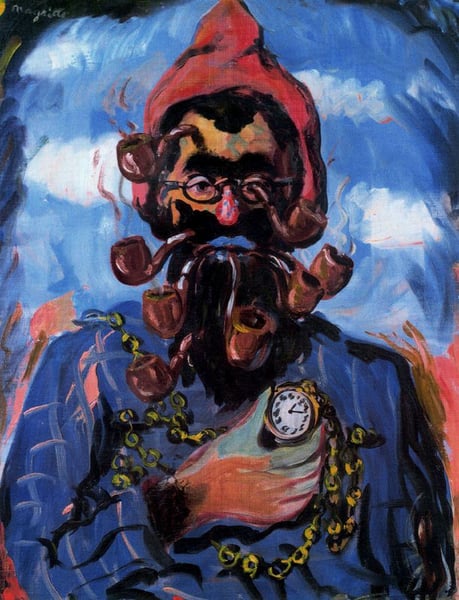
Expert analysis of Rene Magritte’s The maimed
Style: Surrealism · Genre: symbolic painting
Expert Art Historical Analysis: "The Maimed" (c. 1948) by René Magritte
Within René Magritte’s celebrated surrealist oeuvre, The Maimed stands as a rare and confrontational outlier—a work produced during his short-lived but deliberately provocative Vache Period (1947–1948). This phase, whose name derives from the French vache (cow) implying something crude, coarse, or “beastly,” marked a radical departure from the polished, dreamlike precision that defines his most famous canvases.
Significance within the Vache Period:
The Vache Period was a calculated artistic rebellion. In the aftermath of World War II, Magritte—frustrated by the public’s expectation of his signature enigmatic style—adopted a brash, gestural, almost childlike manner. The Maimed exemplifies this shift: instead of meticulous realism, the paint is applied in thick, slashing brushstrokes; colors are shrill and discordant (lurid yellows, harsh reds, dirty greens); and the forms are deliberately crudely drawn—almost caricatured. The "maimed" subject is not a classical mutilated figure but a grotesque, limb-dislocated entity that defies anatomical logic, its disjointedness echoed by the jittery, unfinished contours. This aggressive anti-aesthetic was a direct challenge to the refined Surrealist orthodoxy of Dalí, Ernst, and even Magritte’s own earlier work.
Thematic and Symbolic Reading:
While typical Surrealist symbolism aims to disrupt reality through eerie juxtaposition, The Maimed achieves its disturbance through formal violence. The “maiming” is both literal—a figure missing limbs, or with limbs misplaced—and metaphorical: a painting that deliberately maims the viewer’s expectation of beauty and craft. It resonates with the existential dislocation of the post-war era, but filtered through a cynical, almost nihilistic humor. This work anticipates later artistic rebellions, such as the CoBrA group’s primitivism and the “bad painting” movement, by proving that Surrealism’s power could stem not only from subtle enigma but from raw, intentional ugliness.
Legacy:
The Maimed is significant precisely because it reveals Magritte’s versatility and his capacity for artistic self-sabotage. It is a meta-commentary on the art market—a deliberate provocation against collectors who wanted only more elegant pipe-and-bowler-hat imagery. Today, the Vache Period (including The Maimed) is studied as a crucial moment of Surrealist internal critique, showing that even the most polished dreamscape can be shattered by the artist’s own hand. In this work, the maiming is not just the subject; it is the very act of painting itself.
Visually similar
20 works with related composition and palette
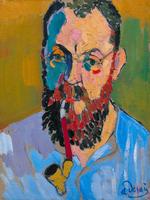
Portrait of Matisse
Andre Derain
Still Life. Pipes.
Pyotr Konchalovsky
Scheiber Hugó , Pipás Fiu
Scheiber Hugó
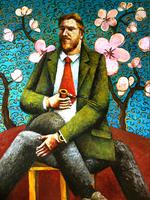
Portrait
Alexander Roitburd
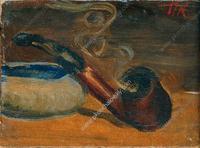
Still Life. Pipe with smoke.
Pyotr Konchalovsky
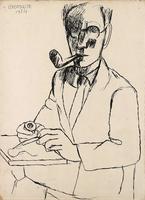
Self-portrait with pipe
Marcel Gromaire
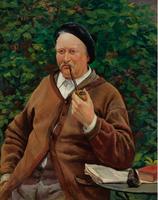
Artist's Father
Maximilien Luce
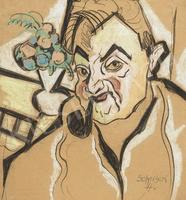
Scheiber Hugó, Self Portrait
Scheiber Hugó
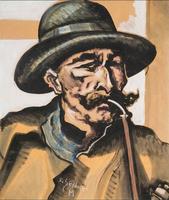
Scheiber Hugó, Pipázó Férfi
Scheiber Hugó
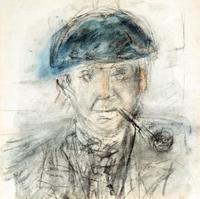
Czóbel Önarckép
Bela Czobel
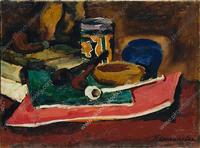
Still Life. Pink notebook and handset.
Pyotr Konchalovsky
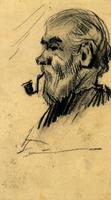
Head of an Old Man
Vincent van Gogh
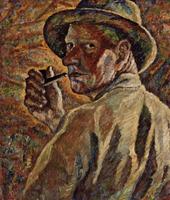
Self-portrait
Vilho Lampi
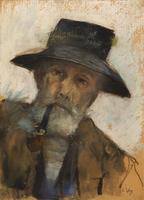
Küfermeister Adam Chaudy
Lesser Ury
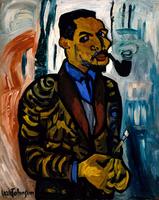
Self-Portrait with Pipe
William H. Johnson
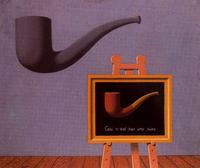
The two mysteries
Rene Magritte
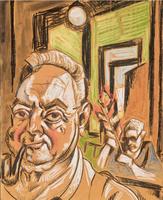
Scheiber Hugó, Önarckép Pipával
Scheiber Hugó
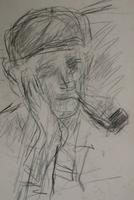
Béla Adalbert Czóbel, Self Portrait
Bela Czobel
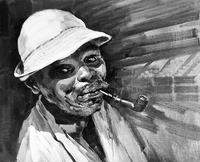
Xhosa Man with Pipe
James Yates
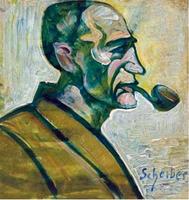
Scheiber Hugó Férfi Pipával 1930
Scheiber Hugó