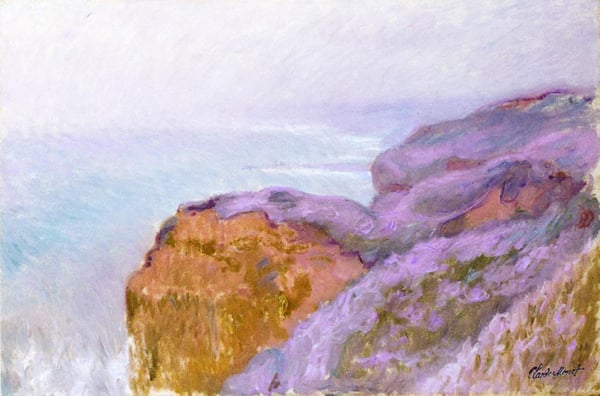
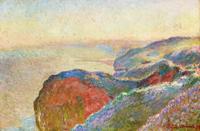
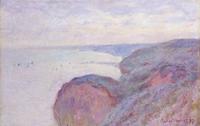
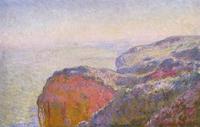
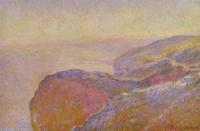
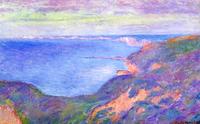
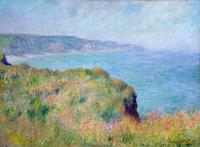
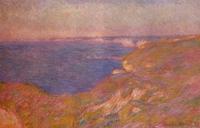
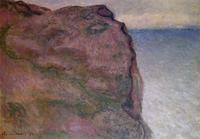
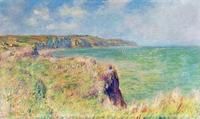
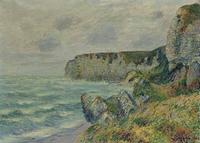
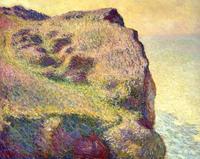
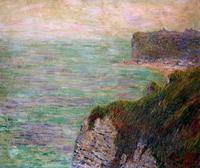
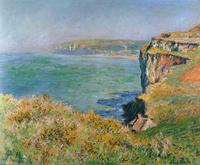
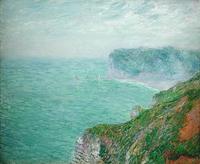
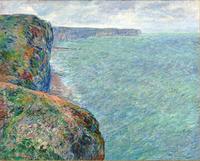
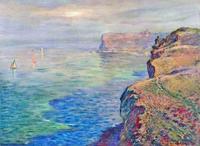
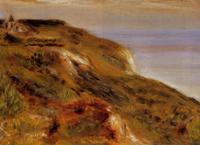
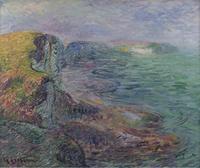
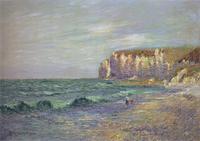
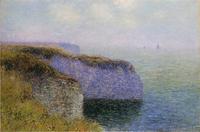
“At Val Saint-Nicolas, near Dieppe” exemplifies Claude Monet’s mastery of Impressionist landscape painting, a style defined by its pursuit of fleeting light, atmospheric nuance, and spontaneous brushwork. As a leading figure of Impressionism, Monet consistently chose outdoor motifs that allowed him to capture the ephemeral qualities of nature. Here, the coastal setting of Val Saint-Nicolas—with its interplay of sea, sky, and rugged cliffs—offers a perfect stage for his signature technique. The significance of this work lies in Monet’s ability to dissolve solid forms into shimmering patches of color and broken strokes, creating a vibrating, sensory experience that prioritises perception over precise detail. The painting embodies the Impressionist revolution: a departure from studio conventions toward a direct, immediate rendering of the natural world, where light itself becomes the true subject.