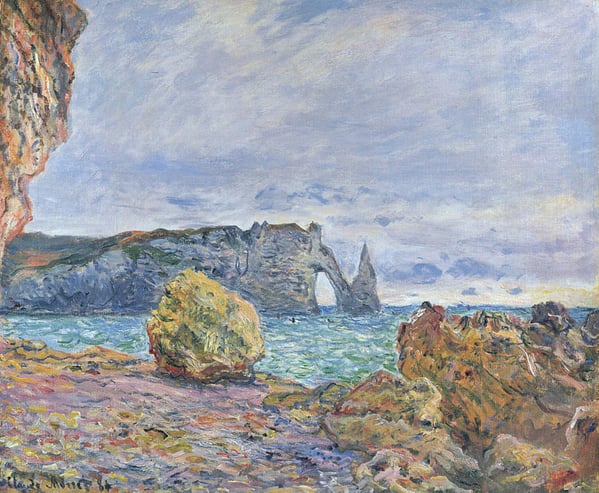
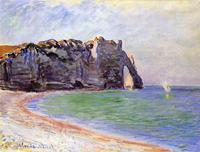
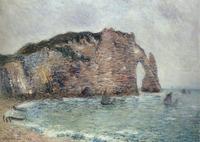
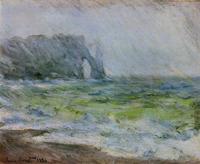
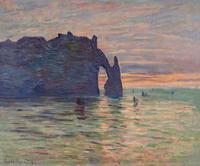
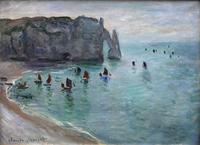
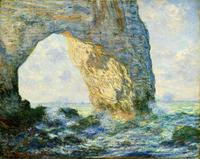
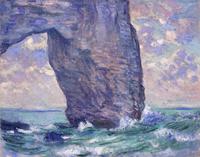
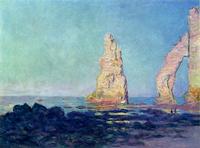
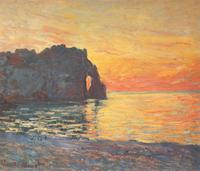
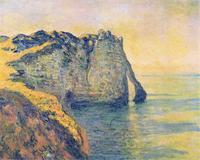
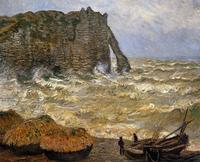
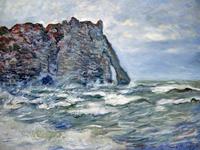
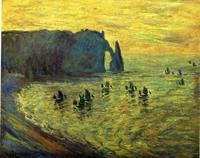
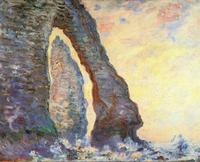
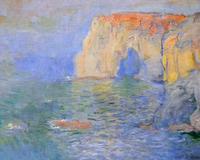
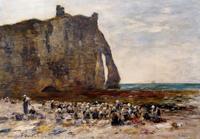
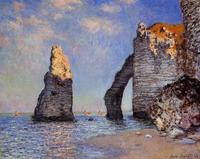
This artwork is a quintessential example of Impressionist landscape painting by Claude Monet. Its significance lies in how it embodies the core principles of the movement: the pursuit of capturing transient light, atmosphere, and the sensory experience of a specific moment. Depicting the natural arch of Porte d'Aval and the beach at Étretat, Monet uses loose, visible brushstrokes and a vibrant palette to convey the play of sunlight on water, sky, and rock. This approach prioritizes the fleeting effects of weather and time over precise topographical detail, making the work a landmark of Impressionism’s revolutionary shift toward subjective perception and plein-air immediacy.